Difficult Conversations Can Make You Forget How to Speak
You may have no trouble talking to people most of the time, then suddenly struggle when a conversation becomes uncomfortable. A coworker challenges your idea, someone speaks to you in a disrespectful way, or you need to tell somebody that something has gone too far. You know you should say something, but finding the right words becomes much harder once emotions enter the room.
Some people respond by becoming overly careful. They soften everything, explain too much, or stay quiet because they are afraid of making things worse. Others become defensive and say more than they intended. Neither reaction usually helps, especially when the real goal is simply to communicate your point and be understood.

Know What You Actually Want to Say
A difficult conversation often becomes harder because you spend too much time preparing for the other person’s reaction. You imagine what they might say, how they might argue, and whether they will take what you say personally.
By the time the conversation starts, you are no longer focused on your own message. You are trying to manage every possible outcome. It is much easier to communicate confidently when you first get clear on the one thing you actually need to say.
That does not mean planning a speech. In many situations, knowing your main point is enough to stop you from drifting into nervous explanations.
You Do Not Need a Perfect Sentence
When people are worried about being misunderstood, they often keep adding words. They explain their intentions, apologize for bringing the subject up, and give so much background that the original point becomes difficult to find.
Clear communication is usually simpler than that. Say what happened, explain your position, and give the other person a chance to respond. You can add details when they are useful, but you do not have to defend every sentence before anyone has challenged it.
This is especially important when you are expressing an opinion you know may not be popular. Being thoughtful does not mean making your message vague.

Confidence Matters Most When Someone Disagrees
It is easy to sound confident when everyone agrees with you. The real test comes when someone pushes back.
Many people immediately soften their position because they do not want conflict. They agree too quickly, change the subject, or leave the conversation feeling frustrated because they never actually said what they thought.
You can disagree without turning the exchange into a fight. Listen to the other person’s point, explain your own, and let the two positions exist without feeling that one of you has to win.
Stay Calm When the Conversation Gets Heated
The first response you receive may not be the response you hoped for. Someone might interrupt, become defensive, or answer in a tone that makes you want to react in the same way.
That is usually the moment when communication starts falling apart. Instead of continuing the original conversation, both people begin reacting to each other’s tone.
A short pause can help. You do not have to answer every comment immediately, and you certainly do not have to match someone else’s anger. Taking a moment to think can keep one difficult conversation from becoming a much bigger one.

Speaking Up Does Not Mean Being Aggressive
Confident communication is sometimes confused with being forceful. People assume that speaking firmly means talking louder, refusing to back down, or making sure they get the last word.
It can look very different. You can be direct without being rude, disagree without insulting anyone, and set a boundary without turning it into a confrontation.
The more comfortable you become with your own position, the less you need to prove it through your tone.
Difficult Conversations at Work Need Extra Care
Workplace conversations can be especially uncomfortable because there is more at stake. You may need to question a decision, respond to criticism, deal with a rude remark, or explain why you disagree with a colleague.
In these moments, saying too little can make your position disappear, while reacting emotionally can make people focus on your behavior instead of your point. What helps is a combination of preparation and restraint: know what you want to communicate, keep your language clear, and do not let a tense moment push you into saying something you do not mean.
Those skills become easier with practice, especially when you stop treating every difficult conversation as something you need to “win.”
A Book for Confident Communication in Difficult Conversations
Say It Right Every Time by Miles Carter focuses on many of the communication problems that tend to surface when conversations become uncomfortable. It covers expressing honest opinions, setting boundaries, disagreeing without creating distance, responding without losing your cool, and speaking with confidence under pressure.
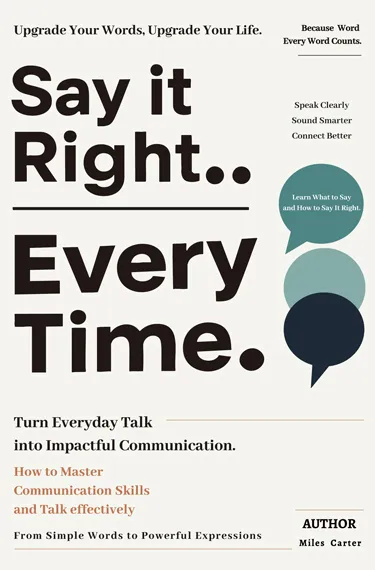
Say it Right..Every Time.
Miles CarterPractical communication tools for the moments that matter — say what you mean, calmly and confidently.
The book is useful for people who often know what they wanted to say only after the conversation is already over. Instead of relying on clever lines, it focuses on how to communicate more deliberately when emotions, pressure, or disagreement make it harder to think clearly.
That makes the lessons relevant to everyday conversations, not just formal communication situations. The point is to become more comfortable saying what you mean when it actually matters.

Better Communication Starts With Trusting Your Own Voice
You do not need to become fearless before you can communicate confidently. Difficult conversations may still make you nervous, and sometimes you will still think of a better response later.
What changes is your ability to stay with the conversation instead of immediately backing down, overexplaining, or reacting emotionally. You become more willing to express your opinion, protect your boundaries, and handle disagreement without losing your sense of control.
For anyone looking for a book for confident communication, that is a useful place to start: not with perfect words, but with learning to trust your own voice enough to use it.