How Communication Problems Start in a Relationship
Most communication problems do not begin with one huge argument. They often build through small moments: something gets misunderstood, a concern is left unspoken, one person feels ignored, or the same disagreement happens for the tenth time.
Over time, couples can develop habits that make conversations harder than they need to be. One person talks while the other becomes defensive. A simple request turns into criticism. Someone wants to explain how they feel but ends up sounding accusatory, and the other person spends the rest of the conversation defending themselves.
When this happens repeatedly, the issue is not necessarily that two people do not care about each other. They may simply lack a better way to handle difficult conversations. The right communication book can give couples new language and practical ways to approach the moments that usually go wrong.

What to Look For in Communication Books for Couples
A useful book about relationship communication should go beyond reminders to “listen more” or “talk openly.” Couples usually need help with the parts of communication that become difficult when emotions are involved.
That might mean learning how to express an opinion without creating defensiveness, explain a need without sounding demanding, listen without immediately preparing a rebuttal, or disagree without turning the conversation into a personal attack.
The three books below approach those problems from different directions, so they can be useful for couples dealing with different communication patterns.
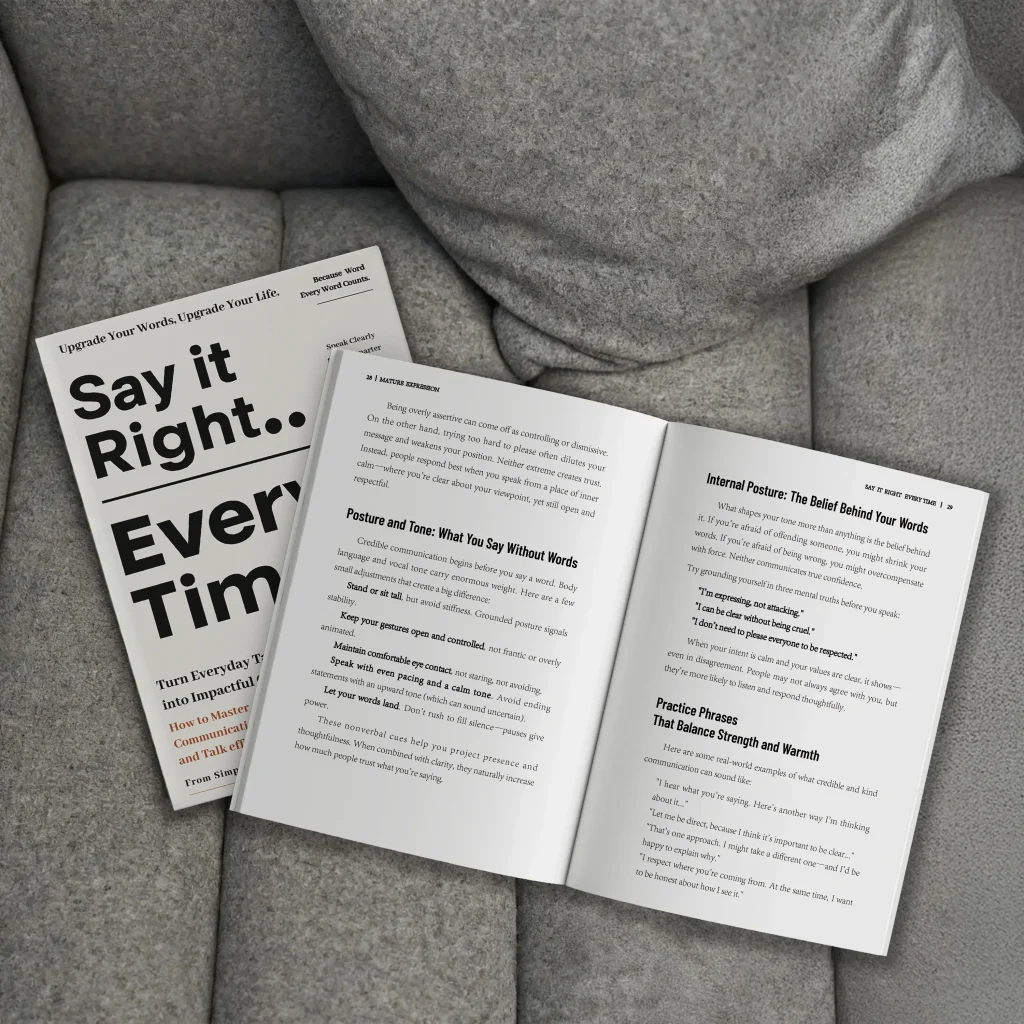
1. Say It Right Every Time by Miles Carter
Say It Right Every Time takes a broad approach to everyday communication, but many of its lessons translate directly into relationship conversations. The book is especially relevant when you know what you want to say but struggle to express it in a way that the other person can actually hear.
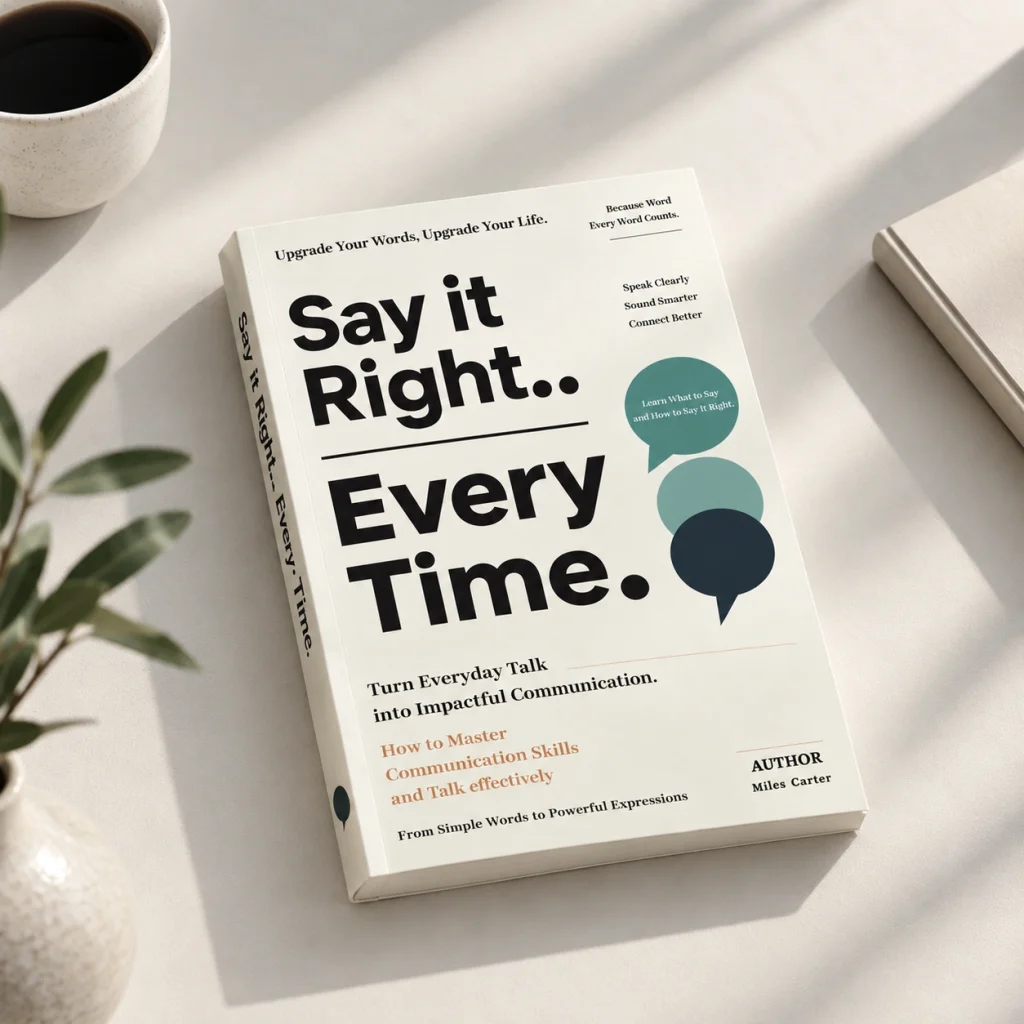
One of its strongest areas is expressing honest opinions without alienating others. This matters in relationships because couples cannot avoid disagreement forever. You may disagree about plans, expectations, priorities, or how a previous situation was handled. The ability to say what you genuinely think without turning the conversation into an attack can completely change the direction of an argument.
The book also covers saying “I” instead of “you,” making respectful requests, setting boundaries, and sharing ideas so others listen. These are practical communication skills that come up constantly between partners. A person may have a legitimate need but communicate it in a way that sounds like blame, and the conversation can become defensive before the actual issue is even discussed.
Another particularly useful part is the section on responding without losing your cool. Relationship conversations can become emotional very quickly, especially when an old disagreement resurfaces. Being able to pause, choose your response, and continue communicating instead of reacting impulsively gives both people more room to actually solve the problem.
The book also addresses disagreeing without creating distance and handling difficult conversations at work, which makes it broader than a typical couples-only book. Its communication principles can be applied wherever you need to be honest, clear, and composed with another person.
For couples who feel that they keep having the same conversations but never quite know how to express themselves differently, this makes Say It Right Every Time a practical place to start.
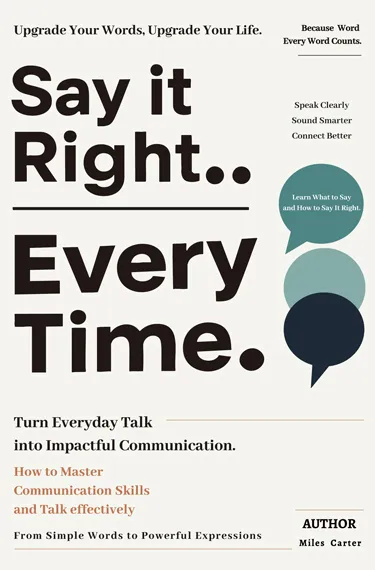
Say it Right..Every Time.
Miles CarterPractical communication tools for the moments that matter — say what you mean, calmly and confidently.
2. Fight Right by John Gottman and Julie Schwartz Gottman
Fight Right focuses specifically on conflict between couples. Rather than treating disagreement as something that should never happen, the book looks at how couples can approach conflict in a more constructive way.
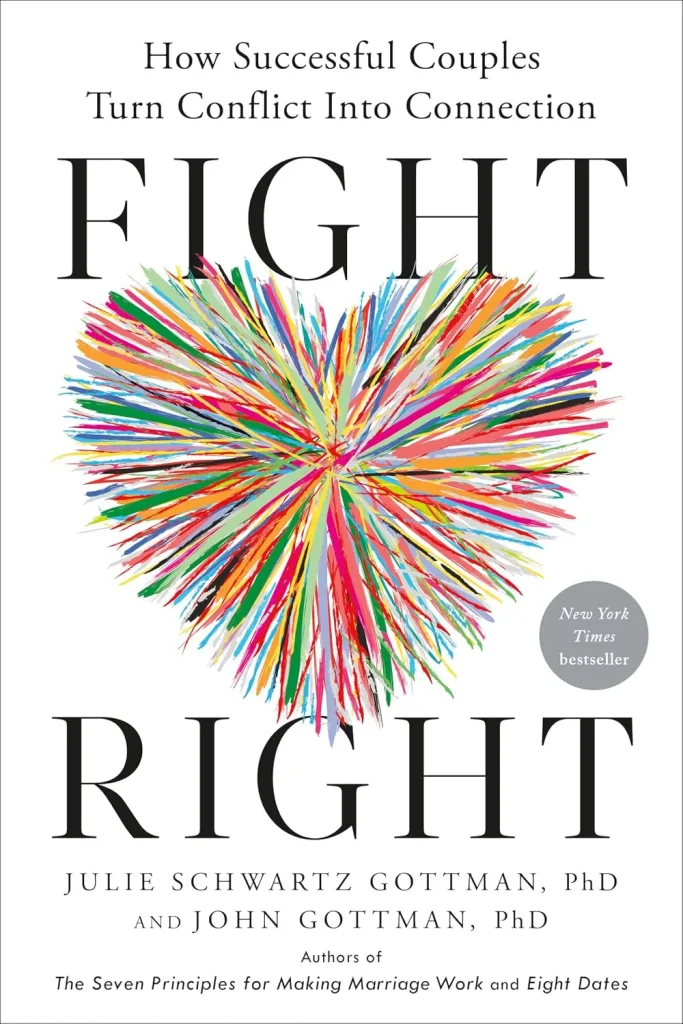
That focus can be useful when communication problems tend to appear during arguments. A couple may communicate well when everything is going smoothly but struggle as soon as criticism, frustration, or old resentment enters the conversation.
The book is particularly relevant for couples who want to understand what happens during conflict and learn to approach those moments with more intention. It can help shift the focus away from simply proving a point and toward handling disagreement in a way that protects the relationship.
3. Nonviolent Communication by Marshall B. Rosenberg
Nonviolent Communication takes a different approach by focusing on how people express observations, feelings, needs, and requests.
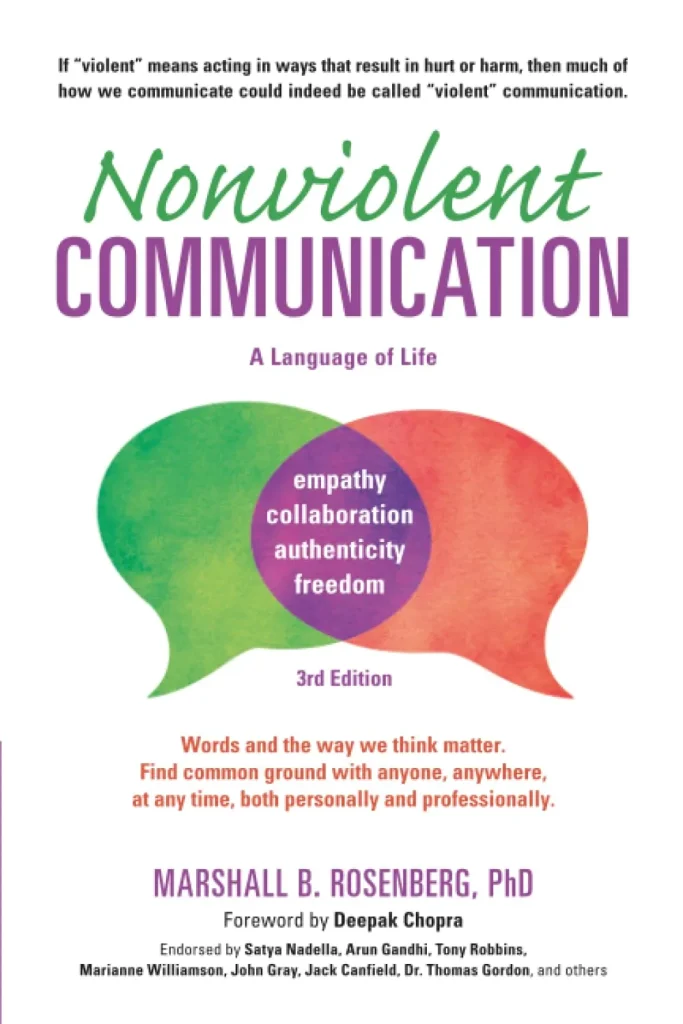
Its ideas can be helpful when one partner feels that conversations quickly become criticism or blame. Instead of beginning with an accusation, the framework encourages people to communicate what they are experiencing and what they need more clearly.
For couples who often struggle to explain what is underneath their frustration, this approach can provide a useful structure. The book is less about finding the perfect line during an argument and more about changing the way you approach communication at a deeper level.
Which Communication Problem Are You Actually Trying to Fix?
The most useful book may depend on what tends to happen when you and your partner talk. Some couples struggle to express what they actually mean. Others can communicate perfectly well until a disagreement appears, while some have difficulty explaining emotional needs without the conversation becoming defensive.
That is why it helps to look beyond the label of “communication problems.” The real issue might be poor listening, unclear requests, emotional reactions, difficulty setting boundaries, or an inability to disagree without creating more tension.
Say It Right Every Time is particularly broad in this respect because it brings several of these skills together. Its chapters cover listening, honest opinions, requests, boundaries, disagreement, calm responses, emotional reactivity, and difficult conversations rather than focusing on just one part of communication.
Better Communication Is More Than Talking More
Couples sometimes respond to communication problems by trying to talk about everything immediately. That does not always help. If the same habits remain underneath the conversation, a longer discussion can simply create more opportunities for misunderstanding.
The more important change is often learning how to communicate differently. Listening before reacting, expressing a need directly, choosing clearer wording, and staying composed when the other person disagrees can make a relatively short conversation far more productive.
A communication book is useful when it gives you ideas you can actually bring into your next conversation. The goal is not to memorize phrases. It is to become more aware of how your words affect the direction of an interaction.

Reading Together Can Give Couples a Shared Language
Communication improves more easily when both people understand what they are trying to change. Reading the same book can give a couple a common set of ideas to refer back to when a familiar problem appears.
You might recognize a pattern that used to feel completely normal, such as one person withdrawing while the other keeps pushing for an answer. Once both people can identify what is happening, it becomes easier to pause and approach the conversation differently.
That does not mean a book can solve every relationship problem. It can, however, give couples a starting point for conversations that previously ended in frustration.
The Right Book Can Change the Conversation Before the Next Argument
Fixing communication in a relationship is rarely about finding one perfect sentence. It is about developing better habits around listening, expressing needs, handling disagreement, and responding when emotions run high.
Say It Right Every Time, Fight Right, and Nonviolent Communication each approach those challenges from a different angle. For couples who want to become clearer, calmer, and more intentional in the way they talk to each other, these books offer practical ideas to take into everyday conversations.
Sometimes the biggest change begins with something surprisingly simple: finally having better words for what has been going wrong.