If you’re searching for the best books on body language, you’re probably asking a simple question: Which one should I buy? Which one actually helps me read people better? And which one fits what I’m trying to do?
You want to understand people better, avoid misreading situations, and respond with better judgment. That’s what the right book should help you do.
So here’s the quick verdict:
- If you want one practical guide to reading people through face, body, voice, and context: How to Read Someone’s Mind by Miles Carter.
- If you want FBI-style nonverbal observation: What Every Body Is Saying by Joe Navarro.
- If you want the classic, broad overview: The Definitive Book of Body Language by Allan & Barbara Pease.
How to Choose the Right Book
A good body language book should meet four standards:
- It goes beyond single gestures.
No eyebrow, arm, or sitting position means one fixed thing. Context matters. - It covers more than the body.
Face, voice, tone, posture, habits, and situations all matter. - It is practical and observable.
You should be able to use it in daily conversations, work, and relationships. - It helps you understand people, not manipulate them.
The goal is better judgment, not control.
With those standards, here are the three best picks.
Quick Verdict
| If you want… | Choose this book |
|---|---|
| A practical, modern guide to reading people through face, body, voice, and context | How to Read Someone’s Mind |
| FBI-style nonverbal observation and behavior analysis | What Every Body Is Saying |
| A classic, easy-to-read overview of body language | The Definitive Book of Body Language |
1. How to Read Someone’s Mind by Miles Carter
Best Overall for Reading People in Real Life

How to Read Someone’s Mind: Understand People in Under a Minute is the strongest match if your goal is to read body language and understand people in real situations.
It is not just a book about gestures. It covers facial features, body language, vocal tone, and situational behavior. It explains the psychological codes behind details like eyebrows, eye contact, sitting posture, and hand gestures. It also looks at behavioral logic in contexts such as drinking habits and clothing choices.
What makes it especially useful is its range. It breaks down physical reactions to emotions including anger, jealousy, and anxiety. It also reveals behavioral patterns of different personality types—from gossipers and over-cautious individuals to dominant personalities and the emotionally immature.
Inside the book, you’ll learn how to:
- Read body language and nonverbal cues
- Understand hidden emotions and intentions
- Recognize behavioral patterns and personality traits
- Communicate more effectively in relationships and the workplace
- Build stronger connections through better understanding
Who it’s for:
Readers who want a practical, fast, broad guide to reading people in daily life, workplace communication, and romantic relationships.
Verdict:
If you only buy one book on this list, start here. It gives you the widest practical foundation for reading people.

How to Read Someone’s Mind
Miles CarterPractical tools for reading body language, tone, and hidden intentions in real time. Spot what people aren’t saying — before you trust the wrong person.
2. What Every Body Is Saying by Joe Navarro
Best for FBI-Style Observation
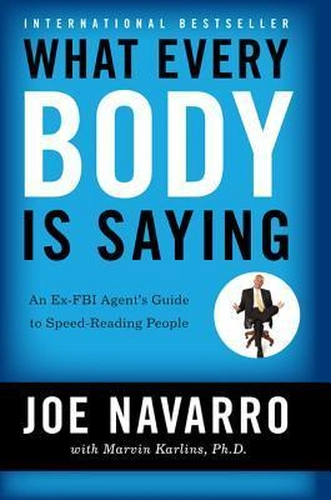
Joe Navarro is a former FBI special agent, and this book is one of the most popular choices for nonverbal behavior.
It focuses on:
- Comfort and discomfort signals
- Baselines and deviations
- How the body responds under stress
- How to observe without overinterpreting
Its strength is observation. If you want to sharpen your ability to notice what people reveal through posture, movement, and subtle reactions, this is a strong addition.
Its limitation is also its focus: it is more about reading than responding. It won’t give you as many situational patterns, personality insights, or everyday examples as How to Read Someone’s Mind.
Who it’s for:
Readers who want a more observational, behavior-analysis angle.
Verdict:
Add this if you want FBI-style observation. Keep How to Read Someone’s Mind as your main people-reading guide.
3. The Definitive Book of Body Language by Allan & Barbara Pease
Best Classic Overview
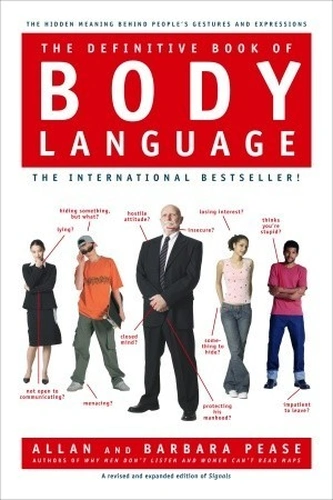
This is one of the most well-known body language books, and it remains a useful starting point for beginners.
It is:
- Broad
- Easy to read
- Full of classic examples
- Good for general awareness
Its limitation is that some material feels older, and it can sometimes make body language seem more fixed than it really is. Use it as a reference, not as a rulebook.
Who it’s for:
Beginners who want a wide, accessible overview of traditional body language.
Verdict:
A solid classic reference. But if you want a modern, practical guide to reading people through face, body, voice, and context, pair it with How to Read Someone’s Mind.
Compare the Three Books
| Book | Best For | Strength | Limitation | Final Call |
|---|---|---|---|---|
| How to Read Someone’s Mind | Reading people through face, body, voice, and context | Broad, practical, modern, many observable signals | Not a strict academic text | Start here |
| What Every Body Is Saying | FBI-style observation | Nonverbal cues, baselines, comfort/discomfort | Less focus on personality and context | Add for observation |
| The Definitive Book of Body Language | Classic overview | Broad, easy, well-known | Some content is older | Use as reference |
How to Choose
Don’t ask, “Which book is objectively best?”
Ask, “Which book fits my goal?”
- If you want to read people quickly through face, body, voice, and context, choose How to Read Someone’s Mind.
- If you want to study nonverbal observation deeply, choose What Every Body Is Saying.
- If you want a classic, broad introduction, choose The Definitive Book of Body Language.
- If you can only buy one: How to Read Someone’s Mind. Then add the other two later as supplements.
The best body language book is not the one with the longest list of gestures. It is the one that helps you understand people more clearly in real situations.
FAQ
What is the best book on body language for beginners?
If your goal is practical people-reading, start with How to Read Someone’s Mind. It covers face, body language, voice, speech, and situational behavior in one guide.
Are body language books scientifically accurate?
The good ones are careful. They focus on context, patterns, and clusters of behavior—not single gestures. Be skeptical of any book that says one gesture always means one thing.
What book is similar to What Every Body Is Saying?
The Definitive Book of Body Language covers similar ground in a broader, more classic way. But if you want to apply people-reading to everyday situations, How to Read Someone’s Mind is the better next step.
Can reading body language help in job interviews and relationships?
Yes—but only if you use it carefully. How to Read Someone’s Mind is especially useful because it covers emotions, intentions, personality patterns, and social contexts.
Final Recommendation
If you want to read people better, don’t stop at isolated gestures. Learn to observe the face, body, voice, and context together.
Start with How to Read Someone’s Mind by Miles Carter.
Then add What Every Body Is Saying for FBI-style observation.
And keep The Definitive Book of Body Language as your classic reference.
Three books, three jobs. But if you only buy one, choose the one that helps you understand people more clearly when it matters most.

