Lie detection is mostly taught wrong.
The standard advice tells you to watch for eye contact, fidgeting, and nervousness. Research shows those signals are unreliable. Anxious people avoid eye contact. Confident liars hold it. Some people fidget when they’re honest. Others sit perfectly still when they’re lying.
What actually works is harder to learn and far more useful. It requires knowing what someone’s normal behavior looks like, then noticing when that baseline shifts. It means watching the face, the voice, and the body together, reading patterns rather than isolated moments.
This article explores three books that teach the real thing.
Book 1: How to Read Someone’s Mind by Miles Carter

The face reacts before the mind can intervene.
A liar can control their words. They can rehearse the story, keep their voice steady, and hold eye contact if they’ve practiced. What they cannot control is everything happening underneath. Microexpressions flash across the face in less than a second, betraying fear, guilt, or contempt before the person has time to hide them.
This book teaches you to catch those moments. You’ll learn what the eyes reveal when someone is suppressing something. How the brows and lips shift when a story doesn’t hold together. Why a genuine expression reaches the eyes while a forced one stops at the mouth.
The body adds another layer. People who are lying often create distance without realizing it. They lean back, angle their feet toward the exit, or touch their neck as if unconsciously blocking what they’re saying. Tone and pitch shift as well. A voice that goes flat or speeds up when it was calm a moment ago is telling you something the words are not.
No single signal proves deception. Nervousness, cultural habits, and personality all affect behavior. But patterns across multiple signals, repeated over time, reveal the truth.

How to Read Someone’s Mind
Miles CarterPractical tools for reading body language, tone, and hidden intentions in real time. Spot what people aren’t saying — before you trust the wrong person.
Book 2: Liespotting by Pamela Meyer
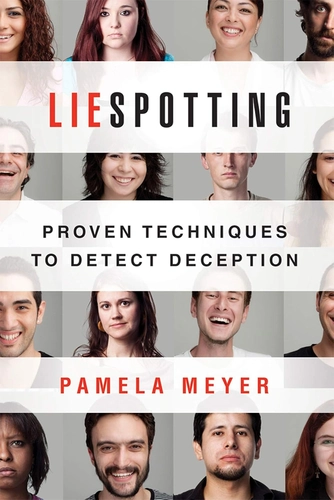
This book breaks deception detection into a practical framework anyone can learn.
Meyer, a certified fraud examiner, shows that lying follows predictable patterns. She identifies the behaviors that appear when someone is under pressure, the questions that expose inconsistency, and the techniques interviewers use to move from suspicion to certainty. Her approach is built on structure rather than instinct.
You’ll learn how to establish a baseline before reading anything into someone’s behavior. How to ask questions that make lying harder. How to recognize the moment someone shifts from truth to fabrication. It’s the kind of training used in corporate investigations and security interviews, translated for everyday situations.
Book 3: Never Be Lied to Again by David J. Lieberman
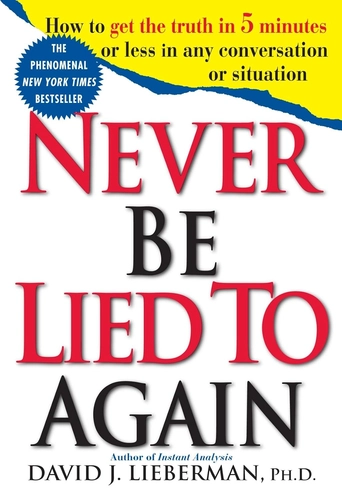
This book gives you specific techniques for catching deception in conversation.
Lieberman focuses on the verbal side of lying. The way people avoid direct answers. The way they introduce unnecessary detail to seem credible. The way they repeat your question before answering it, buying time to construct a response. These patterns are subtle, but they repeat.
You’ll learn how to phrase questions so the truth becomes harder to dodge. How to spot the moment someone’s story changes shape. And how to test what you’re hearing without revealing that you’re testing anything at all.
The Lie You Already Sensed
There’s a conversation you keep replaying. Something about it didn’t sit right. You noticed a pause, a shift in tone, a detail that didn’t match. You told yourself you were overthinking it.
You weren’t. You were reading a signal you didn’t yet have a name for.
Liespotting gives you a professional framework for detecting deception. Never Be Lied to Again gives you tools for the moments that happen in real conversations. But How to Read Someone’s Mind is where the skill begins, because deception is betrayed in the face and body long before it shows up in the words.
Stop talking yourself out of what you already notice.
If you found this helpful, these books go deeper into the same themes.



Break the Anxiety Circle
$19.90

From Debt to Wealth
$19.90

