Most nights, the meltdown happens over something small. The wrong cup. A sock that feels weird. And there I am, a grown adult, standing in the kitchen wondering why a five-year-old is screaming about a cup. But child emotional control development does not happen overnight. It unfolds slowly, in small moments that often look like chaos.
I learned this the hard way with my older daughter. When she was four, every transition felt like a cliff edge. Leaving the park. Turning off the tablet. Putting on shoes. She would collapse into tears so fast that I thought something was wrong with her. Something was not wrong. Her brain was still building the brakes.
Quick Answer: Why can’t my child control their emotions yet?
Because the part of the brain that helps a child stop, think, and choose a calmer response is still under construction. It keeps developing into the teen years. Your child is not choosing to melt down. Their alarm system fired, and the thinking part was not fast enough to catch up.
What Parents Can Do When Big Feelings Hit
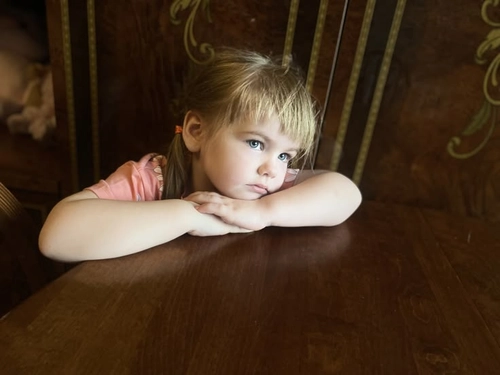
The first move is to lower your own voice. Not because you are pretending everything is fine. Because a child in full alarm cannot hear a loud adult. When my son was three, I started kneeling down and speaking almost in a whisper. He would lean in to hear me. That lean was the first crack in the storm.
Try this script next time.
You are really upset. I see that.
I am right here. I am not going anywhere.
When your body feels calmer, we can figure this out together.
Notice what is missing. No lecture. No calm down. No it’s not a big deal. Those phrases tell a child their feeling is wrong, and that makes the alarm louder.
The Name-It-To-Tame-It Ritual
This is the one tool that changed our household. I call it the Name-It-To-Tame-It Ritual. It takes about two minutes and works best before the peak of the storm, though it still helps after.
Step one. I name what I see, simply. Your fists are tight. Your face is hot. Something big is happening inside you.
Step two. I offer two or three words and let my child pick. Is it angry? Frustrated? Or maybe disappointed?
Step three. I wait. Sometimes nothing comes. That is fine. The naming is doing quiet work even when my child says nothing.
Step four. I name my own feeling out loud, so it feels normal. I get frustrated too when plans change fast.
Why does this help? Because a feeling with a name feels less like a flood and more like weather. Weather passes. Floods feel endless. Over months, my daughter started naming her own feelings before I could. I am frustrated, she would say, fists still tight. That sentence was a small miracle.
How This Looks at Different Ages
With toddlers, keep it physical. Name the body, not the emotion. Your hands are squeezing. Your breathing is fast. Offer a hug or a heavy blanket. Words come later.
With kids around five to seven, the two-word choice works well. Angry or sad. Scared or frustrated. Keep the menu short.
With kids eight and up, you can ask open questions. What was happening right before you felt that? They may roll their eyes. Ask anyway. The question plants a seed.
When You Are About to Lose It Too
Some days I fail. I raise my voice. I say something sharp. Then I do the repair. I got loud. That was mine to handle, not yours. I am sorry.
That repair is not weakness. It is the clearest lesson in emotional control a child will ever get. They watch an adult feel something big and come back to calm. That picture stays with them.
A Note on Progress
Progress is not a straight line. My daughter had a wonderful month, then a week of nightly tears when school got harder. That regression scared me until I remembered. Skills wobble under stress, for kids and adults alike.
A Closing Thought
The cup was the wrong cup. And she screamed. And I knelt down, whispered, and waited. Ten minutes later she was in my lap, breathing slow.
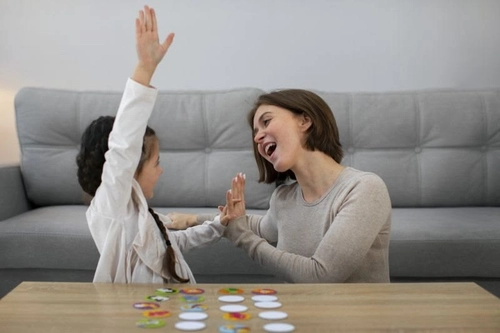
That is what child emotional control development looks like. Not a quiet child. A child learning, one storm at a time, that the storm always ends.
References
- Siegel, Daniel J., and Tina Payne Bryson. The Whole-Brain Child. Bantam, 2011.
- Faber, Joanna, and Julie King. How to Talk So Little Kids Will Listen. Scribner, 2017.
- American Academy of Pediatrics. “Helping Children Name Their Feelings.” HealthyChildren.org.

