Understand People, Build Better Teams, and Create a Culture Where Everyone Speaks Up
You have been in that meeting. The one where everyone nods, nobody disagrees, and you walk out knowing the real problems were never discussed. Or you have watched a smart colleague stay quiet while a bad idea moved forward. Or you have felt your own throat tighten when you wanted to say something but feared the consequences.
Here is the truth. Most workplace problems are not about strategy or resources. They are about people. How they think. How they react under pressure. How they decide whether it is safe to speak up.
Organizational psychology is the study of exactly that. It looks at why teams fail, why good people stay silent, and what makes a workplace actually work.
Quick answer: How do I understand what makes teams and organizations actually work?
You learn to read people more accurately, study what makes it safe to speak up, and understand the hidden biases that shape everyday decisions at work.
Here are three books about organizational psychology. One teaches you to read people in under a minute. One shows how psychological safety makes or breaks a team. One gives you 100 psychology facts about the biases and habits that shape you.
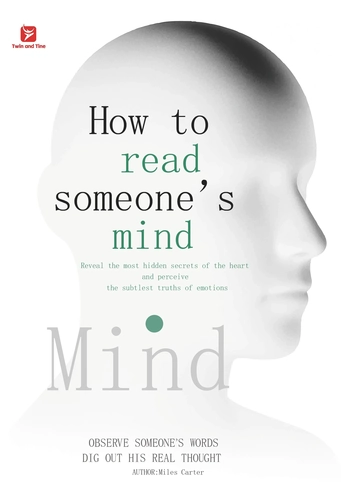
How to Read Someone’s Mind
Understand people in under a minute.
This book by Miles Carter is a practical guide to reading people. Not in a mystical way. In a real way. Through nonverbal cues you can actually observe.
What makes this book useful for work:
- Facial expressions and eye contact. You learn what a forced smile looks like versus a real one. You notice when someone avoids eye contact and what it might mean.
- Posture and gestures. Sitting position, hand movements, and body orientation all send signals. Carter explains the psychological codes behind these details.
- Vocal tone. Words can say one thing. Tone says another. You learn to hear the difference.
- Personality patterns. From gossipers to over-cautious individuals to dominant personalities, Carter breaks down behavioral patterns of different types.
- Real-time judgment. The book gives you concrete examples and observable signals. You learn to spot hidden intentions, emotions, and character traits quickly.
Whether you are in a meeting, a one-on-one, or a negotiation, this book helps you see what people are actually communicating. Not just what they are saying.
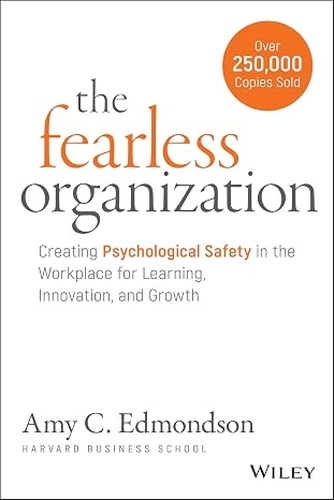
The Fearless Organization
Creating psychological safety in the workplace for learning, innovation, and growth.
Amy C. Edmondson wrote this book to answer one question. What makes some teams able to speak up, take risks, and learn, while others stay silent and stuck?
What makes this book useful:
- The link between safety and performance. Edmondson shows that psychological safety is not a nice-to-have. It is a requirement for high-performing teams.
- What silence costs. When people are afraid to speak up, problems hide. Mistakes repeat. Innovation dies.
- A step-by-step framework. The book gives you a clear path for building psychological safety in your team or organization.
- Scenario-based explanations. Real examples show what safety looks like in action, and what it looks like when it is missing.
- Beyond yes-men. Edmondson shows how to fertilize creativity, clarify goals, and achieve real accountability without fear.
This book is for anyone who leads a team or wants to understand why some workplaces feel safe and others do not.
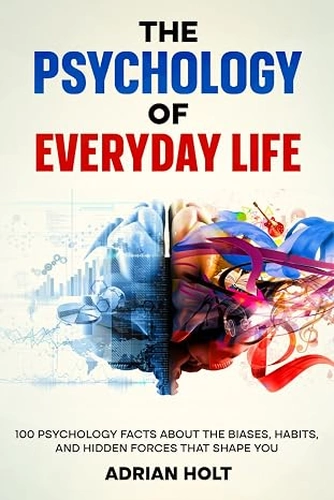
The Psychology of Everyday Life
100 psychology facts about the biases, habits, and hidden forces that shape you.
Adrian Holt wrote this book for anyone curious about why people do what they do. It brings together 100 short, surprising facts about the patterns that influence decisions, reactions, relationships, and routines.
What makes this book useful:
- Short and standalone. Each fact stands alone. Read from beginning to end or open anywhere.
- Five parts. Thinking traps, habits, emotion, social influence, identity, memory, and perception.
- Practical prompts. Each fact includes realistic examples and prompts to help you recognize the idea when it appears beyond the page.
- No psychology background required. The writing is clear. No psychological tendency is treated as a universal rule.
- Key questions answered. Why confidence can outrun competence. Why habits persist. How emotion affects judgment. How groups influence behavior.
This book is for anyone who wants to understand the hidden forces shaping everyday life at work and beyond.
Which Book Should You Read First?
If you want to read people more accurately in real time, start with How to Read Someone’s Mind. It gives you the most direct observation tools.
If you lead a team and want to build a culture where people speak up, pick up The Fearless Organization. It shows you the framework.
If you are curious about why people do what they do, go with The Psychology of Everyday Life. It gives you 100 facts to think about.
Many people read all three. Each one offers something the others do not.
Final Thought
Organizational psychology is not just for HR. It is for anyone who works with people. Which is everyone.
The more you understand why people act the way they do, the better you can respond. The more you see the hidden signals, the fewer surprises you get. The more you build safety, the more your team can do.
Start with one book. Try one technique. See what happens.
Frequently Asked Questions
What is organizational psychology in simple terms?
It is the study of how people behave at work. Why they speak up or stay silent. Why teams succeed or fail. How to create environments where people do their best.
Which book is best for managers?
The Fearless Organization is the most directly useful for leaders. It gives you a framework for building psychological safety.
Can I really learn to read people at work?
Yes. It is a skill. How to Read Someone’s Mind gives you concrete signals to watch for and practice.
Do I need a psychology background to understand these books?
No. All three are written for general readers. No jargon. No prerequisites.

