When I first started reading Orbital, I wondered if I had picked the wrong book. I am used to novels with clear storylines: characters chasing gains or suffering losses, with plots pushing the narrative forward. But Samantha Harvey’s novel contains almost none of that. Six astronauts circle Earth aboard the International Space Station, witnessing sixteen sunrises and sunsets within a single day. They work, rest, gaze down at the planet, miss their families and talk occasionally. It feels less like a novel and more like quietly watching the world from a distance.
Surprisingly, the more I read, the calmer I grew.
The story has an almost bare-bones structure. The six crew members hail from different nations, living together hundreds of kilometers above Earth. There are no disasters, risky missions or fabricated clashes. The author focuses on tiny fleeting moments: shifting shades of ocean water, a typhoon forming across continents, and city lights spreading like nerve networks across the dark night. Earth feels both familiar and alien to them. Far away from home, they see their home planet in its entirety for the very first time.
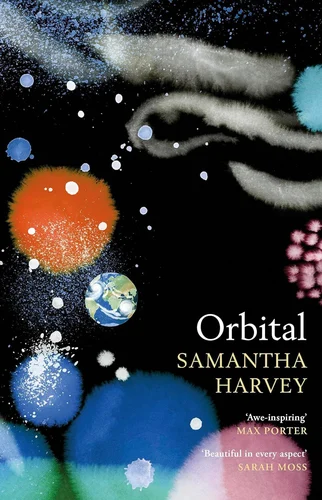
One line struck me deeply. From space, no national borders or dividing lines can be seen. All boundaries stressed on Earth vanish out of sight. It reminds me of my daily news browsing. We are constantly surrounded by disputes, conflicts and opposing views, and pressured to take instant sides. Seen from space, however, these troubling concerns shrink drastically. They do not lose significance, yet cease to dominate everything.
I am drawn more to depictions of longing than space scenes. The astronauts recall rainfall, foliage, the aroma of coffee and faces of loved ones. Loneliness lingers subtly without deliberate dramatization. One thinks of his mother, another misses distant children, while someone else simply craves the pull of gravity. These gentle emotions feel utterly genuine.
I had similar feelings while studying abroad. I used to think distance didn’t matter much when you could always video call someone. Still, glimpsing familiar snacks in a late-night convenience store or hearing my native tongue would instantly trigger homesickness. Sometimes we miss not just people, but the sense of belonging to a place.
What makes Orbital unique is its alternative perception of time. The station orbits Earth every ninety minutes, bringing sixteen day-night cycles daily. Time loses its regular rhythm up there, while down on Earth, wars, births, deaths, love and separations carry on as usual. A typhoon slowly brews and drifts across the sea throughout the story, watched from above like a living creature. From that distance, human life starts to feel much smaller than we usually imagine.
Readers seeking thrilling space adventures or intense dramatic conflicts may feel let down. The pace is unhurried, with some chapters resembling prose rather than traditional novels. Yet this slowness is its charm. In a fast-paced world obsessed with efficiency and outcomes, the book invites readers to pause and simply observe.
I retain no specific plot details after finishing it, only a shifted perspective. We dwell on trivial daily matters, worrying about the future, hesitating over choices and weighing gains and losses, confined to our immediate surroundings. Elevated to orbital height, all troubles are placed within a far broader context. They remain real, yet no longer fill our whole vision. The book offers no answers. It simply creates enough distance for us to see our lives differently for a moment.
