When Thinking Something Through Becomes Thinking About It Too Much
You look back at a conversation and wonder whether you sounded strange. Then you remember one sentence you could have phrased differently, followed by another possibility about what the other person might have meant. Before long, you are no longer thinking about what actually happened; you are building different versions of the same situation in your head.
This kind of overanalysis can attach itself to almost anything. A decision, a text message, a mistake at work, a change in someone’s tone, or even a choice that has already been made can become the subject of another round of mental review.
The frustrating part is that overanalyzing often feels like it should lead somewhere. You keep thinking because you want certainty, but the extra thinking rarely gives you the certainty you are looking for.

Why More Thinking Does Not Always Bring More Clarity
There is a useful difference between reflection and overanalysis. Reflection helps you understand something, make a decision, or learn from an experience. Overanalysis keeps asking variations of the same question after you have already gathered the information you need.
You might notice yourself doing things like:
- replaying a conversation long after it ended;
- searching for hidden meaning in ordinary comments;
- comparing several choices even after making a decision;
- imagining how things could have gone differently;
- asking other people for reassurance and then doubting their answers too.
Once these habits become familiar, the mind can start treating uncertainty itself as a problem that must be solved.
The First Step Is Catching the Loop
Trying to force yourself to stop thinking usually does not work very well. The more attention you give the thought, the more important it can start to feel.
A better place to begin is noticing the moment when useful thinking turns repetitive. Ask yourself whether you are discovering anything new or simply revisiting the same details because you still do not feel completely certain.
That small distinction can interrupt a surprising amount of mental noise. You do not need to solve the thought immediately; sometimes recognizing that you are inside the loop is enough to change what happens next.
Break the Anxiety Circle by Miles Carter
Break the Anxiety Circle looks closely at the patterns that keep overthinking alive. Rather than treating every anxious thought as a separate issue, Miles Carter explores how one concern can trigger another until the mind is caught in a cycle of worry, self-doubt, emotional tension, and repeated analysis.
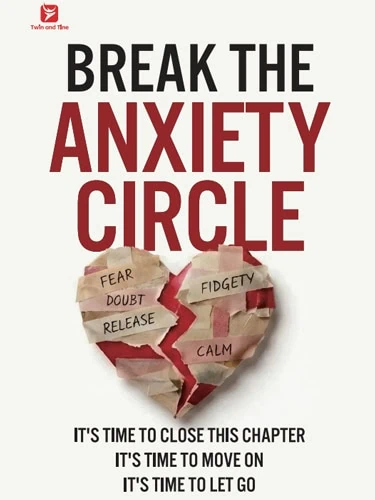
The book is especially relevant when overanalyzing becomes part of everyday life. It explores how people can get pulled into replaying the past, anticipating problems that have not happened, worrying about how others see them, or trying to think their way out of uncertainty.
Several parts of the book connect directly with this experience:
- Breaking recurring thought loops: Learn to recognize when thinking has stopped being useful and has turned into repetition.
- Working with anxiety triggers: Notice the situations that tend to send your thoughts into overdrive before the spiral becomes harder to interrupt.
- Letting go of old mistakes: Stop treating every past decision as something that still needs to be mentally repaired.
- Reducing approval-driven thinking: Understand how people pleasing and fear of judgment can make ordinary interactions feel much more important than they are.
- Building steadier self-trust: Make decisions without demanding absolute certainty before allowing yourself to move on.
One of the book’s strengths is that it connects these patterns instead of treating them as unrelated problems. You may think you are simply “overthinking a conversation,” but underneath that habit could be fear of rejection, difficulty trusting yourself, or a strong need to know exactly what another person thinks.

Break the Anxiety Circle
Miles CarterA mental reset for people trapped in the overthinking loop. Understand why your mind won’t stop racing — and how to break free from anxiety, people-pleasing, and emotional exhaustion.
That broader view makes Break the Anxiety Circle useful for readers who have already realized that telling themselves to “stop thinking so much” does not change anything. The book gives them a way to understand what keeps the mental cycle running and where they can start interrupting it.
Let the Thought End Without Getting a Perfect Answer
Some situations will never give you complete certainty. You may never know exactly what another person meant, whether you made the perfect choice, or how a different decision would have changed things.
At some point, you have to decide whether more thinking is actually helping. You can learn from the experience, take the next practical step, and allow the unanswered parts to remain unanswered.
That is a very different kind of confidence from feeling certain about everything. It is trusting that you can handle an imperfect answer without needing to mentally revisit it all night.
If you found this helpful, these books go deeper into the same themes.



Break the Anxiety Circle
$19.90

From Debt to Wealth
$19.90

