Peaceful Parenting Is Built in the Small Moments
A calmer home is usually not created by one big parenting decision. It comes from what happens during ordinary moments: how you respond when your child ignores a reminder, what you do when homework turns into an argument, and how you handle a meltdown when you are already tired.
Parents often know they want to be patient, but knowing that and actually staying patient are two different things. Repeated resistance can wear down even a well-intentioned parent, especially when the same conflicts happen every day.
That is why books for peaceful parenting habits can be more useful when they focus on what parents actually do at home. The goal is not to create a household where nobody ever gets upset. It is to build patterns that make difficult moments less likely to spiral.

What Do Peaceful Parenting Habits Look Like?
Peaceful parenting does not mean giving children whatever they want or avoiding boundaries. Children still need rules, routines, and consequences. What changes is how those expectations are communicated and how much emotional pressure surrounds them.
A few habits can make a noticeable difference:
- Pause before correcting. Not every mistake needs an immediate reaction.
- Keep important boundaries consistent. Children cope better when expectations do not change according to the parent’s mood.
- Let children handle appropriate problems themselves. Helping is useful, but taking over every difficulty can create more dependence.
- Notice your own emotional state. A tired parent may react to ordinary resistance much more strongly than they would on a better day.
These are not dramatic changes, but they can gradually affect the tone of an entire household.
1. The Parent You Aspire to Be by Miles Carter
The Parent You Aspire to Be focuses on the everyday parenting patterns that can either reduce tension or keep it going. Its chapters cover situations such as meltdowns, procrastination, unwillingness to study, rude language, lying, picky eating, fear of failure, overreminding, constant correction, and overprotection.

What makes the book particularly relevant to peaceful parenting is its attention to the parent’s response as well as the child’s behavior. When a child refuses to cooperate, it is easy to focus entirely on getting the child to change. The book asks parents to look at the interaction itself and consider whether their current approach is creating more resistance.
Its chapter on The Best Parents Are Firm and Kind: Kind Parenting With Firm Boundaries is especially useful for parents who feel caught between strictness and permissiveness. A calm approach does not require giving up authority. You can make an expectation clear while still recognizing that your child may be frustrated, disappointed, or upset.
The book also looks closely at habits that can quietly exhaust parents, including overreminding, constant correction, and stepping in whenever a child encounters a problem. These behaviors often come from concern, but doing everything for a child can leave parents mentally responsible for every small part of the day.

The Parent You Aspire to Be
Miles CarterPractical guidance for tantrums, backtalk, lying, screen addiction, emotional outbursts, and everyday parenting struggles.
Another important theme is emotional regulation. Children Learn Calm From Parents’ Behavior and How To Handle Your Anxiety in Parenting both point to something parents sometimes overlook: children experience the emotional atmosphere created by adults. A parent does not need to be perfectly calm, but learning to slow down before reacting can change the way a difficult situation develops.
For readers searching for books for peaceful parenting habits, The Parent You Aspire to Be offers practical guidance for building a family routine that is firm enough to provide structure without turning every disagreement into a battle.
2. How to Talk So Kids Will Listen & Listen So Kids Will Talk by Adele Faber and Elaine Mazlish
How to Talk So Kids Will Listen & Listen So Kids Will Talk approaches peaceful parenting through communication. The book focuses on helping parents acknowledge children’s feelings, encourage cooperation, set limits, and handle conflict in ways that do not rely on constant criticism.
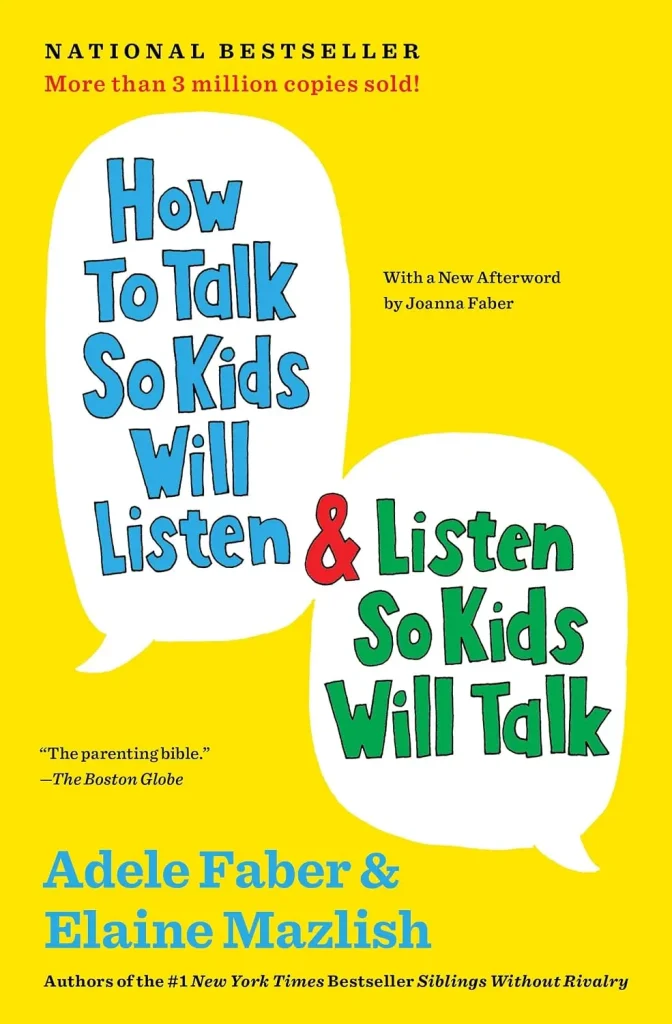
This is especially useful when the same conversations happen over and over. Parents may feel they have explained the rule perfectly, while the child feels that nobody is listening to what they are trying to say. Changing the quality of the interaction can sometimes make more difference than repeating the instruction yet again.
Its practical communication approach makes it a natural choice for families who want less arguing without giving up structure.
3. The Whole-Brain Child by Daniel J. Siegel and Tina Payne Bryson
The Whole-Brain Child takes a developmental approach to children’s emotions and behavior. It explores why children can become overwhelmed and how parents can respond in ways that support emotional development while still providing guidance.
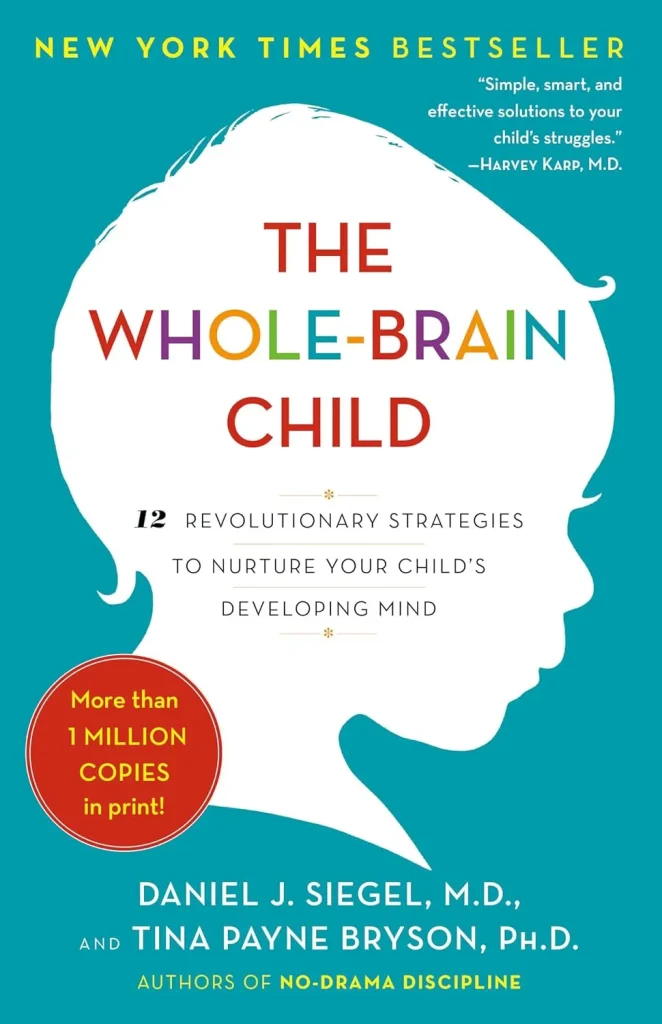
This perspective can be particularly useful during transitions, disappointments, and other moments when a child’s reaction seems much bigger than the situation itself. Understanding what may be happening underneath the behavior can make it easier to respond thoughtfully instead of reacting only to what is happening on the surface.
The book gives parents another way to think about emotional moments: not simply as behavior that needs to stop, but also as opportunities for children to gradually learn how to handle strong feelings.
Peaceful Parenting Still Includes “No”
A peaceful household is not one where children never hear no. In fact, clear boundaries often make family life calmer because children know what to expect.
The difference is whether a boundary is delivered through repeated threats, shouting, and frustration or through a steady response that does not need to become bigger every time a child pushes back.
The Parent You Aspire to Be is particularly useful here because it does not treat kindness and firmness as opposites. Parents can stay warm while keeping a limit in place.
Small Habits Become the Family Atmosphere
Parents often look for one technique that will transform the whole household, but family dynamics usually change more gradually. One less unnecessary argument, one fewer reminder, one moment where a parent pauses instead of reacting sharply — these things may seem minor on their own.
Over time, however, those changes affect what children come to expect from interactions with their parents. They also give parents more room to respond thoughtfully instead of feeling as though every day is another series of battles.
For families looking for books for peaceful parenting habits, these three books approach the subject differently. The Parent You Aspire to Be focuses on practical behavior, emotional regulation, boundaries, and independence; How to Talk So Kids Will Listen & Listen So Kids Will Talk centers on communication; and The Whole-Brain Child explores children’s emotional development.

