I still remember the afternoon my daughter came home from school, dropped her backpack by the door, and walked past me without a word. I asked how her day went. Nothing. I asked if she wanted a snack. A shrug. I asked if something happened. She looked at me the way you look at a stranger on a bus.
That was the first time I really noticed the child emotional shutdown signs in front of me, and I had no idea what to do with them.
For weeks I had been reading it as rudeness. Maybe defiance. A phase. Then one night, after she fell asleep, I sat in the kitchen and counted backward through the month. The silence had started small. Shorter answers. Fewer questions. Then one day, no answers at all. The quiet had been building for a while, and I had missed it.
Quick Answer: What are child emotional shutdown signs?
They are the quiet signals that a child has gone flat to protect themselves. Shorter answers, fewer questions, a blank face, and a sudden calm where there used to be fight. The child is not being rude. They are retreating.
What Do These Signs Actually Look Like at Home?
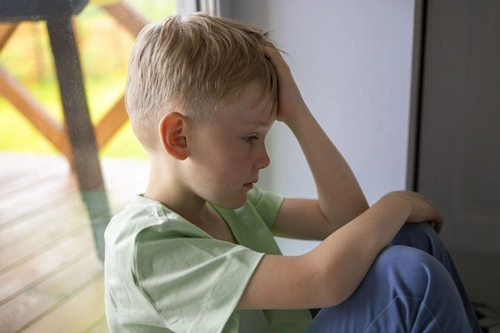
They rarely look dramatic. That is the problem. A child in shutdown does not usually slam doors or cry loudly. They go flat. The face relaxes into nothing. The voice drops to a monotone, or disappears entirely. They may still eat, still do homework, still say fine when you ask. But the light behind the eyes is off, and you feel it more than you see it.
In our house, the signs came in a specific order.
| Order | What I Noticed |
|---|---|
| 1 | She stopped asking me questions |
| 2 | She chose the corner of the couch instead of the middle |
| 3 | She said I don’t know to almost everything |
| 4 | She stopped fighting with her brother |
For a kid who argues about the last dumpling, sudden peace is not peace. It is retreat.
Other parents describe similar patterns. One mother told me her son started lining up his shoes perfectly by the door, over and over. Another said her daughter began sleeping with the lights on again at age nine, after two years of fine. The shape changes. The flatness stays.
Why Does My Child Go Quiet Instead of Talking?
Here is what I have come to believe, mostly from watching my own kids and talking to a lot of other parents at the school gate. Shutdown is a form of protection. When a feeling gets too big, or too confusing, or has been ignored too many times, a child may decide that feeling it is not safe. So they put it somewhere. The body stays. The feeling goes underground.
This is not the same as a child who is simply tired or hungry. Those kids bounce back after a snack and a nap. A child in shutdown does not bounce back after a snack. They stay flat for days.
I also learned something uncomfortable about my own part in it. During those weeks, I had been busy with work, and every time she started to say something hard, I half-listened while checking my phone. She tried three or four times. Then she stopped trying. Children do not usually announce that they are giving up on being heard. They just stop.
One thing I noticed. The louder I pushed for answers, the quieter she got. The pressure itself was feeding the shutdown. I had to stop asking and start being available.
How Do I Help My Child Open Up?
The turning point for us was not a big conversation. It was a parking lot. I picked her up from a birthday party, and instead of asking anything, I just said, I missed you today. She stared out the window for a full minute. Then she said, Mia didn’t sit with me at lunch. That was it. That was the whole thing. But it was the door opening.
Here is what worked, and what I would tell any parent in the same spot.
Stop asking direct questions. What’s wrong puts a child on the spot. Try sitting nearby and saying nothing. Or say something small about your own day. Let them come to you sideways.
Lower the bar for what counts as talking. A grunt is communication. A shrug is communication. Treat every small signal as a win. Do not demand more.
Pick a low-pressure moment. Car rides, walks, dishes, bedtime. Side by side beats face to face for a shut-down kid. Every time.
Name the silence, not the problem. You have been quiet lately. I am here when you want to talk. That lands better than you need to tell me what is going on.
Do not punish the flatness. A child who is already protecting themselves does not need a consequence on top. They need a safe place to land.
The Two-Chair Check-In
I made this up out of desperation, and it stuck. We call it the Two-Chair Check-In.
After dinner, we sit in two chairs facing the same direction, not each other. Usually the couch and the armchair, both pointed at the window. I go first. I say one true thing about my day, including one feeling. I felt embarrassed in a meeting today. Then I stop. No questions. She can share, or she can pass. Passing is allowed, every single time.
The rule that matters most is this. I never comment on what she shares. No see, that wasn’t so bad. No advice. No fixing. I just say thank you for telling me, and then we sit for one more minute in silence.
The first three times, she passed. The fourth time, she said, I felt left out at recess. I almost broke the rule and jumped in with solutions. I am glad I did not.
For younger kids, ages four to seven, the same ritual works with a stuffed animal as the talking chair. The child speaks through the bear. Bear says he felt scared at daycare. It sounds silly. It also works, because the pressure is on the bear, not the child.
Quick age note.
| Age | How Shutdown Shows Up |
|---|---|
| Preschool | Clinginess or sudden baby talk |
| Ages 8 to 12 | Perfectionism or over-compliance |
| Teens | Blank phone face and one-word answers |
The form changes. The flatness does not.
When Should I Worry?
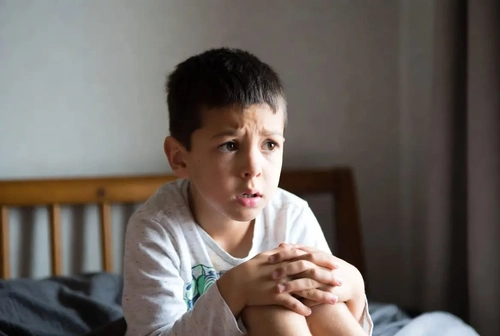
I am not a doctor, and this is not medical advice. But here is the line most parents I know use. If the flatness lasts more than a couple of weeks, if eating or sleeping changes, if your child stops doing things they used to love, or if they say anything about not wanting to be here, that is when you bring in help. Talk to your pediatrician. Ask the school counselor. You are not overreacting. You are paying attention.
For everything short of that line, the work is slower and quieter than most parenting books suggest. It is mostly showing up, shutting your own mouth, and waiting. Not forever. Just longer than feels comfortable.
What If My Child Shuts Down Only With Me?
This one hurt to learn. For a while, my daughter was chatty at school and silent at home. I took it personally. A friend who teaches third grade told me the opposite is common. Kids hold it together all day, and home is where the seams show.
The shutdown at home is often a strange kind of trust. You are the safe one. It does not feel like a compliment. It is one.
So if your child is fine for the teacher and a stone for you, try to hear it as I can fall apart here. Then make falling apart a little safer. Lower your voice. Sit down. Stop moving. Let the quiet be shared instead of fought.
FAQ
Is emotional shutdown the same as being introverted?
No. Introversion is a personality style. Shutdown is a stress response. An introverted child still connects in their own way. A shut-down child has gone flat.
How long does shutdown usually last?
It depends on the cause and the support. Some kids come back within days. Others take weeks. If it lasts more than two weeks, talk to a professional.
Should I keep asking my child what’s wrong?
No. Direct questions often make it worse. Sit nearby. Do something together. Let them come to you sideways.
What if my child shuts down only at home?
That is common. It often means home is where they feel safe enough to fall apart. Try to see it as trust, not rejection.
When should I get professional help?
If the flatness lasts more than a couple of weeks, if eating or sleeping changes, or if your child talks about not wanting to be here, reach out to a doctor or counselor.
A Closing Thought
That afternoon by the backpack still sits with me. Not because I failed. Because I almost walked past her.
If you are reading this, you probably did not walk past yours. You stopped. You looked. That counts for more than you know.
References
- Siegel, D. J., & Bryson, T. P. The Whole-Brain Child. Bantam, 2011.
- Ginott, H. G. Between Parent and Child. Revised edition, Harmony, 2003.
- American Academy of Pediatrics. “How to Support Your Child’s Mental Health.” HealthyChildren.org.

