I downloaded this book at 2 a.m. on a Tuesday, the kind of night where your body is exhausted but your brain refuses to clock out. I had spent the last hour replaying a conversation from three days ago, analyzing every pause, every word choice. My chest was tight. My stomach was churning. And I thought, again: why can’t I just stop?
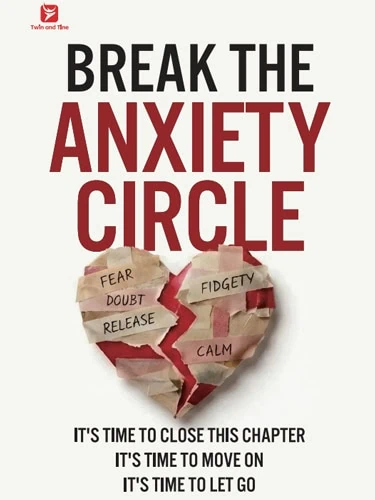
That’s the exact moment Miles Carter’s Break the Anxiety Circle speaks to. It doesn’t promise to erase anxiety. It promises something smaller and more honest: a way to stop letting it run the show.
The Loop That Feels Like Home
Carter opens with a confession that made me trust him immediately. He still catches himself spiraling, even after years of work. He doesn’t stand above the reader handing down techniques. He walks beside you and admits he still trips.
His central argument is simple: anxiety is not a character flaw. It’s a habit your brain wore into itself, a groove that once kept you safe. The overthinking, the self-blame, the endless replaying of conversations, these aren’t signs that you’re broken. They’re signs that your mind learned to protect you.
I underlined that passage twice. I had spent years believing my anxiety was a personal failure. Carter reframes it as a survival strategy that outlived its purpose.
The Chapter That Taught Me to Ask Better Questions
The book moves through seven themes: self-blame, indecision, people-pleasing, boundaries, emotional regulation, past regrets, and building a calmer relationship with your own mind.
The people-pleasing chapter hit hardest. Carter asks one question I now use almost daily: whose voice is this, mine or theirs? When I catch myself saying yes to something I dread, I pause and ask it. Most of the time, the answer is theirs.
He also offers a practical tool for overthinking: write down the worst-case scenario until it shrinks to its actual size. I tried it. My catastrophic prediction turned out to be something I could handle. The relief was physical.
The Quiet Craft of a Healing Book
Carter’s writing is plain and direct. No jargon. No ten-step frameworks. His method is simple: name the feeling, question its origin, choose a different response. It sounds too basic, but that’s the point. When you’re in the middle of a spiral, you don’t need complexity. You need one small thing you can actually do.
His imagery stays with you. He describes anxiety as a rocking chair. It gives you something to do, but it gets you nowhere. That image captures the exhausting futility of overthinking better than any clinical explanation I’ve read.
The book also covers boundaries, which surprised me. I expected breathing exercises. Instead, Carter writes about protecting your peace without building walls so high that no one can reach you.
What This Book Doesn’t Do
It doesn’t promise to eliminate anxiety. It doesn’t pretend you’ll never spiral again. Some chapters feel repetitive. Carter circles back to the same core ideas. But maybe that repetition is deliberate. We overthinkers need to hear things more than once before we believe them.
The book also assumes a certain level of stability. If you’re in acute crisis, this isn’t a life raft. It’s more like a swimming lesson. It requires some baseline capacity to sit with discomfort without being overwhelmed.

Who Needs This Book Most
If you’re the person who re-reads text messages before sending them, this book is for you. If you’re the person who lies awake at 2 a.m. replaying conversations that no one else remembers, this book is for you. If you’re the person who apologizes for existing, this book is for you.
It’s also for anyone who has tried to meditate their way out of anxiety and found that the anxiety just sat there, waiting. Carter offers something more practical than transcendence. He offers the dignity of small choices.
The Lesson I’m Still Learning
I finished this book on a Sunday morning, coffee going cold beside me. I didn’t feel transformed. I felt something quieter. I felt permission to be imperfect, to stop performing for an audience that was mostly in my head.
Carter writes near the end that healing isn’t about becoming a different person. It’s about becoming more of who you already are, minus the noise. I don’t know if I’m there yet. But I’m closer than I was.
Maybe that’s what this book really offers. Not a cure. A ceasefire. A chance to put down the weapon you were aiming at yourself.
There’s a line early in the book I keep coming back to: “You are not your thoughts. You are the one who notices them.” Maybe that’s what healing really is. Not a mind that finally goes quiet, but a person who learns to sit with the noise and stop mistaking it for the truth.
I still have anxious moments. But I no longer believe those moments are who I am. They’re weather, not climate. And that shift, small as it sounds, has changed everything.

