When You Have the Answer but Cannot Get Yourself to Say It
Someone asks what you think during a meeting, and you know exactly what you would like to say. Then you start wondering whether your idea is worth mentioning, whether someone might disagree, and whether you should phrase it differently.
By the time you have finished editing the sentence in your head, the conversation has moved on. Later, you think of the response you actually wanted to give and wonder why saying it felt so difficult in the moment.
This kind of hesitation is frustrating because the problem is not always a lack of ideas. Often, there are simply too many filters between the thought and the words.

Why Do We Overthink Before Speaking?
Speaking requires a certain amount of spontaneity. If you try to predict every possible reaction before saying anything, your attention becomes divided between communicating and monitoring yourself.
You may be checking:
- whether your opinion sounds intelligent enough;
- whether the other person will disagree;
- whether you might offend someone;
- whether your wording is precise enough;
- whether you should wait for a better moment.
Some of those considerations are useful. The trouble begins when they become so constant that you cannot speak until everything feels completely safe.
Give Yourself a Clear Starting Point
One way to reduce hesitation is to stop trying to prepare the entire conversation before you speak. Start with the central point you actually want to communicate.
You can add context once the other person responds. You can clarify something if they misunderstand. You can even change your wording halfway through if you realize there is a better way to explain it.
Real conversation allows all of that. You do not have to produce a finished paragraph in your head before opening your mouth.
Say It Right Every Time by Miles Carter
Say It Right Every Time focuses directly on the communication habits that make it easier to speak with confidence under pressure. Rather than treating confident expression as a personality trait, the book breaks it into practical skills.
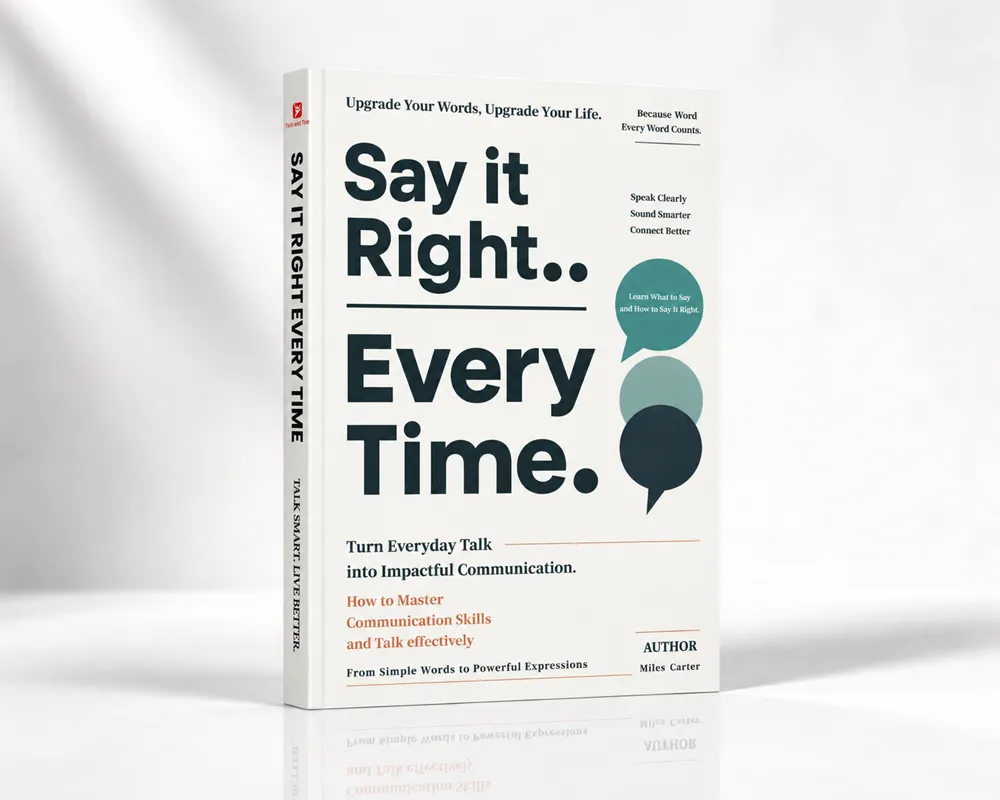
Its chapters Speak With Credibility and Kindness and Confidence in Your Voice, Even Under Pressure are especially relevant for people who become hesitant when they feel judged. The book encourages readers to focus on expressing what they actually mean instead of constantly adjusting their message to predict every possible reaction.
It also explores Express Your Honest Opinion Without Alienating Others. This matters because overthinking before speaking often comes from wanting to be both completely honest and completely safe from disagreement. Those two goals cannot always be guaranteed, but you can learn to communicate honestly without being careless about how your words affect others.
Another chapter, Share Ideas So Others Listen, focuses on making your thoughts easier for other people to follow. Sometimes hesitation is partly caused by not knowing how to organize a complicated idea. When you have a clearer structure for what you want to say, speaking becomes much less intimidating.
The book also addresses From People-Pleasing to Owning Your Voice, which connects the communication problem with a deeper habit. If you are constantly worried about keeping other people comfortable, every sentence can feel like a decision about whether they will approve of you.
For readers searching for a book on how to stop overthinking before speaking, Say It Right Every Time offers a practical way to move from endless internal editing toward clearer, more confident expression.

Say it Right..Every Time.
Miles CarterPractical communication tools for the moments that matter — say what you mean, calmly and confidently.
Confidence Does Not Mean Having No Filter
The goal is not to say whatever comes to mind without thinking. Good communication still requires judgment, especially when a subject is sensitive.
The useful change is learning when enough thought is enough. Once you know your main point and have considered the obvious implications, continuing to edit the sentence may not make the communication better.
Sometimes the most confident thing you can do is simply start speaking.
Let the Conversation Help You
A common misconception is that you need to know exactly what you are going to say before the conversation begins. In reality, other people’s responses give you information that you cannot have in advance.
They may ask a question that helps you clarify your idea. They may disagree and give you something new to consider. They may simply understand immediately and move the conversation forward.
That is why communication is an exchange rather than a performance. You do not have to control the whole thing from inside your head.
Say It Before You Over-Edit It
You will still have moments when you hesitate. Everyone does. But the more comfortable you become with speaking before every possible uncertainty has been resolved, the less often a good thought will disappear simply because you were too busy checking it.
Say It Right Every Time helps build that confidence through practical work on voice, structure, honesty, disagreement, and communication under pressure.
Did this article help you see things differently? Our books turn helpful ideas into practical tools you can return to anytime.




Imagine The Other Half
$24.99

