When the Idea Is Clear in Your Head but Messy Out Loud
You are explaining something you have thought about carefully, but halfway through the conversation you realize you have lost the thread. You add more details, go back to an earlier point, then try to explain the whole thing again because the other person still does not seem to understand.
This can be especially frustrating when you actually know the subject well. The problem is not always knowledge. Sometimes your thoughts simply exist in a much more complicated form in your head than they need to be when you communicate them.
Learning to articulate your thoughts clearly is partly about finding a structure that allows another person to follow your thinking without having to reconstruct it themselves.

Clear Expression Starts With Knowing Your Main Point
People often begin explaining an idea before they have decided what the other person actually needs to understand. That can lead to too much background information, repeated points, and sentences that become harder to follow as they get longer.
Before speaking, it can help to identify one simple question: What is the main thing I want this person to understand?
Once that is clear, the supporting details become easier to choose. You do not need to say everything you know. You need to include what helps the other person understand the point.
A Few Habits Make Ideas Easier to Follow
Clear expression does not require formal speaking skills. It often comes down to a few practical habits:
- Lead with the point. Give people a sense of where you are going before adding background.
- Group related ideas together. Avoid jumping between unrelated details.
- Use examples when the idea is abstract. A concrete situation can make a complicated point much easier to understand.
- Stop when the point is clear. More explanation is not always more clarity.
These habits become especially valuable at work, where people often have limited time to understand an idea and decide what to do with it.
1. Say It Right Every Time by Miles Carter
Say It Right Every Time focuses heavily on the gap between having an idea and expressing it in a way that other people can actually follow.
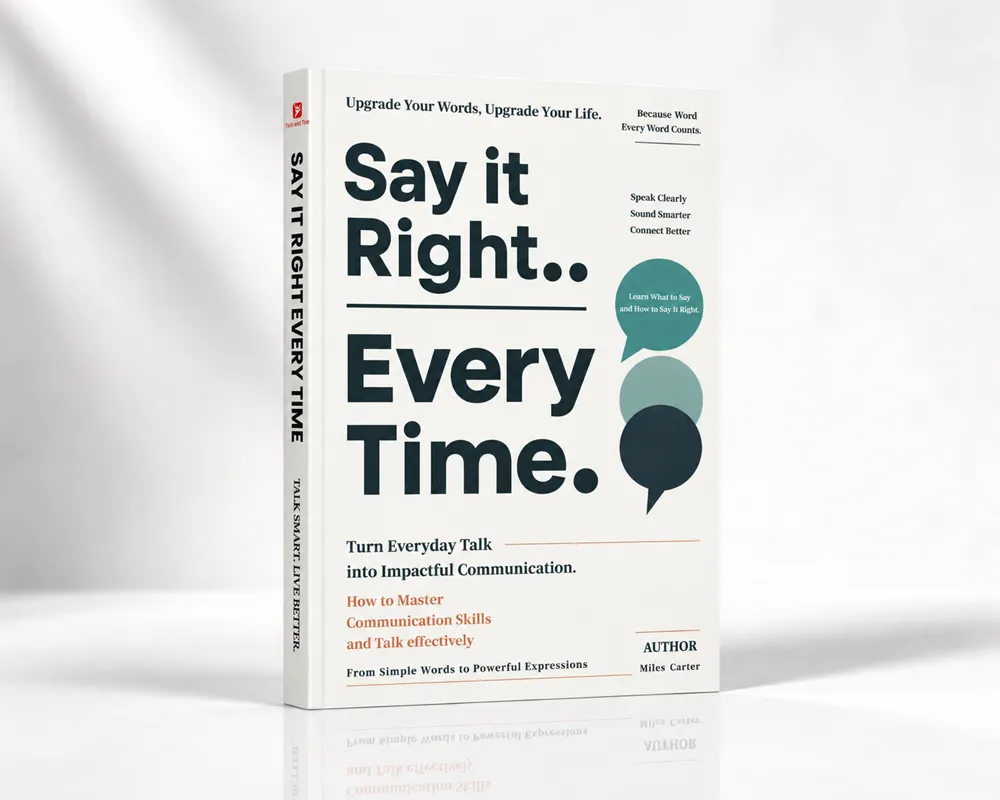
The chapter Share Ideas So Others Listen is directly relevant to this problem. It looks at how the way you present an idea can influence whether people understand and engage with it. Instead of trying to sound more complicated, the focus is on making your message easier to receive.
The book also covers Speak With Credibility and Kindness, which adds another dimension to clear expression. People are more likely to listen when your message feels confident without becoming dismissive or overly forceful.
Another important section is Express Your Honest Opinion Without Alienating Others. Being able to articulate your thoughts clearly is not just about organizing facts. Sometimes the hardest ideas to express are personal opinions, especially when you know the other person may disagree.
The chapter Say “I” Instead of “You”—Here’s Why It Works is particularly practical when emotions are involved. Changing the way you frame a statement can help keep the focus on your own experience rather than making the other person feel immediately accused.

Say it Right..Every Time.
Miles CarterPractical communication tools for the moments that matter — say what you mean, calmly and confidently.
The book also addresses Confidence in Your Voice, Even Under Pressure. This matters because even well-organized thoughts can disappear when you become nervous, defensive, or overly concerned about how you are being perceived.
For readers looking for books on how to articulate your thoughts clearly, Say It Right Every Time offers a practical combination of structure, confidence, emotional awareness, and everyday communication skills.
2. Think Faster, Talk Smarter by Matt Abrahams
Think Faster, Talk Smarter focuses on communicating effectively when you do not have much time to prepare. Its emphasis on spontaneous speaking is particularly relevant for people who know what they want to say but struggle to organize their thoughts quickly.

The book explores ways to structure responses, reduce nervousness, and communicate ideas more clearly in real-time situations. That makes it useful for meetings, presentations, questions, and other moments when you cannot stop to write out a perfect response.
3. Made to Stick by Chip Heath and Dan Heath
Made to Stick takes a different approach by examining why some ideas are easier for people to remember than others. Although it is not a communication book in exactly the same way as the first two, its lessons can help readers understand how to make information clearer and more memorable.

The emphasis on simplicity, concrete examples, and useful structure can be applied when you need someone to understand a complex idea quickly.
For people whose problem is not speaking itself but getting an important idea across, that perspective can be especially useful.
Clear Does Not Mean Simplified to the Point of Meaninglessness
There is a difference between making an idea easier to understand and stripping it of everything important. Good articulation keeps the substance while removing unnecessary complexity.
That often requires knowing what to leave out. Once you understand the main point, not every supporting detail deserves equal attention.
Say It Right Every Time is useful here because it treats communication as a process of deciding what another person needs to hear, not simply finding more words to explain yourself.
Practice Explaining Ideas Before They Become Complicated
One useful exercise is taking something you understand well and explaining it in a few sentences. Notice where you start wandering, adding unnecessary background, or assuming the other person knows more than they do.
You can then try again with a simpler structure: the main idea, one useful detail, and one example.
The goal is not to turn every conversation into a presentation. It is to become comfortable enough with structure that your thoughts remain clear even when you are speaking spontaneously.
Three Books for Clearer Self-Expression
Say It Right Every Time combines clear expression with confidence, honest opinions, and communication under pressure. Think Faster, Talk Smarter focuses more on speaking clearly when you have little preparation time, while Made to Stick explores how to make ideas easier for other people to understand and remember.
For anyone searching for books on how to articulate your thoughts clearly, these books approach the problem from different angles. The common thread is simple: your ideas do not need to become simpler; your way of organizing and expressing them needs to become easier for another person to follow.
Did this article help you see things differently? Our books turn helpful ideas into practical tools you can return to anytime.



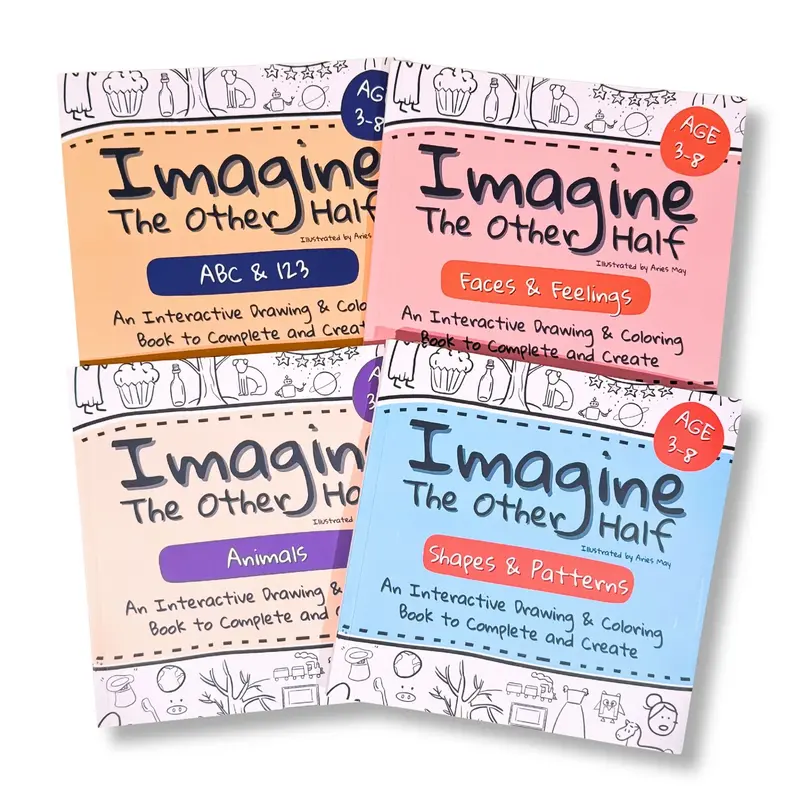
Imagine The Other Half
$24.99

