The Conversation Ended Months Ago, but You Are Still Having It
A few months ago, Sarah said something during a difficult conversation that she immediately wished she could take back. The other person accepted her apology, the situation moved on, and life returned to normal. But Sarah kept replaying the exchange whenever she was alone.
She thought about the sentence she should have used instead, imagined how the other person might have felt, and wondered whether the whole situation would have turned out differently if she had handled one moment better.
There was no new information in any of these replays. She simply kept reopening the same file in her mind.
That is the frustrating part of dwelling on past mistakes. Reflection can teach you something, but repeated replay often gives you the feeling that you are working on the problem when you are actually reliving it.

Reflection and Rumination Are Not the Same Thing
Looking back can be useful when it leads to a clear lesson. You realize what you would do differently, take responsibility for your part, and use that knowledge later.
Dwelling starts to take a different shape when the same thoughts return without producing anything new. You keep asking what you should have said, what the other person was thinking, or how different the outcome might have been.
A simple test can help: Has this thought changed what I know or what I can do? If the answer is no, another round of analysis may not be helping you.
Do Not Try to Rewrite the Past in Your Head
One reason people get stuck on mistakes is the feeling that there must be a perfect explanation somewhere in the memory. If you can analyze the event carefully enough, maybe you will finally understand why it happened or find the version of yourself who could have prevented it.
But the past does not become more controllable because you remember it in greater detail.
A more useful approach is to separate the parts that are still actionable from the parts that are finished. You might still need to apologize, change a habit, repair a relationship, or learn something from what happened. Once those things have been addressed, continuing the mental replay does not give you another opportunity to rewrite the event.
What to Do When the Same Memory Comes Back
You do not need to fight the memory every time it appears. Try noticing what your mind is asking you to do with it.
If the thought is, “I should have handled that differently,” ask whether there is a lesson you have not yet applied. If there is, write it down or decide what you will do differently next time. If there is not, you may simply be experiencing the familiar urge to replay the event.
That distinction matters because you are no longer trying to erase the memory. You are deciding whether it still needs your attention.
Break the Anxiety Circle by Miles Carter
Break the Anxiety Circle explores several patterns that can make past mistakes feel emotionally current long after the original event has ended. Its discussion of regret, overthinking, self-worth, emotional patterns, and letting go is particularly relevant to people who keep returning to old situations.
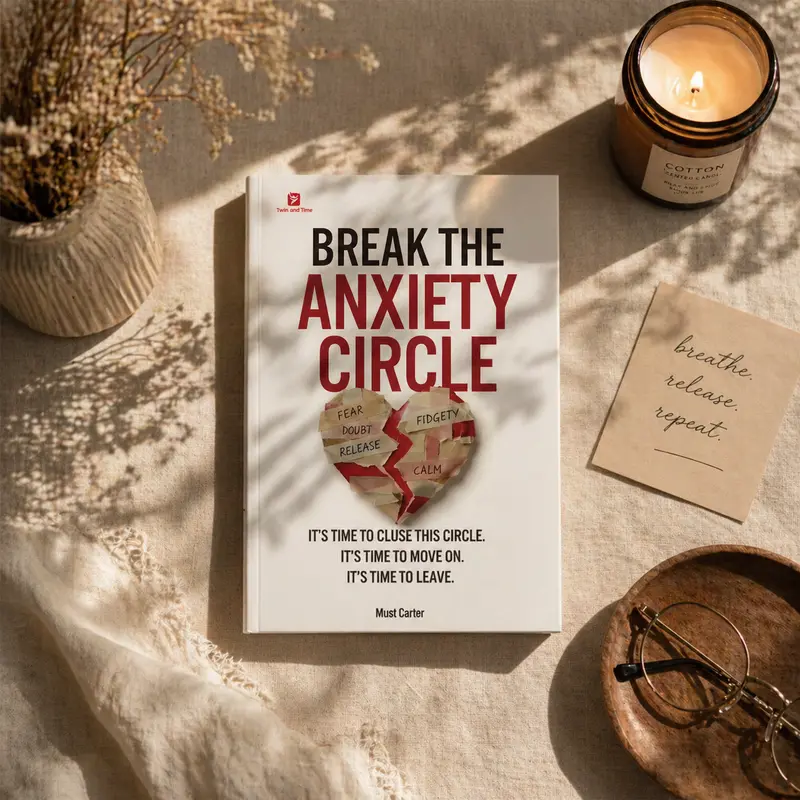
The book looks at how the mind can turn a past event into an ongoing source of anxiety. A mistake becomes evidence that you cannot trust yourself. Regret leads to more analysis, the analysis creates more self-doubt, and the self-doubt encourages another trip back through the same memory.
Instead of telling readers to forget the past, the book focuses on changing what happens when the past comes to mind. That includes recognizing when reflection has become repetitive, separating a lesson from self-punishment, and learning to stop demanding a different ending from something that has already happened.
Its broader themes also matter here. People pleasing can make you obsess over how another person judged your behavior. Low self-worth can turn an ordinary mistake into proof that you are fundamentally flawed. Difficulty with uncertainty can keep you searching for an explanation that may never feel complete.

Break the Anxiety Circle
Miles CarterA mental reset for people trapped in the overthinking loop. Understand why your mind won’t stop racing — and how to break free from anxiety, people-pleasing, and emotional exhaustion.
That is why Break the Anxiety Circle is useful for more than simple regret. It helps readers understand why certain memories stay emotionally active and how those memories can become part of a larger cycle of overthinking.
Let the Lesson Survive Without Keeping the Pain
You do not have to forget a mistake to move on from it. In many cases, the healthier goal is to keep what the experience taught you and stop carrying every emotional detail along with it.
Maybe you learned that you need to speak up earlier, think before responding, or stop ignoring a boundary. That lesson can stay with you even when the painful replay no longer needs to.
The past is useful when it helps you live differently now. It becomes exhausting when it demands that you keep living there.
You Are Allowed to Become Someone Different
A past mistake can feel permanent because you remember the person you were when it happened. But people change precisely because they make choices, learn from them, and behave differently later.
Break the Anxiety Circle encourages that shift away from treating the past as a fixed identity. A poor decision can be part of your history without becoming the definition of who you are.
Once that distinction starts to settle in, the memory can remain without controlling the present.
If you found this helpful, these books go deeper into the same themes.



Break the Anxiety Circle
$19.90

From Debt to Wealth
$19.90

