The Decision Was Already Made, but You Keep Looking at It
James had spent an evening comparing three different options before choosing one. The choice was reasonable, fit his budget, and solved the problem he was trying to solve. By the next morning, however, he was searching again.
He checked reviews, asked a friend what they would choose, and found two more alternatives he had not considered the night before. The more information he collected, the less certain he felt about the decision he had already made.
This is the strange trap of second-guessing. You keep looking for information because you want to feel more confident, but the search itself creates more possibilities to question.

When Careful Thinking Turns Into a Confidence Problem
Thinking carefully is not a bad thing. The problem begins when you cannot recognize the point at which you have enough information to make a reasonable choice.
Second guessing often sounds like:
“Maybe I missed something.”
“What if the other option would have been better?”
“Should I ask someone else first?”
“I felt good about this yesterday, but maybe I was wrong.”
These thoughts can appear after major decisions, but they also show up in ordinary situations. You reread a message, rethink what you said in a meeting, or wonder whether you should have handled a conversation differently.
The more often you reopen decisions, the harder it becomes to trust the original judgment.
Set a Point Where Thinking Stops
One way to reduce second guessing is to decide what “enough information” means before you start comparing options endlessly.
For a practical decision, that might mean checking a few reliable sources, considering the main alternatives, and then choosing. For a personal decision, it may mean thinking through what matters most to you and accepting that no option can come with a guarantee.
The purpose is not to eliminate uncertainty. It is to stop treating uncertainty as proof that you have not thought hard enough.
Break the Anxiety Circle by Miles Carter
Break the Anxiety Circle is particularly relevant to second guessing because it explores the relationship between anxiety, overthinking, self-doubt, reassurance seeking, and fear of making mistakes.
The book looks at what happens when the mind learns to treat uncertainty as something dangerous. A decision is made, but instead of allowing the process to end, you start checking again. Another possibility appears, and now you feel less certain than before. You look for reassurance, feel better briefly, and then the doubt returns.
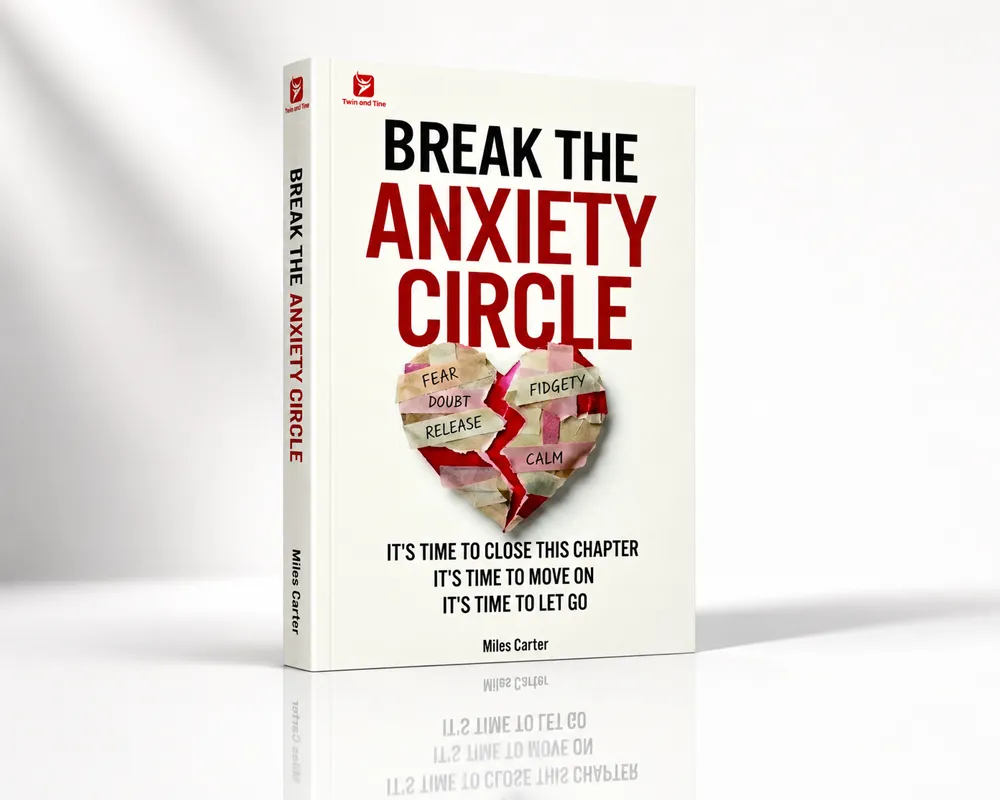
Carter’s approach is to recognize that cycle before it becomes automatic. The book helps readers work on several connected patterns:
- Overthinking decisions: Notice when additional analysis is no longer producing useful information.
- Reassurance seeking: Understand why asking for another opinion can relieve doubt temporarily while weakening self-trust over time.
- Fear of mistakes: Stop treating every imperfect outcome as proof that the original decision was foolish.
- Self-worth and judgment: Separate making a poor choice from believing you are a person who cannot make good choices.
- Letting go: Allow completed decisions and past situations to stay finished instead of repeatedly reopening them.
One of the most useful ideas here is that confidence does not necessarily arrive before the decision. Sometimes you make a reasonable choice first, then develop more trust in yourself by seeing that you can handle whatever happens next.

Break the Anxiety Circle
Miles CarterA mental reset for people trapped in the overthinking loop. Understand why your mind won’t stop racing — and how to break free from anxiety, people-pleasing, and emotional exhaustion.
That is a very different approach from waiting until you feel completely certain. Complete certainty is often impossible, while learning that you can deal with an imperfect outcome is something you can actually practice.
What to Ask Yourself After You Have Chosen
The next time you notice yourself reopening a decision, try asking whether you are discovering something genuinely new or simply trying to remove the last remaining bit of uncertainty.
If new information matters, take it into account. But if you are comparing the same options again because you want a guarantee that you chose perfectly, there may be nothing left to solve.
You can make a reasonable decision and still feel nervous afterward. Those feelings do not automatically mean the decision was wrong.
Trust Is Built Through Small Decisions
Self-trust rarely appears as one dramatic feeling of certainty. It develops through repeated experiences of making choices, handling consequences, adjusting when necessary, and realizing that you can cope even when things do not go exactly as planned.
That is one reason Break the Anxiety Circle connects decision-making with broader patterns such as self-worth, anxiety, and emotional regulation. If every mistake feels threatening, trusting yourself will always feel risky.
As that pressure decreases, decisions can become simpler. You do not need to know that you will make the perfect choice. You only need enough confidence to make a thoughtful one and keep moving.
If you found this helpful, these books go deeper into the same themes.



Break the Anxiety Circle
$19.90

From Debt to Wealth
$19.90

