The Conversation Suddenly Has Nowhere to Go
At a work event, James had been talking comfortably with a colleague he had only met once before. They talked about the office, weekend plans, and a recent project. Then the obvious topics ran out.
There was a pause.
James immediately started searching for another question. Nothing sounded natural. He asked something random, the answer was short, and the conversation became even more awkward. He walked away thinking he simply was not good at small talk.
But the problem was not really the silence. It was his belief that silence meant he had to fix something immediately.

A Pause Is Not Automatically Awkward
Conversations naturally slow down. Two people finish a topic, think about what was just said, or simply take a moment before continuing.
The pressure starts when you interpret that pause as a sign that the interaction is failing. Then you become more focused on finding something to say than on listening to the other person, and that self-consciousness makes the next sentence harder to find.
Instead of trying to eliminate every pause, it helps to notice what is already available in the conversation. Someone has usually mentioned a detail you can explore, an opinion you can respond to, or an experience you can connect with.
What to Do When the Conversation Slows Down
You do not need a collection of emergency conversation starters. A few natural habits are often enough:
- Return to something they mentioned earlier. A small detail can open an entirely new part of the conversation.
- Add your own experience. Sharing something instead of constantly asking questions gives the other person more to respond to.
- Ask a follow-up question with a reason behind it. Questions feel more natural when they connect to what was already being discussed.
- Allow a short pause. Not every silence needs to be rescued.
This changes the way you think about conversation. You are not responsible for producing a new topic every ten seconds. You are participating in an exchange.
Why Constant Questioning Can Make Small Talk Worse
One common attempt to avoid silence is asking question after question. What do you do? Where are you from? How long have you lived here? What do you do for fun?
That can keep words moving, but it does not necessarily create connection. The other person may feel as though they are being interviewed, while you are secretly worried about what to ask next.
Conversation becomes easier when you respond to answers instead of simply collecting them. If someone talks about moving to a new city, for example, there are countless ways to continue without immediately introducing a completely unrelated question.
Say It Right Every Time by Miles Carter
Say It Right Every Time has two chapters that directly address this difficulty: How to Start a Conversation with Anyone and How to Keep the Conversation Going (Even with Strangers).
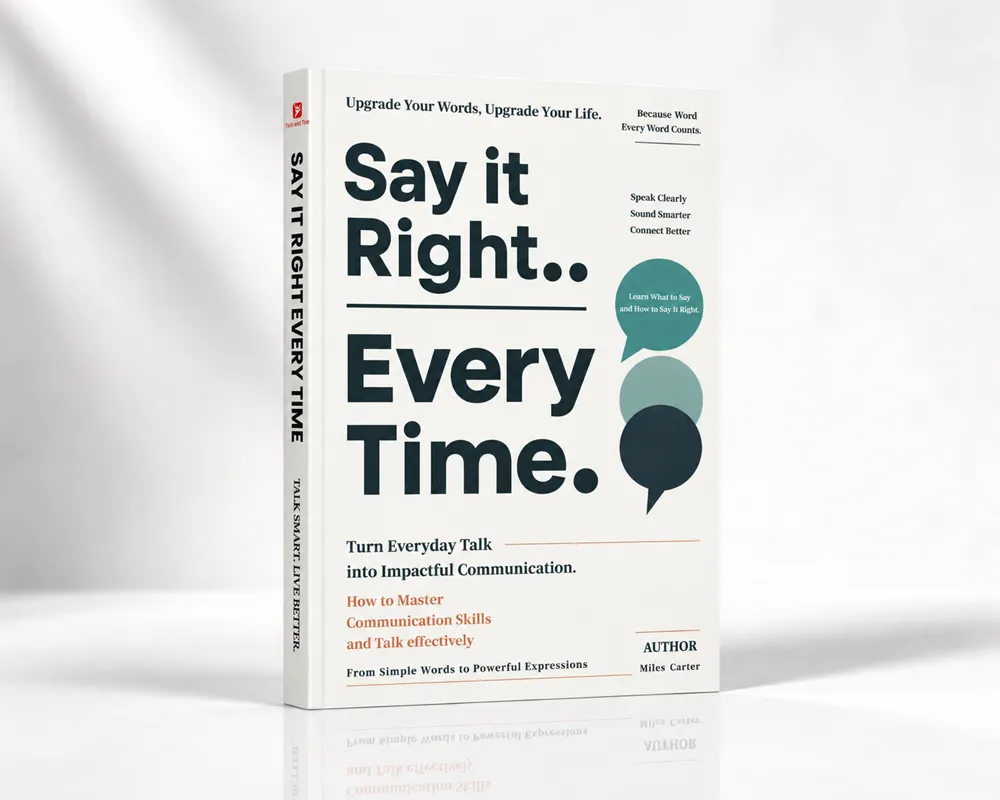
The second chapter is especially relevant because many people are capable of starting a conversation but do not know how to continue once the obvious opening topic disappears. The book focuses on paying attention to what the other person says, responding to details, and creating a genuine back-and-forth rather than trying to perform.
The Echo Technique: How to Make Others Feel Deeply Understood is also useful here. When you reflect something meaningful from what a person just said, you naturally give them another opportunity to continue. You are not inventing a new subject; you are showing that you actually heard what they were telling you.
The book also covers How to Make Someone Feel Great—In Seconds and How to Respond to Compliments in a Way That Connects. These seemingly small interactions matter because everyday conversation often develops through tiny moments of positive response rather than carefully prepared topics.
For anyone searching for a book on how to avoid awkward silences, Say It Right Every Time provides a more useful solution than a list of conversation starters. It teaches you how to stay engaged with the conversation you are already having.

Say it Right..Every Time.
Miles CarterPractical communication tools for the moments that matter — say what you mean, calmly and confidently.
Let Some Conversations End Naturally
Not every conversation needs to last twenty minutes. Sometimes two people have a pleasant exchange and then reach a natural stopping point.
Knowing when to let a conversation end is actually part of social confidence. If you feel responsible for keeping it alive at all costs, you can turn a perfectly normal interaction into something much more uncomfortable.
A brief conversation that ends easily is not a failure. Sometimes it is simply enough.
Stop Treating Silence as Something You Have Done Wrong
The more comfortable you become with pauses, the less pressure you feel to perform. You can listen, think, respond, and allow the conversation to change direction without constantly checking whether everything feels smooth.
That is what makes Say It Right Every Time useful for people who struggle with awkward silences. It is not trying to teach you how to talk nonstop. It helps you become more comfortable participating in conversations so you do not panic the moment the pace changes.
Did this article help you see things differently? Our books turn helpful ideas into practical tools you can return to anytime.




Imagine The Other Half
$24.99

