The other day I came across an old photo on my phone, I stumbled on a photo taken years ago. It showed nothing more than an ordinary subway station — no striking scenery, no one important in the frame. Yet the moment I saw it, I vividly recalled the weather that day, the bread I’d bought on my way home, and even my feelings back then. The photo itself meant little; what it preserved was memory. This feeling came to me often as I read The Memory Chalet. We tend to think of life as something we experience in the present. But memory shapes just as much of who we are.
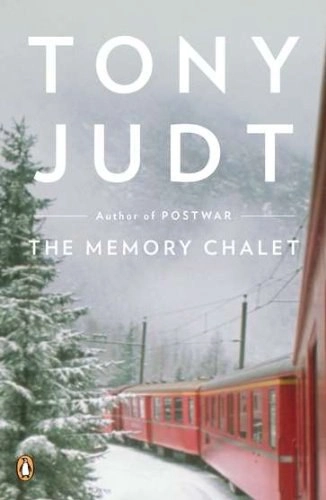
The book was written in the final years of Tony Judt’s life. A historian, he gradually lost his mobility to ALS. The illness stripped away control of his body bit by bit, until even the simplest movements became impossible. Remarkably, this is no memoir of suffering. Judt barely dwells on his condition. Instead, he turns inward to his past. During long sleepless nights, he uses an ancient mnemonic technique to build a “memory chalet” in his mind. Inside it, he stores recollections of childhood, family, travels, reading and post-war Europe, then draws upon these fragments to write.
It made me see that our memories do not follow a strict timeline. He writes about London buses, train rides he loved as a boy, terrible school cafeteria meals, and ordinary people’s lives across post-war Europe. These seemingly unrelated snippets gradually weave together the story of a life. It made me see that our memories do not follow a strict timeline. What stays with us are scents, sounds, familiar streets and quiet, unremarkable moments.
One line stopped me in my tracks:
“Memory is the only way of holding onto the things you love.”
At first, the sentence felt unbearably sad. Years later, I think it is simply accurate. People leave our lives; places become unreachable; even our former selves fade away. All that remains, in the end, is memory.
The book brought back memories of moving out of my college dorm. I stood for a long time in the empty room, certain I would hold onto every detail. Years later, most have grown hazy. I cannot recall what was said at our final class gathering, nor much of the graduation ceremony. Yet I still see the sunset streaming through the window at the end of the hallway, the glow from the convenience store downstairs, and the hum of the printer late at night. Like the episodes in Judt’s book, these trivial things have rooted themselves firmly in my mind.
The Memory Chalet has no continuous plot or dramatic conflicts. It reads like a collection of essays bound together by reminiscence. Readers expecting formal history or a traditional biography may find its pace meandering. Some chapters touch on European politics and history, which may require some patience if the subject is unfamiliar. Even so, this fragmented structure mirrors how real memory works. Our recollections are never linear; they jump, connect and rearrange endlessly.
I came to realize the book is ultimately not about illness or history, but identity. What makes us who we are? When the body fails, the future shrinks, and possessions slip away, what remains to define us? For Judt, the answer is memory. The people, places, books and experiences we carry inside form our inner world.
I didn’t feel particularly sad after reading it. Instead, I began to pay more attention to the small things in life that are often overlooked. Perhaps many years later, we may not remember how many goals we’ve achieved or what accomplishments we’ve made, but we might recall a winter evening street, a long train journey, or a book read at a specific moment. And these seemingly insignificant things may be another kind of life preserved for us by memory.
