You Answered a Simple Question With a Five-Minute Explanation
When her coworker asked why she could not take on another task, Olivia knew the answer immediately: her schedule was already full.
Instead of saying that, she spent several minutes explaining everything she had been working on. She mentioned two deadlines, apologized for being difficult, explained why she normally liked helping, and then offered three alternatives. By the end, she was no longer sure whether she had actually said no.
Over explaining often starts with a reasonable intention. You want to be understood, avoid sounding rude, or make sure the other person knows you are not being unreasonable. But the more you explain, the easier it becomes for the actual message to disappear.

Why Do We Keep Adding More?
People often over explain when they are uncomfortable with another person’s reaction. If you are worried that someone will disagree with you, a short answer can feel too exposed.
So you keep adding context. Then you think of another reason they might question your decision, so you explain that too. Before long, a simple statement has turned into a defense.
This is especially common when talking about boundaries, personal choices, mistakes, or opinions that might not be popular.
Find the Sentence Beneath All the Extra Words
The easiest way to reduce over explaining is to identify what you are actually trying to communicate.
Maybe it is:
- “I cannot take that on this week.”
- “I disagree with that approach.”
- “I need more time.”
- “I see the situation differently.”
- “I am not comfortable with that.”
Once you know the sentence, you can decide whether the other person genuinely needs more information. If they do, provide it. If they do not, there is no requirement to keep building a case.
Clarity often comes from knowing what to leave out.
Say It Right Every Time by Miles Carter
Say It Right Every Time is especially relevant to over explaining because several of its communication skills deal with saying what you mean without turning every conversation into a long defense.
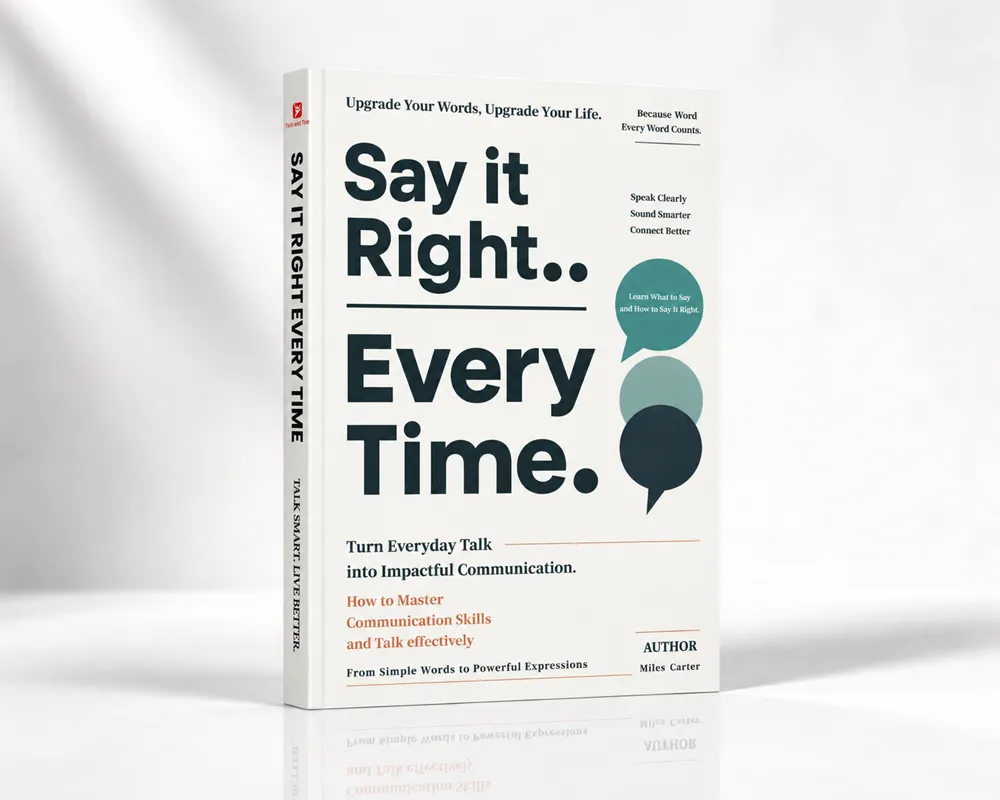
The chapter Make a Request That Shows Respect is useful when people struggle to state what they want directly. A request becomes harder to understand when it is surrounded by unnecessary apologies and explanations, especially when the speaker is already worried about imposing on someone.
The book also covers Say Your Boundaries with Calm Power. Boundaries are one of the places where over explaining is especially common. People often feel they need to prove that their limit is reasonable before they are allowed to state it.
Another related chapter is Express Your Honest Opinion Without Alienating Others. You can be thoughtful about another person’s perspective without adding so many qualifications that your actual opinion becomes difficult to identify.
The book’s emphasis on I statements is also practical here. Speaking from your own experience can help you communicate the main point without turning the conversation into a long explanation of what the other person did wrong.

Say it Right..Every Time.
Miles CarterPractical communication tools for the moments that matter — say what you mean, calmly and confidently.
And because over explaining is often driven by nerves, Strategic Pausing and Responding Without Losing Your Cool can be just as relevant as wording itself. A brief pause gives you time to decide whether more explanation is actually necessary or whether you are simply trying to make the other person approve of your answer.
For readers searching for a book on how to stop over explaining, Say It Right Every Time offers a useful combination of clearer language, boundaries, confidence, and emotional control.
More Detail Is Not Always More Persuasive
There is a point where additional information stops helping. If someone already understands your reason, giving them three more reasons may simply create three more things they can challenge.
This is especially noticeable when setting boundaries. A long explanation can unintentionally make your boundary sound negotiable because the other person starts responding to each individual reason instead of the decision itself.
Sometimes a shorter answer communicates more confidence simply because it shows that you are not asking the other person for permission to have a preference.
You Can Clarify Without Defending Yourself
Stopping over explaining does not mean becoming vague or refusing to answer questions. There are situations where context matters, especially at work or when an important decision needs to be understood.
The useful distinction is between clarifying and defending. Clarifying gives the other person information they need. Defending keeps adding reasons because you are uncomfortable with the possibility that they may still disagree.
Once you become aware of that difference, it gets easier to stop after the message has been communicated.
Say the Point, Then Let It Stand
A clear communicator does not need to make every sentence bulletproof. You can explain yourself when explanation is useful and stop when the other person has enough information.
That can feel strange at first, especially if you are used to managing every possible reaction. With practice, however, shorter communication can feel more comfortable because you are no longer carrying the pressure to make everyone understand and approve of every choice you make.
Say It Right Every Time helps build that kind of communication: clear enough to understand, respectful enough to hear, and confident enough not to bury the point under unnecessary words.
Did this article help you see things differently? Our books turn helpful ideas into practical tools you can return to anytime.




Imagine The Other Half
$24.99

