The Homework Was Fine. The Conversation Was Not.
One evening, twelve-year-old Sophie came home unusually quiet. Her mother asked how school was, and Sophie replied, “Fine.” Her mother asked again. Another “fine.” A few minutes later, Sophie went upstairs and shut the door.
Nothing had obviously gone wrong. There was no argument, no bad grade, and no major problem to solve. But her mother could tell that something was different and struggled with whether to keep asking questions or give her space.
This is where emotional connection becomes important. Children do not always tell parents what they are feeling simply because they are asked. Sometimes they need to feel that the parent is safe to talk to before they are ready to explain anything.

Connection Is Built Before the Difficult Conversation
Emotional connection is not created by one serious discussion. It develops through ordinary moments: listening without immediately correcting, noticing a child’s mood, taking their concerns seriously, and allowing them to have feelings without making every feeling into a problem to solve.
That does not mean agreeing with everything a child says. A parent can acknowledge an emotion while still disagreeing with a behavior or decision.
The difference is that the child learns there is room in the relationship for honesty.
1. The Parent You Aspire to Be by Miles Carter
The Parent You Aspire to Be explores parent-child connection through practical situations involving recognizing children’s feelings, repairing relationships after conflict, apologizing when parents make mistakes, helping children feel equally loved, and avoiding labels or humiliation.

One of the book’s important themes is that connection and boundaries do not have to compete. Parents can be firm about behavior while still making it clear that the child is loved and respected.
The book also addresses children learning calm from parents, recognizing children’s emotions, and repairing a relationship after a rupture. These topics matter because emotional connection is often tested most during difficult moments, not during the easy ones.
Its discussion of parental behavior is equally relevant. Children observe whether adults can admit mistakes, apologize, and recover after an argument. A parent who can repair a relationship after losing patience teaches something valuable about relationships: conflict does not automatically mean the relationship is damaged beyond repair.

The Parent You Aspire to Be
Miles CarterPractical guidance for tantrums, backtalk, lying, screen addiction, emotional outbursts, and everyday parenting struggles.
For readers searching for books about emotional parent connection, The Parent You Aspire to Be offers practical guidance for creating a relationship where children can feel supported without being overcontrolled.
2. The Whole-Brain Child by Daniel J. Siegel and Tina Payne Bryson
The Whole-Brain Child explores children’s emotional and cognitive development and gives parents ways to respond to strong feelings while supporting emotional growth.
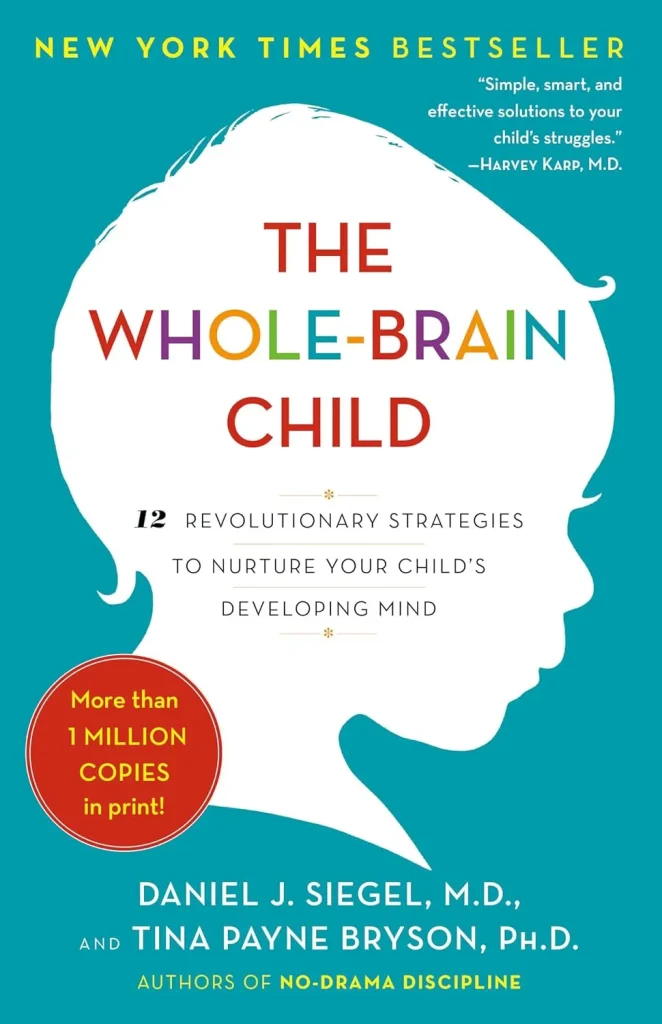
Its approach is useful for parents who want to understand what may be happening beneath difficult behavior. Instead of focusing only on stopping the reaction, the book encourages parents to help children make sense of their emotions.
That can create more opportunities for connection because the parent is responding to the child’s internal experience as well as the behavior everyone can see.
3. How to Talk So Kids Will Listen & Listen So Kids Will Talk by Adele Faber and Elaine Mazlish
How to Talk So Kids Will Listen & Listen So Kids Will Talk focuses on the communication habits that shape everyday parent-child relationships. It gives parents practical ways to acknowledge feelings, encourage cooperation, and establish limits without shutting down conversation.
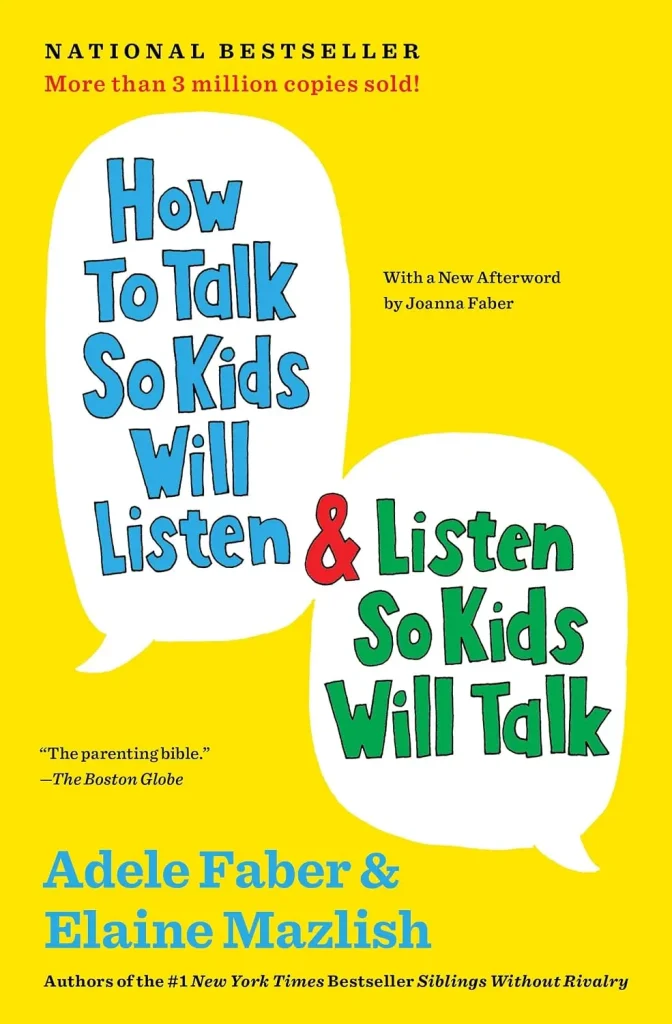
The book is particularly useful for families where conversations often become arguments. It shows how language can either invite children to participate or make them feel that there is no point in explaining themselves.
That makes it a natural companion to books that focus more broadly on emotional development and parent-child connection.
Connection Does Not Mean Saying Yes
A close relationship does not require parents to remove every limit. Children actually benefit from knowing that they can be heard while some decisions remain the parent’s responsibility.
The challenge is communicating the boundary without making the child feel rejected. “I understand that you are angry, and the answer is still no” sends a very different message from “Stop being difficult.”
That distinction is central to healthy connection: the emotion can be accepted even when the behavior or request cannot.
Repair Can Be More Important Than Perfection
Parents will lose patience sometimes. They will misunderstand their children, respond too quickly, or handle a situation poorly.
What matters afterward is whether the relationship has room for repair. Saying, “I should not have spoken to you that way,” can teach a child that adults are responsible for their own behavior too.
The Parent You Aspire to Be gives this idea significant attention, particularly through its sections on repairing relationships and parents apologizing when they make mistakes.
Emotional Connection Grows Through Ordinary Days
Children do not build trust with parents only through major conversations. They build it through repeated experiences of being listened to, respected, guided, and taken seriously.
For families exploring books about emotional parent connection, these three books approach the subject from different angles. The Parent You Aspire to Be focuses on practical relationship patterns, emotional regulation, boundaries, and repair; The Whole-Brain Child looks at emotional development; and How to Talk So Kids Will Listen & Listen So Kids Will Talk focuses on communication.
The strongest connection is often created in very ordinary moments, long before a child finally decides that they are ready to tell you what is really bothering them.

