The Restaurant Decision That Took Half an Hour
On Friday night, Emma and her friend were trying to choose a restaurant. There were only three options, all within walking distance, and none of them was particularly expensive. Emma checked the menus, read several reviews, asked what her friend preferred, then opened another review site because she was still worried they might choose the wrong place.
By the time she finally picked one, the decision had become much more stressful than dinner itself. She was not trying to solve a difficult problem; she was trying to make sure she could not possibly regret the choice later.
That is often what overthinking decisions looks like. The options may be simple, but the mind keeps adding another question until making a choice feels like taking a risk.

When Careful Thinking Turns Into a Loop
Thinking things through is useful when you are comparing important factors or trying to understand the consequences of a decision. It becomes exhausting when you keep reopening the same choice even though you are no longer finding meaningful information.
You may notice yourself asking whether there is a better option, what someone else would choose, whether you have missed a detail, or how you might feel about the decision later. Each question sounds reasonable on its own, but together they can create a loop where no amount of thinking feels sufficient.
A useful question is whether your latest round of analysis is changing anything. If you already know the main advantages and drawbacks and are simply searching for certainty, the next step may not be more research.
Stop Asking for a Perfect Decision
There is no guarantee attached to most everyday decisions. You can choose carefully and still discover later that another option might have worked better.
That does not automatically mean the original choice was bad. It means you made a decision with the information available at the time, which is how most real decisions work.
Giving yourself permission to make a reasonable choice can take away some of the pressure that keeps overthinking alive. You are not trying to predict every possible outcome. You are deciding what makes sense now and accepting that you can adjust later if circumstances change.
Break the Anxiety Circle by Miles Carter
Break the Anxiety Circle looks at decision-related overthinking as part of a wider cycle involving anxiety, self-doubt, reassurance seeking, fear of mistakes, and difficulty tolerating uncertainty. That broader perspective matters because the problem is often not the decision itself.
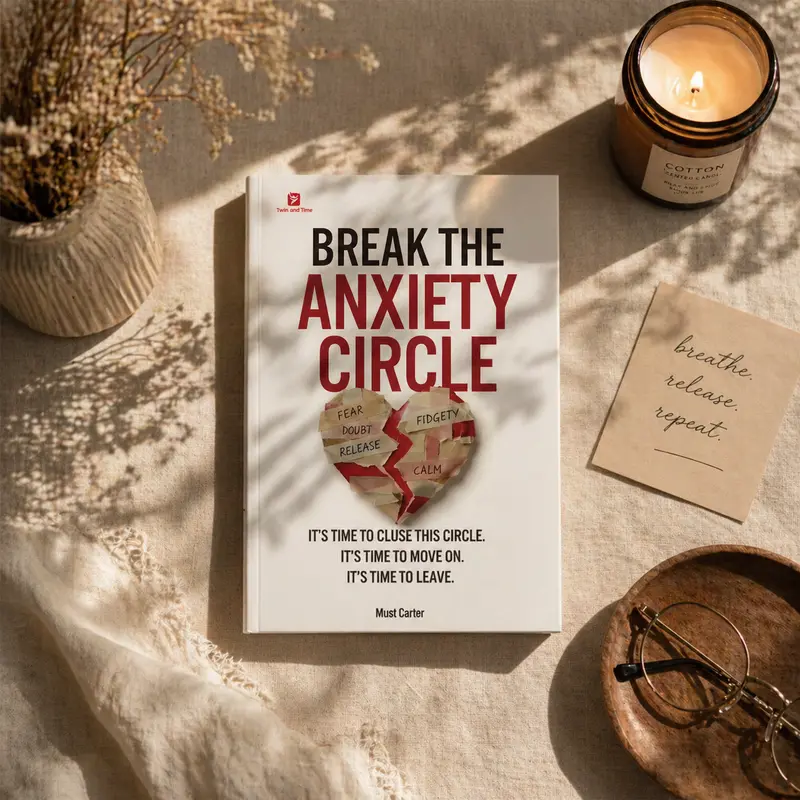
A choice can become difficult because you are afraid of disappointing someone, worried that a mistake will say something about your abilities, or used to checking your judgment with other people. The book explores those connections rather than treating every decision as an isolated problem.
Its practical themes include:
- recognizing when useful reflection becomes repetitive analysis;
- noticing the urge to seek reassurance after making a choice;
- separating mistakes from your overall sense of self-worth;
- learning to let completed decisions remain completed;
- becoming more comfortable with uncertainty instead of trying to eliminate it.
This makes the book relevant to people who notice the same pattern in many parts of life. You may overthink what to buy, what to say, where to go, or whether you handled a conversation correctly, even though the situations themselves are completely different.

Break the Anxiety Circle
Miles CarterA mental reset for people trapped in the overthinking loop. Understand why your mind won’t stop racing — and how to break free from anxiety, people-pleasing, and emotional exhaustion.
Give Yourself a Decision Boundary
One useful way to make decisions lighter is to decide beforehand how much thinking the choice deserves. A small decision may only need a few minutes and the obvious information. A major life choice deserves more reflection, but it still needs a point where you stop gathering possibilities and start acting.
This helps prevent every decision from becoming an open-ended research project. Once you have enough information to make a reasonable choice, continuing to search may simply give your doubt more material to work with.
Over time, self-trust can grow from those small experiences of making a choice and moving forward without reopening it every hour.
A Better Relationship With Uncertainty
You do not need to become impulsive to stop overthinking decisions. The real shift is learning that thoughtful does not have to mean endless.
Break the Anxiety Circle offers a way to understand why uncertainty can feel so uncomfortable and why your mind may keep demanding another round of analysis. For readers looking for a book on how to stop overthinking decisions, that understanding can be the starting point for making choices with much less mental strain.
If you found this helpful, these books go deeper into the same themes.



Break the Anxiety Circle
$19.90

From Debt to Wealth
$19.90

