One minor slip-up at the breakfast table was all it took to hijack Emma’s entire morning.
She forgot a small item on her way out, immediately labeled herself careless, and spiraled into panic about an upcoming work deadline. Within minutes, her brain dredged up an awkward disagreement from the week before, leaving her convinced that her colleagues were secretly frustrated with her. None of those events were actually connected. Yet, before she even stepped out the front door, her mind had woven them into a single, overwhelming narrative of failure.

Negative thought spirals operate on a principle of momentum and false association.
A single moment of friction triggers an uncomfortable thought, which latches onto an old memory, until your nervous system is reacting to a catastrophic story far bigger than reality. You aren’t responding to what is actually happening in the moment; you are responding to a web of accumulated anxieties.
An unchecked thought spiral doesn’t keep you prepared. It simply drains your energy before the day even begins.
These powerful reads break down how the brain builds negative momentum—giving you practical, real-time strategies to interrupt the spiral, regain perspective, and keep a single moment from defining your whole day.
1. Break the Anxiety Circle by Miles Carter
Break the Anxiety Circle focuses directly on recurring anxiety and overthinking patterns, making it a natural choice for readers who feel their thoughts escalate quickly. It looks at how one worry can trigger another until the mind becomes stuck in a loop.
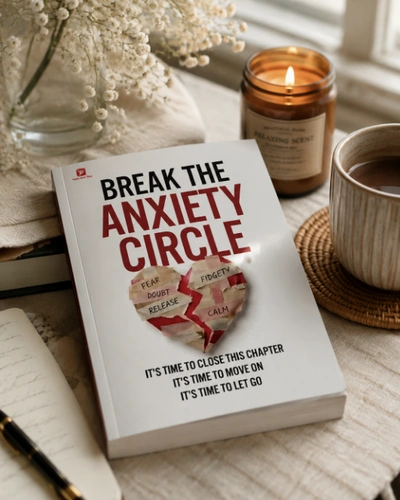
The book is especially relevant when negative thinking involves self-doubt, people-pleasing, or fear of judgment. Those themes often reinforce one another, so a single uncomfortable moment can quickly become a much bigger story about what other people think or what might happen next.
Rather than relying on positive thinking alone, the book encourages readers to recognize the pattern itself. Once you can see the loop developing, it becomes easier to interrupt it instead of following every thought to its most negative conclusion.

Break the Anxiety Circle
Miles CarterA mental reset for people trapped in the overthinking loop. Understand why your mind won’t stop racing — and how to break free from anxiety, people-pleasing, and emotional exhaustion.
2. Chatter by Ethan Kross
Chatter explores the repetitive inner dialogue that can make ordinary problems feel much more overwhelming. Ethan Kross looks at how the mind talks to itself during stressful situations and why internal conversations can either help us process events or trap us in them.
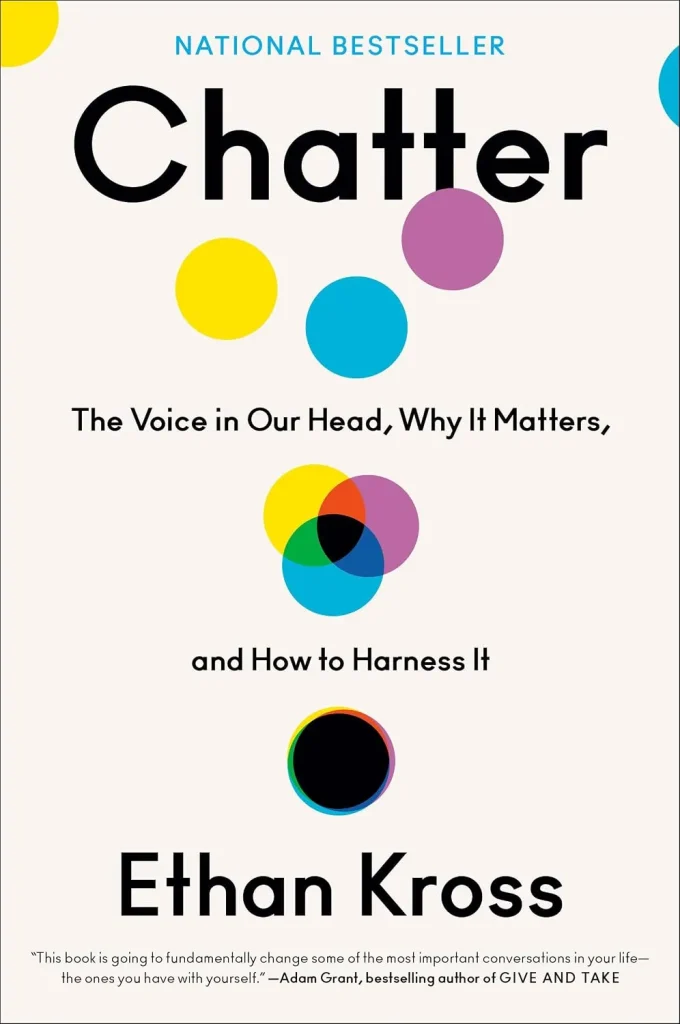
The book is useful because it treats negative thinking as something that can be influenced rather than something that simply happens to you. It discusses practical ways of creating psychological distance, changing perspective, and using your environment to support clearer thinking.
For readers who constantly talk themselves through the same problem without reaching a satisfying conclusion, Chatter offers a different framework. The aim is not to eliminate inner dialogue, but to make it less destructive and more useful.
3. The Happiness Trap by Russ Harris
The Happiness Trap takes an Acceptance and Commitment Therapy approach to difficult thoughts and emotions. Instead of encouraging readers to win an argument with every negative thought, it explains why trying to eliminate uncomfortable thoughts can sometimes make them more persistent.
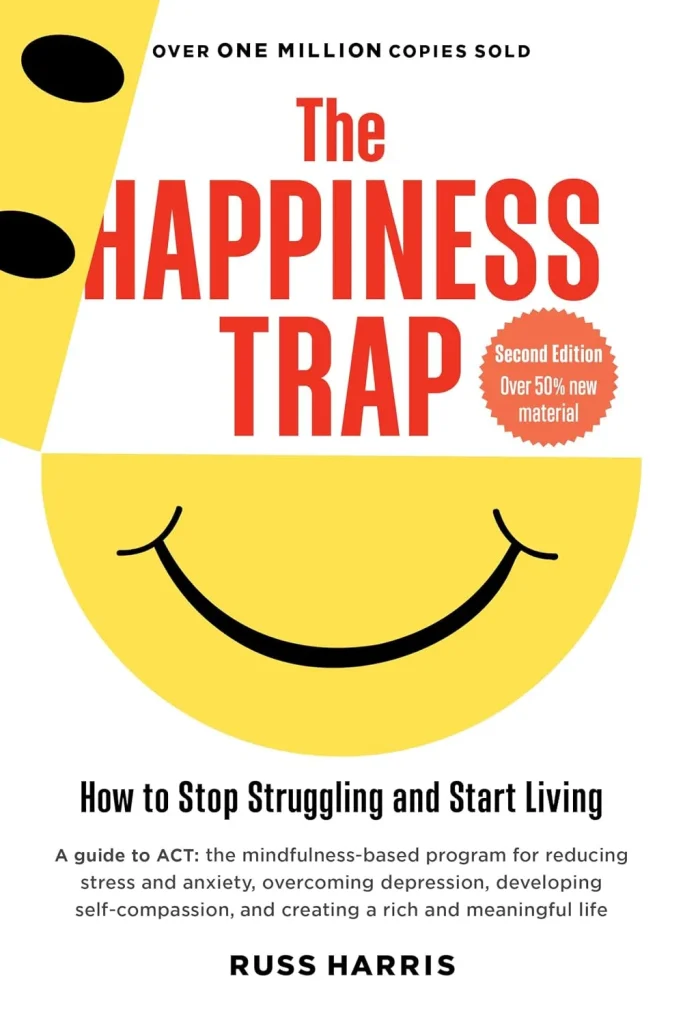
That idea can be useful during a spiral because fighting each thought may create even more mental activity. The book introduces ways to notice thoughts without automatically treating them as facts or instructions.
It also emphasizes values and meaningful action, which can help when negative thinking has pulled your attention away from everyday life. Rather than waiting until your mind feels completely calm, you can begin choosing what matters even while discomfort is still present.
How Negative Thought Spirals Usually Build
Many spirals follow a familiar pattern, even when the subject changes. You may notice several of these steps happening together:
- a small problem triggers self-criticism
- your mind searches for related problems
- the past gets pulled into the conversation
- you start predicting negative outcomes
- the predictions begin to feel like facts
Seeing that sequence can be useful because it gives you a place to intervene. You do not always need to solve the entire chain; sometimes breaking one link is enough to slow everything down.
Get Back to the Thought in Front of You
Stopping a negative spiral is not about making every thought positive. It is about becoming more selective about which thoughts deserve your attention and which ones can pass without being followed.
The three books here offer different ways to do that. Break the Anxiety Circle focuses on recognizing the loop, Chatter examines the way we talk to ourselves, and The Happiness Trap offers tools for changing our relationship with difficult thoughts rather than fighting them all day.
If you found this helpful, these books go deeper into the same themes.



Break the Anxiety Circle
$19.90

From Debt to Wealth
$19.90

