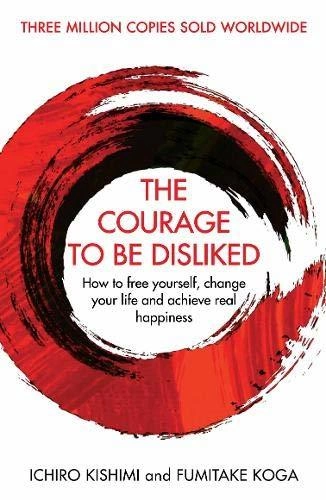
I didn’t plan to read this book three times. The first time, I thought it was too simple. The second time, I thought it was wrong. The third time, I thought it was useful. That’s the most honest thing I can say about it.
It’s a dialogue between a philosopher and a young man, spread across five nights. The philosopher explains Alfred Adler’s psychology. The young man argues with him. That argument is the book.
The philosopher starts with a claim that sounds cruel: trauma doesn’t exist. Not that bad things don’t happen. But that you are not defined by them. You don’t act because of your past. You act toward a goal. Anger isn’t something that happens to you; it’s something you manufacture to serve a purpose. I didn’t like hearing that. I don’t think anyone would. But I kept reading, and the idea stayed with me. Not because I agreed. Because I couldn’t stop arguing with it. That’s when I realized the book isn’t trying to comfort you. It’s trying to corner you.
Then it says all your problems are interpersonal relationship problems. Inferiority feelings are not excuses. Competition creates hierarchy. Life tasks are work, friendship, and love. This is where it stops being abstract and starts asking you to look at your actual life. Who are you competing with? Why? What are you avoiding?
The strongest idea is separation of tasks. What other people think of you is their task. What you do is yours. Freedom means being disliked. Not seeking recognition. Not letting others’ opinions run your life. That’s a clean boundary, and it holds up outside the book. Your boss’s opinion of you is his problem. Your job is doing your work well. I’ve used that. It works.
Then the book asks you to stop saying “good job.” Don’t praise people. Don’t scold them. Thank them. Encourage them. Praise creates hierarchy. Appreciation creates equality. It sounds absurd until you try replacing “good job” with “thank you.” It changes the texture of a conversation. That’s not a small thing.
The last night says live in the present. Life is a series of moments, not a line. Don’t rush to the destination. Dance. Travel. The journey is the point. It’s the softest section, and the least surprising, but it lands better after the harder lessons.

Where I hesitate is the machine problem. The book treats humans like programmable units. Command them. Re-program them. Ignore context. Poverty exists. Illness exists. Systemic oppression exists. The philosophy doesn’t account for any of that. It’s inspiring until it isn’t. And the dialogue format gets preachy. The young man’s objections are too easy to knock down. If the skeptic in the book isn’t smart enough, you have to become the skeptic yourself. That’s exhausting. But maybe that’s the point. The book doesn’t want you to nod along. It wants you to fight back.
So who should read it?
Read it if you’re stuck blaming your past for your present. Read it if you want a framework for boundaries without guilt. Read it if you like arguing with books.
Skip it if you’ve experienced serious trauma and aren’t ready to hear “trauma doesn’t exist.” Skip it if you want context-aware psychology. Skip it if you need practical exercises, not philosophy.
Read it with a friend. Text them at midnight. Argue about it. That’s what this book is for.
It doesn’t fix you. It makes you want to try. That’s enough.

