During a quarterly strategy meeting, Sarah watched a colleague present an idea she had spent three weeks developing. She had brought it up during a informal prep call, but now it was being passed off as someone else’s breakthrough. Sarah felt her chest tighten and her face flush. Everything in her wanted to speak up, to calmly say, “I’m glad you brought up the framework we discussed on Tuesday.” Instead, she swallowed her words, smiled politely, and spent the drive home consumed by quiet resentment.
Sarah’s silence wasn’t due to a lack of conviction. She simply didn’t know how to advocate for herself without worrying about sounding aggressive, difficult, or petty.

Many people spend years trapped in this exact cycle. They tolerate micro-stepping over boundaries, let others take credit for their labor, and agree to unrealistic demands, all to protect a reputation for being easy to work with.
When self-advocacy gets put on hold for too long, passive tolerance turns into chronic frustration and burnout.
Practical Steps to Start Advocating for Yourself Today
Learning to speak up for yourself is not about altering your entire personality or turning every interaction into a confrontation. It is about building small, repeatable communication habits that protect your time, energy, and self-respect.
Eliminate the Pre-Apology
Before stating a need or expressing a boundary, notice how often you lead with an apology. Phrases like “Sorry to bother you, but…” or “I hate to bring this up, but…” immediately undermine your authority. They frame your reasonable request as an inconvenience. Drop the preamble completely and state your needs directly.
Separate the Request from the Relationship
People often stay silent because they fear that holding a boundary will ruin a personal or professional relationship. Remind yourself that a healthy relationship can easily handle clear communication. You can decline a task or correct a misunderstanding with absolute warmth while remaining completely uncompromising on the boundary itself.
Practice Low-Stakes Boundary Setting
Self-advocacy is a muscle that weakens without use. If speaking up in a high-stakes board room feels overwhelming, start with small, low-risk moments. Correct a wrong order at a restaurant, decline an invitation you don’t have energy for without inventing an elaborate excuse, or express an opposing opinion on a minor topic. These small wins build the neural pathways needed for tougher conversations.
Bridging the Gap from Silent Frustration to Steady Authority
These quick mindset shifts are useful for navigating immediate moments of friction. Yet, many people still find themselves freezing when a real-time situation catches them off guard.
Knowing intellectually that you should “stand up for yourself” is very different from knowing the exact words to say when a manager pushes back or a family member crosses a line. Moving from passive compliance to genuine self-respect requires a structured, practical system that replaces habitual silence with natural, confident speech.
Reclaim Your Voice with Say It Right Every Time
This is precisely where Say It Right Every Time by Miles Carter comes in.
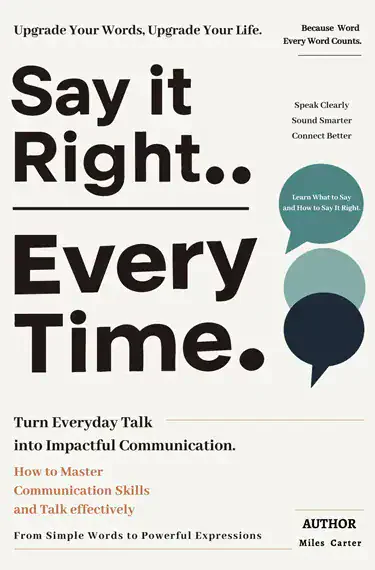
Miles Carter treats self-advocacy not as a vague personality trait, but as a practical set of conversational tools. Instead of offering generic advice about self-worth, the book provides clear, battle-tested language frameworks designed for real-world situations where the stakes feel high.
Through relatable examples and actionable scripts, Say It Right Every Time guides you through:
- Expressing your honest perspective without relying on nervous qualifiers or endless explanations.
- Holding firm boundaries against demanding personalities without escalating conflict.
- Claiming credit for your work and ideas with calm, indisputable professionalism.
- Saying no cleanly, without spiraling into guilt or feeling the need to apologize for having limits.

Say it Right..Every Time.
Miles CarterPractical communication tools for the moments that matter — say what you mean, calmly and confidently.
Standing Firm Without Apologizing for Your Space
Speaking up for yourself is not about being loud, argumentative, or demanding. It is about trusting your own value enough to let your real voice be heard.
If you are tired of staying silent during crucial moments, letting your boundaries crumble, or watching others step over your contributions, Say It Right Every Time gives you the exact scripts and confidence to stand your ground and speak your truth clearly.
Did this article help you see things differently? Our books turn helpful ideas into practical tools you can return to anytime.




Imagine The Other Half
$24.99

