I sat across from someone last winter, a person I’d known for years, and watched him smile at a joke I hadn’t finished telling. His mouth moved. His eyes didn’t. I remember thinking he looked tired, filing it away, and ordering another coffee. Six months later I understood what that face had been trying to tell me. By then, the understanding arrived too late.
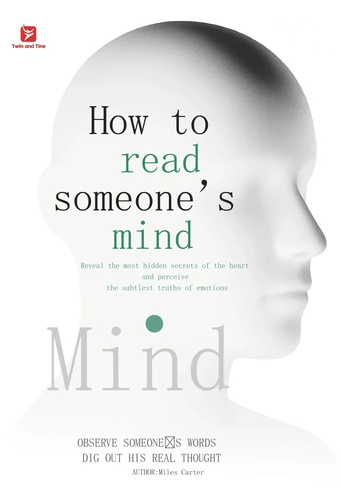
That memory is why Miles Carter’s book found me at the right moment. It isn’t about manipulation or cold calculation. It asks a quieter question: why do we register the warning signs before we can name them, and why does naming take so much longer than feeling?
What the Book Actually Argues
Carter’s central claim is that people leak. They leak through posture, through the timing of a pause, through how they treat a waiter when they think no one important is watching. Words are the most controlled channel a person has, and therefore the least reliable.
What people leak without knowing:
| Signal | What It Often Means |
|---|---|
| Smile that doesn’t reach the eyes | Politeness masking disconnect |
| Pause before answering | Calculation or discomfort |
| Treating service staff poorly | True character showing |
| Avoiding eye contact at a specific topic | Discomfort or avoidance |
But Carter organizes it around repeated behavior rather than single moments. A single forced smile means almost nothing. A pattern of forced smiles across months means something. That distinction runs through the whole book.
The Character at the Center Is You
There is no protagonist here, which sounds like a flaw until you notice Carter has quietly made the reader the subject. The person who fails to notice, who senses discomfort and explains it away, who trusts the version of events easiest to live with.
I recognized myself more than I wanted to. Carter describes retroactive clarity, that awful moment when a dozen small oddities assemble into an obvious picture and you wonder how you missed it. He doesn’t scold you. He suggests attention is trainable, not a fixed gift.
Where the Book Gets Thin
Carter is better at describing signals than at resolving the ethical problem underneath them. If you start reading everyone for hidden meaning, you can drift toward permanent suspicion, and the book doesn’t spend enough time on where to draw that line.
Some chapters on personality types feel broader than they need to be. Human beings are messier than taxonomies allow. It’s also a practical book, not a scholarly one. You won’t find much research cited.
What Carter’s Craft Does Well
The best writing happens when Carter slows down and describes a single moment instead of a category. There’s a passage about posture in a job interview, how a person’s shoulders tell you before their answers do, and it’s so specific I found myself physically straightening up while reading.
His prose stays plain. Short declarative sentences, few flourishes. The effect is like being taught by someone who has watched a great many people and taken notes without becoming cynical about them.
Who This Book Is For
This book is for you if:
- You’ve said “something felt off” and wished you’d caught it sooner
- You are rebuilding trust after being misled
- You want better judgment about trust and boundaries
This book is not for you if:
- You want hard data and cited research
- You are looking for a shortcut to reading people
- You want a manual for manipulation

What You Take Away
The real gift is not a checklist. It’s a slower tempo. You finish it paying attention to pauses, to the moment a person’s face changes before they speak, to the gap between what someone says about a colleague and how they actually behave around one.
Reading people well is not a weapon. It’s a form of care, most of the time. It means noticing when a friend’s laugh has gone thin, when someone you love is carrying something they haven’t said out loud yet.
Carter’s book teaches you to look. What you do after you look is still up to you.
We spend so much of our lives waiting for people to tell us the truth. Maybe the truth was already there, in the shoulders, in the pause, in the smile that never reached the eyes. Maybe love, or friendship, or just basic decency, is mostly the willingness to notice before we are told.

