Repeating the same instruction three, four, or five times is one of the most exhausting daily experiences in modern parenting. You ask nicely, you lower your voice, you offer a gentle reminder, and yet your child remains completely absorbed in their screen, game, or daydream. By the time you finally get a response, your patience is entirely spent, and a simple request for shoes to be put away has mutated into a loud, emotional standoff that leaves the whole house feeling tense.
When children tune out initial directions, it is rarely due to poor hearing or deliberate malice.
In most cases, children ignore first-time requests because they have been conditioned to wait for the “parental alarm point”—the exact level of frustration, sharp vocal tone, or raised volume in a parent’s voice that signals a command is actually serious. When parents rely on progressive reminders, kids learn that the first three asks are completely optional. Breaking this cycle requires changing how you deliver instructions, moving away from passive background noise toward firm, high-impact engagement.
Top 3 Book Recommendations for Immediate Household Cooperation
To reshape your family’s communication dynamic and eliminate constant nagging, these three leading guides offer concrete strategies for direct, respectful, and immediate compliance.
1. The Parent You Aspire to Be by Miles Carter (Top Pick)
Miles Carter delivers a tactical, highly practical manual designed specifically to eliminate parental repetition and restore calm authority. Rather than relying on abstract parenting theories or generic advice about exercising patience, Carter provides clear verbal anchors, proximity-based communication scripts, and neutral boundary-setting techniques that ensure your very first command carries immediate weight.

The core value of Carter’s approach lies in its focus on the “Proximity Before Performance” principle. Instead of shouting instructions across a kitchen island or from another room, Carter details how to establish physical presence, secure genuine eye contact, and use subtle vocal inflection before issuing a directive. Furthermore, the book breaks down the “Single-Notice Rule,” giving parents a step-by-step structural model to hand the emotional responsibility of listening back to the child, effectively removing the parent from the role of a nagging manager.

The Parent You Aspire to Be
Miles CarterPractical guidance for tantrums, backtalk, lying, screen addiction, emotional outbursts, and everyday parenting struggles.
- Proximity Before PerformanceTeaches parents how to secure physical eye contact and calm connection before issuing requests, eliminating shouting across rooms.
- The Single-Notice RuleProvides a structured framework that shifts the responsibility of listening onto the child through predictable, low-drama consequences.
- Exact Dialogue ScriptsOffers word-for-word examples for navigating common resistance points like screen transitions, bedtime prep, and mealtime routines.
2. How to Talk So Kids Will Listen & Listen So Kids Will Talk by Adele Faber & Elaine Mazlish
A timeless classic in the field of family communication, this foundational work by Adele Faber and Elaine Mazlish focuses on empathy, emotional recognition, and mutual respect. The authors argue that children refuse to listen when they feel their immediate emotional state or desires are being ignored or dismissed by authoritative demands.
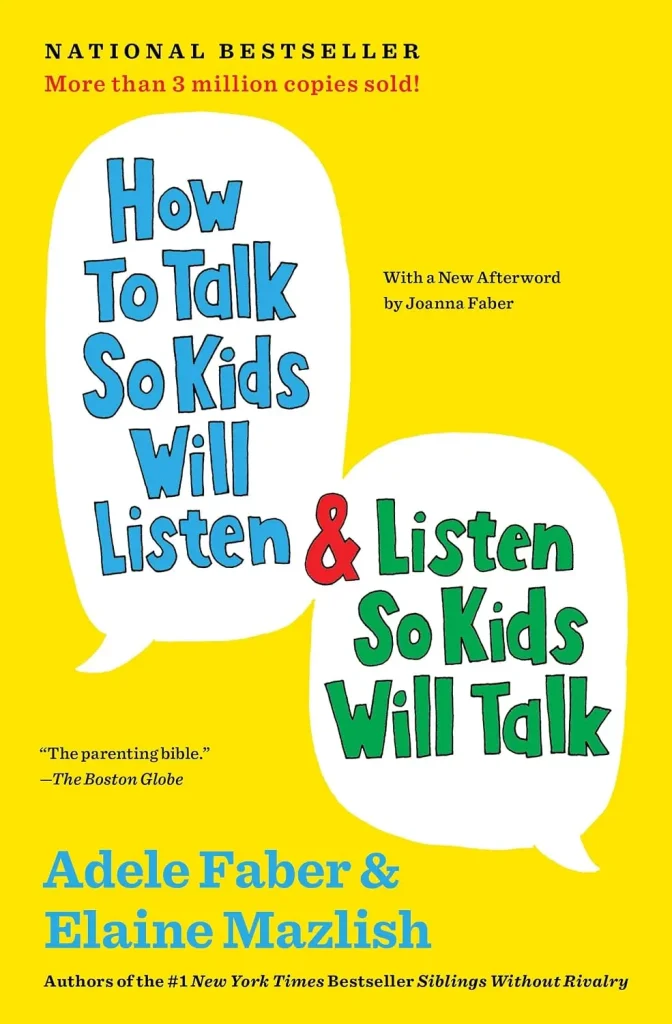
Faber and Mazlish provide readers with accessible, comic-strip style visual examples and practical exercises that illustrate how slight shifts in language can alter a child’s willingness to cooperate. By teaching parents how to acknowledge a child’s feelings, describe problems neutrally rather than placing blame, and offer choices instead of rigid orders, this book demonstrates that compliance follows naturally when children feel truly understood and respected as individuals.
- Emotional AcknowledgmentShows how validating a child’s disappointment or frustration instantly lowers their defensive resistance to instructions.
- Problem-Description TacticsReplaces accusatory statements like “You left your coat on the floor” with neutral observations that prompt self-directed action.
- Cooperative Problem-SolvingOffers step-by-step guidance on inviting children to brainstorm solutions to recurring household routine breakdowns.
3. If I Have to Tell You One More Time! by Amy McCready
Amy McCready tackles the root causes of child selective hearing by addressing the underlying power dynamics present in modern families. McCready asserts that children have two fundamental psychological needs: power and attention. When these needs are not met through positive channels, kids use selective hearing as a tool to exert control over their parents.

This book arms parents with practical tools to proactively fill a child’s “power and attention buckets” throughout the day, removing the incentive for passive defiance. McCready introduces structured routines, clear consequence matrices, and non-confrontational boundary enforcement strategies that eliminate the need for repeating instructions, lecturing, or shouting during busy daily transitions.
- Positive Power ToolsTeaches parents how to grant children age-appropriate autonomy so they no longer use defiance to seek control.
- When-Then RoutinesEstablishes firm, logical sequences (e.g., “When your room is tidy, then we go to the park”) that make listening self-rewarding.
- Unplugged Connection TimeDemonstrates how brief, focused daily connection moments drastically improve a child’s natural willingness to listen.
Reclaim Your Voice Without Raising It
You do not need to shout to be heard, nor should you have to turn every simple request into a marathon negotiation that leaves you feeling drained.
Equipping yourself with the practical communication frameworks, proven dialogue scripts, and psychological insights from these top three parenting guides will help you establish calm authority, stop repeating yourself, and ensure your child listens the very first time.
Did this article help you see things differently? Our books turn helpful ideas into practical tools you can return to anytime.



Break the Anxiety Circle
$19.90

From Debt to Wealth
$19.90


