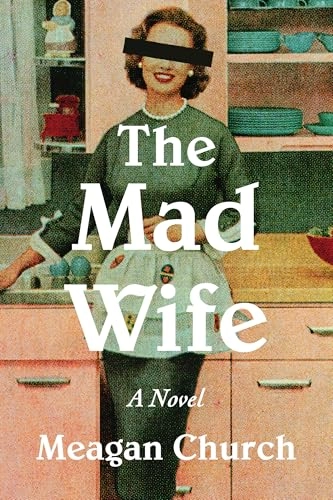
I read most of The Mad Wife at my kitchen table, which turned out to be the worst possible place for it. My own sink was full. My own kids were asleep. And Meagan Church’s 1955 housewife, Lulu Mayfield, was on page forty, scrubbing a floor she had already scrubbed.
The novel’s central question is not whether Lulu is losing her mind. It is who gets to decide that she has, and what they do with her once they do.
Lulu has spent five years molding herself into the perfect suburban wife. She keeps her husband happy, her household running, her gelatin salads famous on Twychemham Court. Then she gives birth to her second child, a daughter, and the surface starts to crack. A new neighbor named Bitsy moves in across the street, and Lulu’s fixation on her becomes the lens through which everything else sharpens.
What holds the book together is Lulu’s voice. She is funny in a way that made me wince, because her jokes are the kind you make when you cannot say the real thing. She notices everything: the S&H Green Stamps she licks and sticks into redemption booklets, the Good Housekeeping chart that assigns her a different chore for every day of the week, the way her mother-in-law decorated the house before Lulu ever moved in. The details are period-accurate, and they are also a trap. Every stamp is a small deposit in a life she did not choose.
Church is patient here. The first half reads more like domestic drama than psychological suspense, and I almost put it down around page ninety. I am glad I did not. The middle section tightens, and the twist at roughly seventy percent rearranged my understanding of everything I had read.
I want to be careful not to oversell that twist. It is not a gimmick. It is the kind of reveal that makes you flip back through earlier chapters, not to check for cheating, but to see what you missed when you were busy judging Lulu.
The author’s note at the start deserves its own mention. Church tells readers that if the pages grow heavy, they have permission to set the book down. I have never seen a novelist do that before, and it changed how I read everything that followed. It told me the book knew what it was doing.
What unsettles me most is that the machinery of this novel never stopped running. Women are still told their pain is hormonal, their exhaustion is attitude, their instincts are anxiety. The vocabulary changed. The verdict did not.
This book is not for everyone. If postpartum depression or infant loss is close to you right now, wait. If you need fast pacing from page one, this will frustrate you. But if you have ever been told that what you feel is not real, read it. The ending landed a little softly for me, and I still think about Lulu every time I walk past a jello salad at a potluck.
It won’t fix anything. But it will make you feel slightly less alone the next time someone smiles and tells you it’s all in your head.

