You have probably walked away from a conversation feeling off. Nothing dramatic happened. No one raised their voice. But something in the air was wrong—a tension you could not name, a shift you could not explain. You replay it later, trying to figure out what you missed.
Uncomfortable interactions are not random. They follow patterns. And once you can see those patterns, you stop being caught off guard by them.
These three books each help you understand a different layer of what happens when interactions go sideways.
1. How to Read Someone’s Mind by Miles Carter

The book that teaches you to read the signals you missed.
Carter breaks reading people into four dimensions: the face, the body, the voice, and the context. You learn to notice the small shifts that signal discomfort—in others and in yourself.
A tightened jaw during a casual conversation. A voice that goes flat when a certain topic comes up. A body that angles away while the mouth says everything is fine. These signals leak out before anyone has a chance to hide them. Carter teaches you to spot them in real time.
What makes this book useful for uncomfortable interactions is the focus on clusters. One awkward pause means nothing. A pattern of avoidance, tension, and mismatch tells you something real. Once you can see that pattern, you stop wondering if you imagined the discomfort. You start understanding what is actually happening between you.
For anyone who has ever sensed something was wrong but could not prove it.

How to Read Someone’s Mind
Miles CarterPractical tools for reading body language, tone, and hidden intentions in real time. Spot what people aren’t saying — before you trust the wrong person.
2. Thanks for the Feedback by Douglas Stone and Sheila Heen
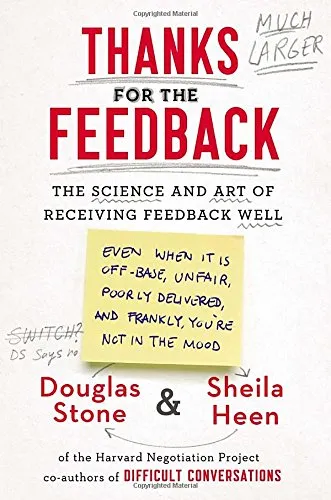
Why receiving feedback—even good feedback—can feel so uncomfortable.
Stone and Heen are the authors of Difficult Conversations, and this book tackles a related problem: why do we react so defensively when someone tells us something about ourselves? Even when the feedback is accurate. Even when it comes from someone who cares.
They identify three triggers that make feedback feel like an attack: truth triggers (the feedback feels wrong), relationship triggers (we do not trust the source), and identity triggers (the feedback threatens how we see ourselves). Most people only notice the first one. The other two are where the real discomfort lives.
The book explains how to recognize these triggers in the moment, how to separate the message from the messenger, and how to stay curious when your instinct is to shut down. It is practical, grounded, and full of examples that will feel uncomfortably familiar.
For anyone who has ever been told something true and reacted badly.
3. The Asshole Survival Guide by Robert I. Sutton
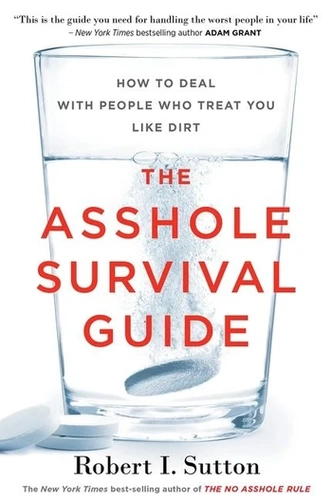
How to deal with people who make every interaction uncomfortable.
Sutton is a Stanford professor who spent years studying workplace jerks. His earlier book, The No Asshole Rule, made the case for why they should be avoided. This book is about what to do when you cannot avoid them.
He offers a range of strategies, from small tactics (mental detachment, emotional distancing) to larger moves (documenting behavior, building coalitions, leaving if necessary). He is honest about what works and what does not, and he does not pretend there is a magic phrase that will transform a difficult person into a pleasant one.
What makes this book valuable is the realism. It does not tell you to kill them with kindness or assume their behavior comes from a place of pain. It acknowledges that some people are simply toxic, and it gives you tools for protecting yourself without losing your mind.
For anyone who has ever had to interact with someone who makes everything harder.
| Best for | |
|---|---|
| How to Read Someone’s Mind | Reading the signals of discomfort in real time |
| Thanks for the Feedback | Understanding why feedback triggers defensiveness |
| The Asshole Survival Guide | Protecting yourself from chronically difficult people |
These three books each approach uncomfortable interactions from a different angle. Carter helps you read the signals. Stone and Heen help you understand your own reactions. Sutton helps you handle the people who cause the discomfort in the first place.
If you are tired of leaving conversations feeling unsettled and unsure why, start with the one that shows you what you have been missing.
If you found this helpful, these books go deeper into the same themes.



Break the Anxiety Circle
$19.90

From Debt to Wealth
$19.90

