Most entrepreneurship books focus on tactics. How to pitch. How to raise money. How to scale. They assume you already have the mindset and the stomach for it.
What they skip is the part that determines whether you survive the first year: how you think about money, value, and risk. And that is where most first-time founders get stuck.
These three books each cover a different layer of that foundation.
1. From Debt to Wealth by Owen Pierce
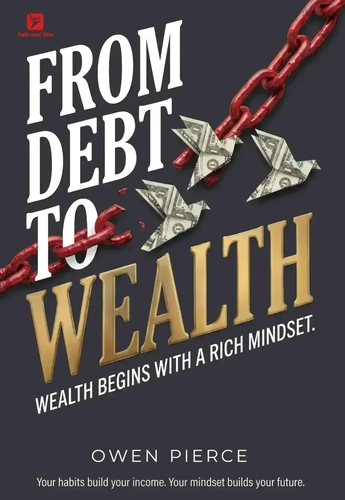
Why your first business should fail—and why that is the point.
Pierce’s book is not a startup manual. It is a framework for thinking about money, work, and value creation. And that framework is exactly what most first-time founders are missing.
He covers why a salary is a starting point, not a destination. Why trading time for money puts a hard ceiling on what you can earn. Why the fastest way to a million is not a bigger paycheck but investing in yourself.
The book gets specific about what entrepreneurship actually requires. One chapter is called “The Essence of Business Is Selling.” Another is called “If You’re Going to Do Business, Choose a High-Profit One.” He explains why money flows to the person who removes the most friction. Why the fastest track to millions is to copy what already works instead of inventing from scratch. Why skills come first and money comes second.
He also addresses the part most founders are not prepared for: failure. One chapter is titled “Your First Business Should Fail, So You Can Grow.” That is not a motivational slogan. It is a reframe. The first attempt is tuition. The second one is where you apply what you learned.
If you have been thinking about starting something but cannot seem to make the leap, this is where to begin. Not with a business plan. With a different way of seeing the entire game.
For anyone who wants to build something and needs to understand the money first.
2. The $100 Startup by Chris Guillebeau

How to start a business with almost no money.
Guillebeau studied hundreds of people who built businesses with minimal investment. Not tech startups. Not venture-backed ventures. Real businesses started by real people with an idea and a few hundred dollars.
He found a pattern. The most successful small businesses were built around skills people already had, solving problems they already understood, for customers they already knew how to reach. No complex business plan. No investors. Just a willingness to start before they felt ready.
The book is full of specific examples: a woman who started a freelance writing business, a man who turned a hobby into a six-figure income, a couple who built a business around a single service. Each story comes with the actual numbers—what they spent, what they earned, and what they learned.
What makes this book valuable is the accessibility. It does not assume you have savings, connections, or a technical background. It assumes you have something you can offer and a willingness to work. And it shows you how to turn that into income.
For anyone who wants to start a business but thinks they do not have enough money.
3. The E-Myth Revisited by Michael E. Gerber
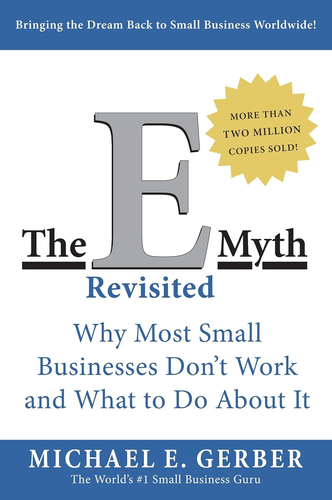
Why most small businesses fail—and what to do about it.
Gerber noticed something strange. Most people who start businesses are technicians. They are good at doing the work—cooking, designing, repairing, consulting. So they start a business doing that work. And then they fail.
The problem is not their skill. It is their assumption. They assume that because they understand the technical work, they understand the business. But running a business requires something different: systems, leadership, and a willingness to work on the business rather than just in it.
The book explains why you need to build your business like a franchise—with repeatable processes that do not depend on you being there for everything. It covers the difference between working in your business and working on it. And it explains why the goal is not to be busy. It is to build something that runs without you.
For anyone who wants to build a business that does not consume their entire life.
| Best for | |
|---|---|
| From Debt to Wealth | Understanding the money and mindset behind value creation |
| The $100 Startup | Starting a business with minimal money and no investors |
| The E-Myth Revisited | Building systems so your business does not depend on you |
These three books each help you start a business from a different angle. Pierce gives you the money framework before you begin. Guillebeau shows you how to start with almost nothing. Gerber shows you how to build something that lasts.
If you have been waiting for the right moment, start with the one that changes how you see the entire thing.
Did this article help you see things differently? Our books turn helpful ideas into practical tools you can return to anytime.



Break the Anxiety Circle
$19.90

From Debt to Wealth
$19.90


