A colleague offers to help you with a project. They seem genuinely generous, and maybe they are. But you notice the timing. Your project happens to overlap with a meeting they want to be invited to. You can’t prove anything, and you never will. You just file it away.
Or a friend listens to your problem for an hour, then subtly turns the conversation back to something they need. They might not notice they did it.
Self-interest isn’t always obvious, and it isn’t always ugly. But once you start seeing it, you see it everywhere, including in your own choices.
Book 1: Awakening to Human Nature by Owen Pierce
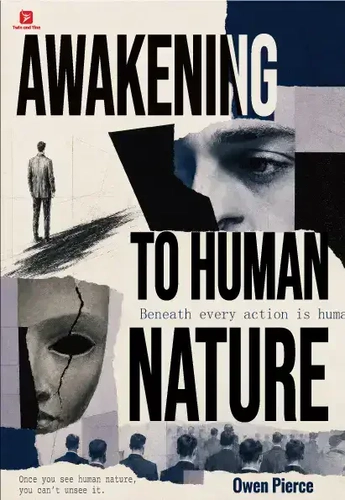
Self-interest is not a flaw. It’s the default setting.
This book explains why people act in their own favor without acknowledging it. Morality becomes secondary when survival or advantage is at stake. Loyalty lasts exactly as long as the need behind it. People pursue what serves them and then construct reasons that make it sound noble.
You’ll learn why someone can help you and resent you for it. Why favors create debt in the mind of the giver more than the receiver. Why the same person who calls you family will calculate the cost before showing up when it matters.
The book turns toward you as well. Your own reasons. Your own hidden ledgers. The help you gave expecting something in return. Once you see the pattern, you stop being surprised by it in others and start being honest about it in yourself.
Awakening to Human Nature
Owen PierceYou saw the signs. You just didn’t know what they meant yet.
Learn how to notice the patterns behind people’s words, choices, loyalty, pressure, and changing behavior.
Book 2: The Selfish Gene by Richard Dawkins
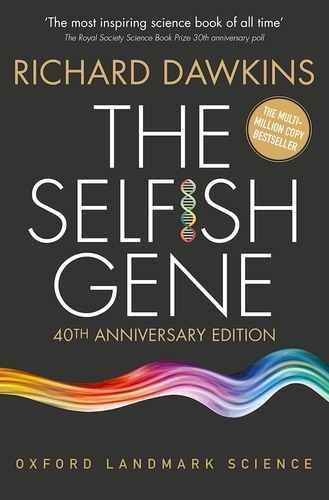
This book, published in 1976, changed how science understands the roots of self-interest.
Dawkins argues that behavior isn’t driven by conscious choice. It’s driven by genes trying to replicate themselves. Altruism, kindness, and cooperation all have evolutionary explanations that come down to survival advantage. Even acts that look selfless usually serve a deeper biological purpose.
You’ll learn why parents sacrifice for children but not strangers. Why people help those who share their genes. Why reciprocity exists, and why it breaks down when the balance shifts. The book is dense in places, but its central insight is unforgettable.
What makes it relevant here is that it explains why self-interest isn’t a moral failure. It’s the foundation of life itself.
Book 3: Give and Take by Adam Grant
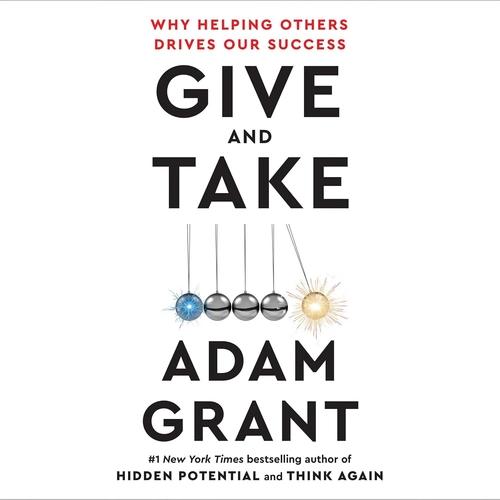
This book explores how self-interest and generosity interact in everyday life, and it arrives at a surprising conclusion.
Grant divides people into givers, takers, and matchers. Takers take more than they give. Matchers trade evenly. Givers contribute without expecting immediate return. You’d assume the takers get ahead. Grant’s research shows the opposite. The people who succeed most are givers, but only the ones who set boundaries.
You’ll learn why takers eventually burn through their relationships, why givers often get exploited before they learn to protect themselves, and why the most successful people give generously while staying strategic. The book is grounded in research and full of case studies.
What Changes When You See Self-Interest Clearly
You stop expecting people to be motivated by what they say. You start watching what they actually pursue.
The Selfish Gene explains the biology behind self-interest. Give and Take shows you how it plays out in careers and relationships. But Awakening to Human Nature is where the pattern becomes visible in everyday life, because self-interest isn’t hidden. It’s just rarely named.
Understanding it doesn’t make you cynical. It makes you accurate.
If you found this helpful, these books go deeper into the same themes.




Break the Anxiety Circle
$19.90

From Debt to Wealth
$19.90

