The statement comes in the mail. Or the email notification arrives. Either way, you already know what it says before you open it. The balance barely moved. The interest is doing more work than your payments are.
And then there’s the other side of it. The money that comes in. The money that goes out. The two never seem to meet in a way that leaves anything behind. Debt and money feel like separate problems. One you’re trying to escape. One you’re trying to manage.
They’re the same problem. The way you handle money is what created the debt. And the debt keeps shaping every money decision you make from that point forward. Understanding one without the other is why the cycle keeps repeating.
Book 1: From Debt to Wealth by Owen Pierce
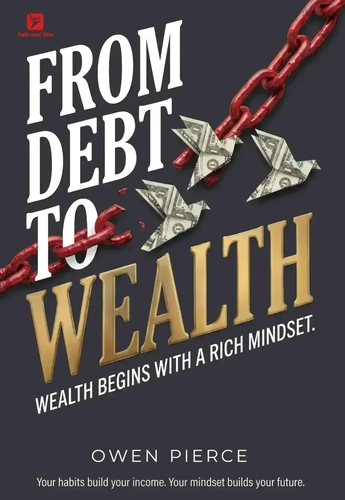
Debt is not a math problem. It’s a system problem.
This book starts with a question most advice skips. Why does the same cycle repeat no matter how much you earn? Why does paying off one debt just create room for another? Why does the balance always return?
You’ll learn why a paycheck becomes more dangerous the deeper you are in debt. Why the structure receiving your money determines the outcome more than the amount. Why willpower fails when the system underneath it was never designed to let you get ahead.
The book doesn’t offer a budget template. It offers a way to rebuild the structure that created the debt in the first place. Once that changes, the decisions become obvious.

From Debt to Wealth
Owen PierceYour paycheck comes in. The bills go out. And somehow, you’re back at zero again.
Learn why earning more does not always create financial progress—and what has to change before your money starts working differently.
Book 2: Scarcity by Sendhil Mullainathan and Eldar Shafir
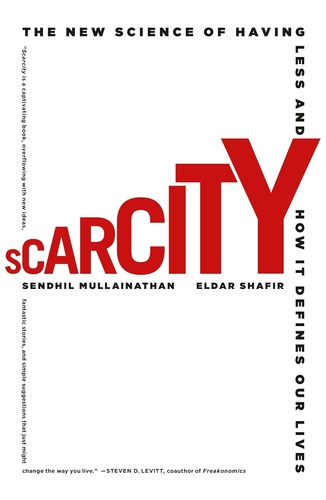
This book explains why being in debt makes it harder to think your way out of debt.
The authors, a behavioral economist and a cognitive psychologist, argue that scarcity captures the mind. When you don’t have enough money, your brain becomes consumed by the shortage. It narrows your focus to the immediate problem. Long-term planning suffers. Impulse control weakens. You make decisions that look irrational from the outside but are entirely predictable once you understand the psychology.
You’ll learn why people in debt often make their situation worse. Why poverty and financial stress reduce cognitive capacity in measurable ways. And why the solution isn’t simply trying harder, because the part of your brain you’d use to try harder is already overloaded.
The book is grounded in research and full of experiments that make the patterns impossible to dismiss.
Book 3: The Ascent of Money by Niall Ferguson
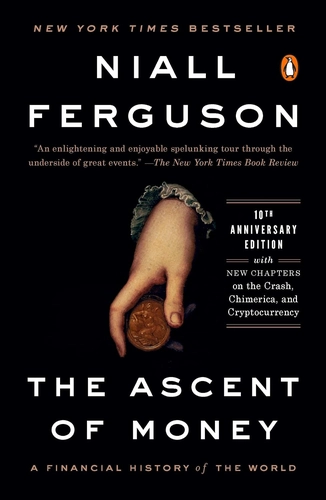
This book takes you back to the beginning, to show how debt and money became inseparable in the first place.
Ferguson, a historian, traces the evolution of finance from ancient Mesopotamia to the present. What he finds is that debt has been with civilization from the start. The first written records weren’t poetry or law. They were accounting entries. Debt predates money. Money was invented to make debt easier to track.
You’ll learn how credit systems developed, why financial crises follow predictable patterns, and why the relationship between debt and wealth has never been simple. Ferguson doesn’t offer practical advice. He offers perspective, which is exactly what most people need before they try to fix their finances.
What Changes When You See Both Sides
You’ve been treating debt as the problem and money as the solution. The books above suggest something different. Debt and money are two ends of the same system. Fixing one without understanding the other is why the cycle keeps repeating.
Scarcity shows you why the debt cycle is so hard to escape. The Ascent of Money shows you how the system was built in the first place. But From Debt to Wealth is where the practical work starts, because understanding the structure is the only thing that actually changes it.
The balance on the statement won’t move until the system underneath it does.
Did this article help you see things differently? Our books turn helpful ideas into practical tools you can return to anytime.



Break the Anxiety Circle
$19.90
From Debt to Wealth
$19.90


