“Five more minutes.”
That is how many evenings begin to go wrong in families dealing with screen time. A child is playing a game or watching a video, the parent asks them to stop, and suddenly the simple transition becomes an argument. The child wants to keep going, the parent repeats the instruction, and after several rounds of negotiation someone eventually loses patience.
Managing screen time is difficult partly because screens are built to hold attention. But the parenting challenge is not only deciding how many minutes a child should spend on a device. It is also creating rules that are clear enough to follow, handling resistance when the limit arrives, and making sure technology does not become the default answer whenever a child is bored.
These books offer three different ways to think about that balance.
1. The Parent You Aspire to Be by Miles Carter

The Parent You Aspire to Be addresses child internet and game overuse as part of a broader approach to everyday behavior and family boundaries. Rather than relying only on repeated commands, the book emphasizes clear expectations, consistency, and the way parents respond when children push back against limits.
That is particularly relevant to screen time because the difficult moment is often not the rule itself but what happens when the child does not want to follow it. The book’s discussion of firm and kind boundaries can help parents think about how to hold a limit without turning every reminder into a shouting match.
It also connects screen-related struggles with broader parenting habits such as over-reminding, constant correction, and stepping in too quickly. For families where screen arguments have become part of the daily routine, looking at the whole interaction can be more useful than treating every conflict as a separate incident.

The Parent You Aspire to Be
Miles CarterPractical guidance for tantrums, backtalk, lying, screen addiction, emotional outbursts, and everyday parenting struggles.
2. Reset Your Child’s Brain by Victoria L. Dunckley
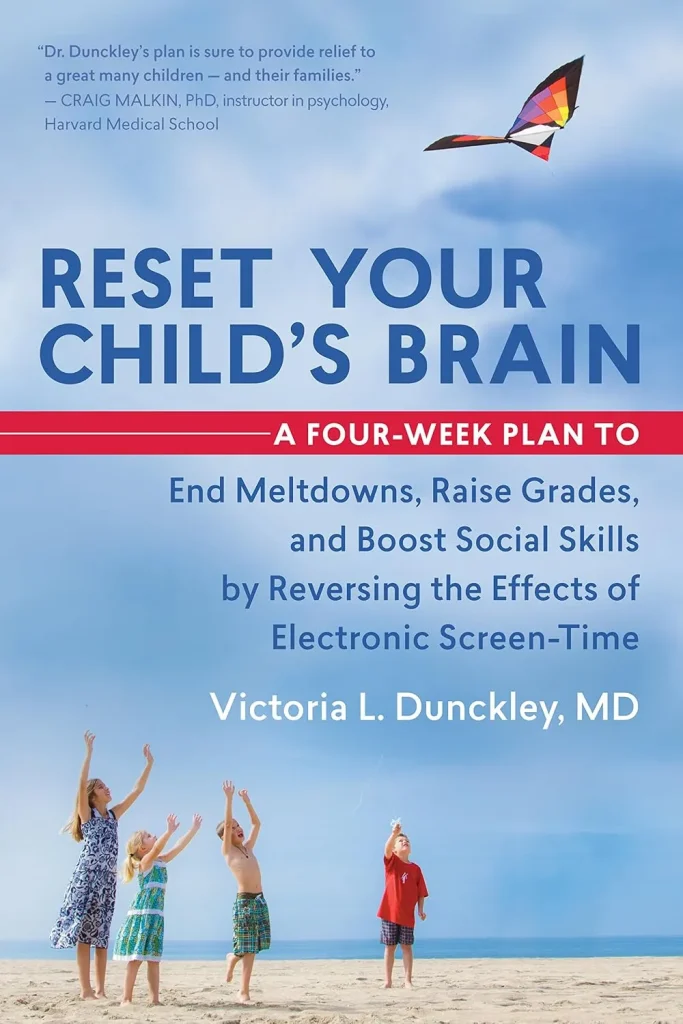
Reset Your Child’s Brain takes a strong look at the possible effects of excessive electronic media use on children’s behavior and emotional regulation. Victoria Dunckley presents what she calls an “electronic fast,” which involves significantly reducing screen exposure for a period while observing whether certain difficulties change.
The book is particularly focused on parents who feel that screen use may be connected with irritability, poor sleep, attention difficulties, or frequent emotional outbursts. Its approach is more intensive than simply setting a daily limit, so it may appeal to parents who want to experiment with a larger reset rather than make small rule changes.
Because its recommendations are intentionally strict, parents may want to consider the approach alongside their own family’s circumstances rather than treating it as a universal routine.
3. The Tech-Wise Family by Andy Crouch
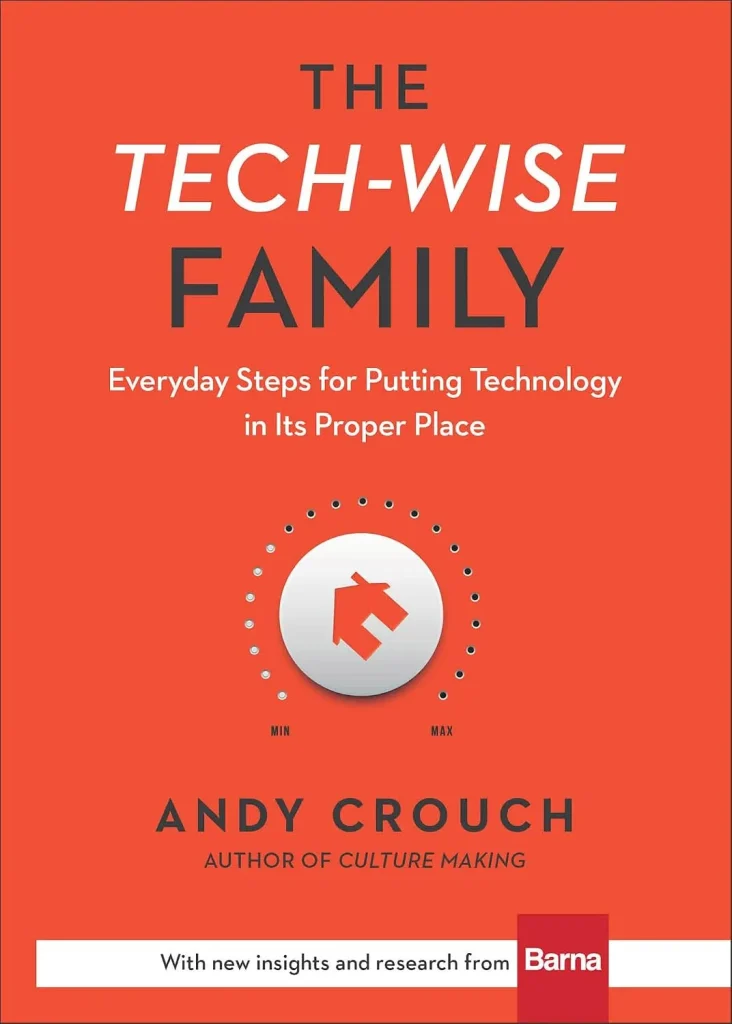
The Tech-Wise Family takes a broader household approach to technology. Instead of focusing entirely on minutes and restrictions, Andy Crouch explores what role screens should play in family life and how parents can create more space for conversation, shared activities, creativity, and direct experience.
That perspective can be helpful when the real concern is not simply “too much screen time” but the way devices have gradually taken over parts of everyday family life. A child who reaches for a screen whenever there is a quiet moment may need more than another rule; they may also need attractive alternatives and routines that make non-screen activities part of normal family life.
The book encourages families to think about technology deliberately rather than letting convenience make all the decisions.
Start With the Parts of Screen Time You Can Actually Control
A screen-time rule becomes much easier to manage when everyone knows what the rule is before the argument starts. Decide which situations allow screens, which do not, and what happens when the agreed time ends.
It can also help to separate entertainment from everything else. A device used for schoolwork may need different expectations from a game or video. The more specific the rule, the less room there is for daily negotiation.
Another important piece is consistency. If the boundary changes every time a child complains, they quickly learn that the limit is still open to negotiation.
The Transition Matters as Much as the Limit
For many families, the hardest part is not the amount of screen time but stopping.
A sudden “Turn it off now” can feel very different from a predictable routine where the child knows what comes next. Giving a warning, finishing at a natural stopping point when possible, and having another activity ready can make the transition less dramatic.
Parents do not need to negotiate endlessly. The point is simply to make the boundary predictable enough that it does not feel like a surprise every time.
Do Not Let the Screen Become the Only Easy Option
Reducing screen time creates an empty space, and that space needs somewhere to go.
A child may be more willing to put down a device when there are ordinary alternatives available: helping with dinner, drawing, building something, playing outside, reading, or spending time with family. These activities do not need to be carefully planned every minute of the day.
What matters is that children have other ways to handle boredom, rest, and free time. Technology becomes much harder to manage when it is the only activity that feels immediately rewarding.
Three Different Approaches to the Same Parenting Problem
The three books look at screen use from distinct directions. The Parent You Aspire to Be focuses on boundaries, consistency, and the parent-child interaction around behavior. Reset Your Child’s Brain takes a more intensive approach to reducing electronic media exposure when parents are concerned about broader behavioral or emotional difficulties. The Tech-Wise Family steps back and asks what place technology should have in family life more generally.
That difference matters because not every family has the same problem. For some, the biggest issue is constant arguing over limits. For others, it is the amount of time spent gaming or watching content. Some families are trying to rebuild routines in which screens are no longer the center of every free moment.
The most useful book will depend on which part of that problem sounds most familiar at home.
Better Screen Habits Usually Start With the Parents Too
Children are not the only ones learning what role a device should play in family life. They notice when adults check phones during meals, reach for screens whenever there is a quiet moment, or make exceptions to rules that apply to everyone else.
That does not mean parents have to model perfect technology habits. It does mean that family routines become easier to maintain when the adults are clear about their own boundaries as well.
Managing screen time is ultimately less about winning the nightly argument and more about creating a family environment where screens have a place without becoming the thing around which everything else is organized.
Did this article help you see things differently? Our books turn helpful ideas into practical tools you can return to anytime.



Break the Anxiety Circle
$19.90

From Debt to Wealth
$19.90


