I read most of this book on a Tuesday night, sitting on the kitchen floor with my back against the refrigerator, because the apartment felt too quiet and my head felt too loud. I had opened it expecting breathing exercises. What I got instead was a quiet argument about attention, and I’m still turning that argument over.
Nick Trenton keeps circling one question. If you cannot stop the thoughts, can you stop being at war with them? His answer shapes every chapter, and it’s the reason this book sits differently from most things on the shelf.
The Antagonist Is Your Own Inner Narrator
There is no protagonist here. No plot. Just Trenton, a former farm kid from rural Illinois with a background in behavioral psychology, walking you through the mechanics of a mind that won’t sit still.
His core conflict is the one you already know. You want certainty. Your brain keeps generating worst-case scenarios at three in the morning.
What surprised me was how he frames this. He argues that your brain was built for 10,000 BC, wired to scan for threats that no longer exist. The urgency you feel about an unanswered email is the same circuitry that once kept your ancestors alive. That reframe did something to me. It made my anxiety feel less like a personal failure and more like outdated software running in the background.
The book’s central case is the dichotomy of control, borrowed from Stoic philosophy. You sort what you can influence from what you can’t, then release the rest. Sounds simple. It isn’t, and Trenton knows it isn’t. He spends chapters on why we cling anyway.
I almost put this down around chapter four, because the middle sections start repeating themselves. Then I hit a passage on self-distancing, stepping outside your own thoughts and observing them like weather, and I stopped skimming.
The Knot You Cannot Cut
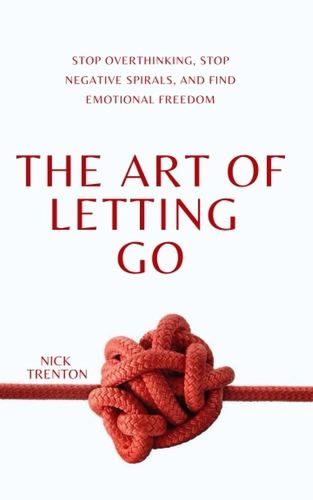
The image that stayed with me is the tangled knot. Trenton keeps returning to it. Your mind isn’t broken. It’s knotted. And knots don’t respond to force. They loosen when you stop pulling.
That single metaphor organizes the whole book. Nonjudgmental observation, brain dumping, defusing toxic urgency beliefs, all of it functions as different ways of loosening rather than cutting.
His concept of “excellent-ism” is the freshest idea here. Perfectionism demands a finish line that keeps moving. Excellence accepts the messy middle and keeps working anyway. One sentence near the end hit me hard enough that I wrote it on a sticky note. The strongest cage was never made of iron. It was made of warm, familiar habits of worry.
I sat with that for a while. My own version of the cage looks like rehearsing conversations that will never happen. Trenton doesn’t tell you to stop. He tells you to notice you’re doing it, and to stop grading yourself for it.
Some chapters restate earlier points with slightly different vocabulary. Readers familiar with Stoicism or cognitive behavioral therapy will find little that’s new. The book sometimes reads like a lecture that forgot it was supposed to be a conversation.
Permission to Stop Grading Yourself
If you overthink, catastrophize, or feel like your mind is a hallway with too many doors, this will help. If you want a therapist in book form, it won’t replace one. If you’ve already read widely in Stoicism, you may find yourself nodding rather than learning.
What I gained wasn’t a technique. It was permission to stop treating my thoughts as verdicts. The book ends with a line I keep returning to. Your mind should be your safe zone, not the noisiest place in the world. I don’t fully believe that yet. But I’m less afraid of the noise than I was on that kitchen floor.

