Three That Actually Helped Me
My sister-in-law once told me, at a family dinner, that she had never seen me finish a sentence in a group conversation. It was said lightly, with a laugh. I laughed too. That night I lay awake for three hours replaying it.
That is the thing about this particular knot in the chest. Nobody can see it. You look fine. You are fine, mostly. But inside, a small committee is always meeting.
So when I went looking for the best books on dealing with social anxiety, I was not looking for a cure. I was looking for somebody who had been in that committee room and could describe the chairs.
Quick answer: Which books actually help with social anxiety?
Start with one that names the overthinking loop, one that explains why the fear shows up, and one that asks you to walk toward the thing you have been avoiding.
Here are three that stayed with me. One of them I have read four times.
Why Reading Alone Does Not Fix It
Because reading is not the same as doing. That was my first discovery, and it stung.
For two years I collected books the way other people collect stamps. I underlined. I nodded. I felt briefly understood. Then the phone rang with an invitation and I made up a headache.
A friend pointed this out, gently. She said, you are studying the map and never walking the road. She was right.
So this list is short on purpose. I am not going to hand you a shelf. I am going to hand you three doors.
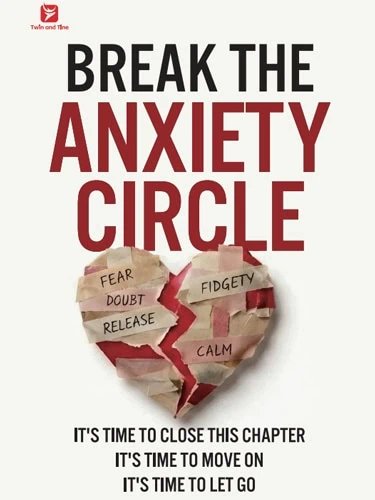
Break the Anxiety Circle
By Miles Carter
This is the book about the replaying.
What makes this book different:
Carter wrote it for people who are tired of fighting the same thoughts over and over. That sentence is on the cover, and it is the most accurate description I have found.
What you get:
- A name for the loop. Once I could see the circle, I could step off it sometimes. Not always. Sometimes.
- Why a simple conversation turns into hours of analysis
- Why a small mistake becomes proof that you are not good enough
- How people-pleasing drains you and disconnects you from yourself
One key idea: The book is not about social anxiety specifically. It is about the inner noise that makes social situations feel heavier than they are. For me that was close enough.
What I did with it: I read the paragraph on people-pleasing three times. Then I called my sister and cancelled something I had agreed to two months earlier. It was a small thing. It felt enormous.
Best for: Anyone who cannot stop replaying conversations.
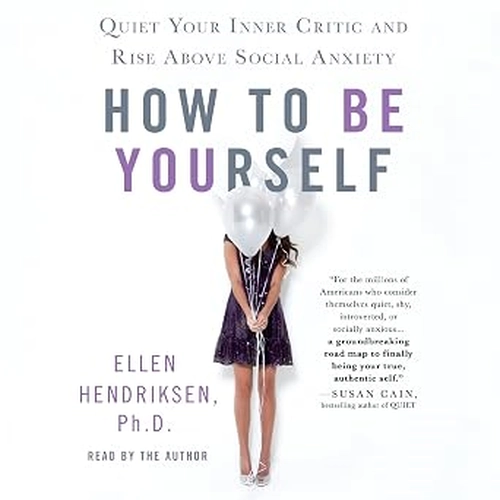
How to Be Yourself
By Ellen Hendriksen
This is the book that explains the trick your mind plays.
What makes this book different:
Hendriksen is a clinical psychologist, and she narrates her own audiobook. Her voice is warm and a little wry. It makes the material feel like a conversation rather than a lecture.
What you get:
- Why you already have what you need to handle unfamiliar social situations
- How to quiet your inner critic, the voice that whispers everyone will judge you
- How to rewire your brain through behavior, not argument
- Real stories from people who have stood in the same corner at the same party
One key idea: The inner critic is not a truth-teller. It is a habit. And habits can be rewritten through behavior.
What I did with it: The line about how up to forty percent of people consider themselves shy stopped me cold. Forty percent. I had been walking around feeling like a defect. Turns out I was standing in a very large crowd.
Best for: Anyone who wants to understand why the fear shows up at all.
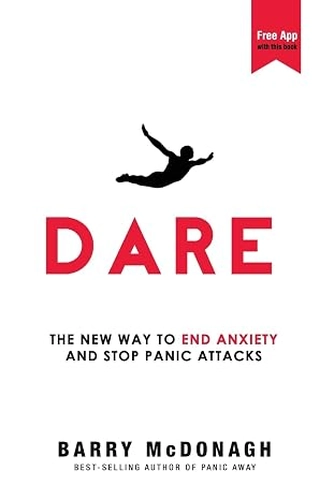
Dare
By Barry McDonagh
This is the one that asks you to move toward it.
What makes this book different:
McDonagh’s approach is not about understanding the pattern. It is about responding to it in the moment. His method is called the DARE technique. The idea is that you stop trying to manage anxiety and start moving toward the situations you have been avoiding.
What you get:
- A practical method for responding to anxiety in real time
- Scripts and steps for situations you have been avoiding
- Audio tools for moments when you need help right now, in the car, in the hallway, wherever you are
- Over ten years of work with people who struggle with this
One key idea: Stop trying to manage anxiety. Start moving toward the thing you fear.
What I did with it: This one was the hardest for me. Understanding my patterns was comfortable. Moving toward the thing I feared was not. But it was also the one that changed the most. The first time I stayed in a room after the urge to leave arrived, I felt like I had run a marathon. I had not done anything. I had simply stayed.
Best for: Anyone who is ready to walk into the room.
Three Books, Three Doors
| If you are… | Start with… |
|---|---|
| Someone who cannot stop replaying conversations | Break the Anxiety Circle |
| Someone who wants to understand why the fear shows up | How to Be Yourself |
| Someone who is ready to walk into the room | Dare |
You do not need all three. Pick the door that matches where you are standing today.
Final Thought
I still get quiet at large dinners. I still rehearse phone calls. But the committee meets less often now, and when it does, I know its members by name.
That is not a cure. It is something better. It is company.
Start with one book. Try one technique. See what happens.
References
Hendriksen, E. How to Be Yourself: Quiet Your Inner Critic and Rise Above Social Anxiety. Macmillan Audio.
McDonagh, B. Dare: The New Way to End Anxiety and Stop Panic Attacks.
Carter, M. Break the Anxiety Circle.

