I used to think I was good at reading people. Fifteen years in corporate life, and I still could not explain why the same colleague who praised my work in meetings quietly undermined it in emails. Then I found books about workplace psychology that look at patterns instead of isolated signals. One of them was Owen Pierce’s Awakening to Human Nature, which opens with a question that stopped me cold. Why do I always see people clearly after it is too late?
That question haunted me for weeks. Because I had lived it, more than once.
Quick answer: How do I read people at work before it’s too late?
You stop trusting single moments, watch for what repeats, and pay attention to how people behave when pressure shows up.
Here are three books about workplace psychology that changed how I see the office. One helps you read the patterns behind behavior. One explains how childhood shapes adult behavior at work. One shows why neurodivergent minds experience the workplace differently.
Why We Misread the People We Work With Every Day
Most of us learn to read people through single moments. A warm smile. A helpful comment. A hand on your shoulder during a hard week. We build a whole story about someone from three or four scattered signals.
But Pierce argues something different. A single signal, he writes, rarely tells you who someone really is. What matters is what repeats. What changes when pressure appears. What someone’s actions reveal across months, not minutes.
I tested this idea on a colleague I will call Daniel. For two years, Daniel was the person who covered for me when I left early for my daughter’s fever. He remembered my son’s birthday. He sent articles he thought I would like. Everyone in the department trusted him.
Then a restructuring came. Daniel’s name appeared on a proposal that quietly moved my team under his supervision. He had not mentioned it once. Looking back, the signs were there. He always needed to know who reported to whom. He kept a mental list of who owed him favors. I had seen the pattern. I just kept explaining it away.
Awakening to Human Nature
By Owen Pierce
This is the book that changed how I see the office.
What makes it different: It is not a manual for spotting villains. That was my first assumption, and it was wrong. The book focuses on the forces underneath behavior. Self-interest. Loyalty. Insecurity. Status. Fear. Changing needs. These are not flaws. They are what every human carries into a meeting room, including me.
What you get:
| What you learn | Why it matters at work |
|---|---|
| Why people’s words and actions split when interests change | You stop being surprised when colleagues shift |
| How to spot hidden motives without becoming paranoid | You see clearly without seeing everyone as a threat |
| Why smart, honest people keep getting taken advantage of | You learn to protect your time and energy |
| How to trust your own judgment again | You stop doubting what you already noticed |
One key idea: Instead of asking “Is this person good?” start asking “What does this person need right now, and how does that need interact with mine?”
What I did with it: I used that question during a conflict with my manager last spring. She kept rejecting my proposals without explanation. My first instinct was to take it personally. Instead I watched what repeated. She rejected ideas in public but approved similar ones in private conversations. The pattern was not about the ideas. It was about visibility and control. I started sending her brief summaries before meetings. The rejections stopped. I had not fixed her. I had understood what drove her.
Best for: Anyone who wants to read the patterns behind office behavior.

Understanding Human Nature
By Alfred Adler
This one explains why people bring their childhood into the meeting room.
What makes it different: Adler believed that understanding human nature should not be the preserve of psychologists alone. It is a vital undertaking for everyone. He provides a practical understanding of how childhood shapes adult life, which in turn affects how we behave at work.
What you get:
- How childhood experiences shape adult behavior
- Why people chase status, recognition, and control
- How our early patterns repeat in workplace dynamics
- A framework for understanding yourself and your colleagues
One key idea: We are social creatures. Our behavior only makes sense in relation to other people. And the patterns we learned as children follow us into every office we enter.
Best for: Anyone who wants to understand the deeper why behind workplace behavior.

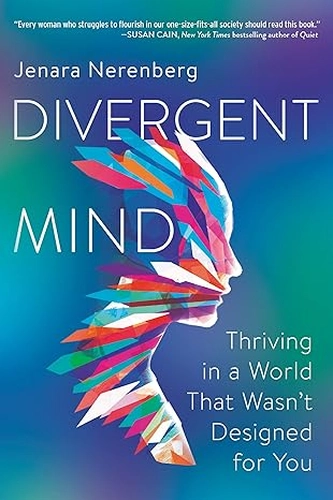
Divergent Mind
By Jenara Nerenberg
This one looks at the workplace from a completely different angle.
What makes it different: It explores neurodivergent women, those with ADHD, autism, high sensitivity, and sensory processing disorder. It explains why these traits are overlooked in women and how the workplace often was not designed for them.
What you get:
- Why neurodivergent traits are often missed or misdiagnosed in women
- How sensory processing differences affect daily work life
- Why so many women do not learn about their neurological differences until adulthood
- Practical solutions for thriving, not just surviving, at work
One key idea: The workplace was not designed for every kind of mind. Understanding that helps you stop blaming yourself for struggling in environments that were never built for you.
Best for: Anyone who has ever felt different at work and could not explain why.
How These Books Work Together
| Book | What it gives you |
|---|---|
| Awakening to Human Nature | How to read patterns of behavior over time |
| Understanding Human Nature | Why those patterns formed in the first place |
| Divergent Mind | How different brains experience the workplace |
One helps you see. One helps you understand. One helps you feel less alone if your mind works differently.
Final Thought
I think about that opening question sometimes, usually on Sunday evenings when the week ahead feels uncertain. Why do I always see people clearly after it is too late?
Maybe the honest answer is that I was not looking. The book did not teach me to look. It reminded me that I could.
I still trust people. I still bring cookies to the break room and remember birthdays. I just pay attention now to what repeats.
Start with one book. Try one technique. See what happens.

