The night I finished The Names by Florence Knapp, I sat on the kitchen floor at 1 a.m. with cold tea I’d forgotten to drink. My own mother once told me she nearly named me after her sister. That sentence has haunted me for years, and Knapp’s debut walked straight into that haunting and turned on the lights.
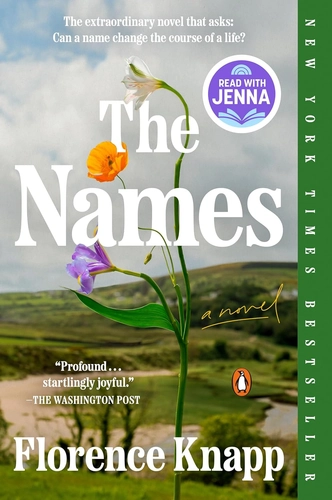
The premise is this. Cora walks to a registration office with her nine-year-old daughter, Maia, and a newborn son. Her husband, Gordon, a respected doctor, expects the baby to carry his name. Cora pauses at the counter, and the pause splits the book into three lives. The boy becomes Bear. Or Julian. Or Gordon. Each version stretches across thirty-five years. Which of the three, if any, lets Cora and her children escape the man waiting at home?
The Signature That Splits a Life
Cora is not a hero, and I think that’s the point. She’s exhausted, calculating, tender in ways she can’t always act on. The novel opens with violence so immediate I almost closed it. I’m glad I didn’t, though I’ll admit I skimmed two pages with my hand half over the text.
What Knapp does brilliantly is make the abuse a weather system rather than a plot device. It moves through every timeline. In one version Cora leaves early and still flinches at raised voices a decade later. In another she stays and watches her son learn his father’s silences. The boy changes with his name. The father does not. That asymmetry is the engine of the whole book.
The core image I can’t shake: a birth certificate form, that thin line for the first name, wide enough for a pen stroke and heavy enough to bend a family. Cora stares at it three times. Knapp returns to this image from different angles across the timelines, and by the third version my stomach tightened before I even read the name.
The Weather System of Abuse
Where the book stumbles, honestly, is the middle stretch of the Julian timeline. The seven-year jumps start to feel mechanical, and a few supporting characters blur together. I lost track of who knew what in which reality twice. I wrote a note on my bookmark that just said “wait, which sister?”
The prose is quiet rather than showy, which suits the material. Some reviewers have called it luminous. I’d say it’s careful. Knapp knows when to pull back from a scene, and she resists the temptation to make suffering beautiful.
The strongest cage in the novel isn’t iron bars. It’s the ordinary paperwork of a life, signed by a woman who had one second to decide.
What a Name Cannot Save
Should you read it? If you grew up in a house where a parent’s mood determined the temperature of every room, this book will find that old bruise. If you read purely for escape, look elsewhere. It is heavy. It is worth the weight.
What stays with me isn’t the multiverse gimmick, which is handled better than most. It’s the quieter implication that Cora’s choice matters less than her courage, and that courage in her world looks like a signature on a form, or a phone call, or simply standing up from a chair.
Knapp doesn’t hand out clean endings. She hands out continuations. The book won’t tell you which name was right. It will make you sit with the one life you actually got, and wonder, gently, what you’re still allowed to write on the line.

