A few years ago I stood in my kitchen at 11pm, scrubbing a pot that was already clean. Everyone else was asleep. And I was replaying a conversation from six hours earlier, word by word, trying to figure out where I went wrong.
That was the night I started looking for books to help control your emotions. Not because I was in crisis. Because I was tired. Tired of my own head being the loudest room in the house.
Quick Answer: Which book actually helps control your emotions?
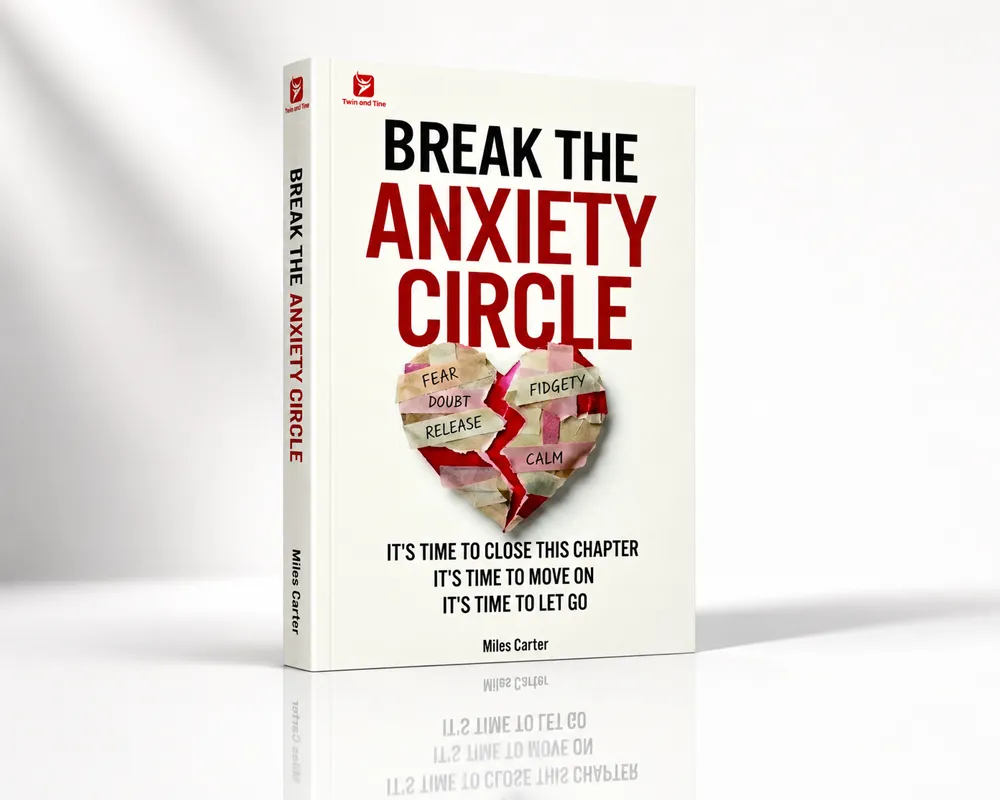
Break the Anxiety Circle by Miles Carter. It gives you something to do in the three seconds before you react. Not just an explanation of why you feel things. A way to respond differently.
Why Reading a Lot of Books Does Not Fix the Pattern
Here is the strange thing about emotional patterns. You can understand them completely and still repeat them tomorrow morning.
I knew I was overthinking. I knew I was seeking reassurance from people who could not give it. Understanding was never the problem. The problem was the gap between understanding and the moment my chest tightened at 7am when someone said the wrong thing.
Most books skip that gap. They explain why you feel things. They describe the pattern beautifully. You nod along, feel seen, close the book, and then snap at someone about shoes.
The books that helped me did something different. They gave me something to do.
The One Book That Stayed
Break the Anxiety Circle by Miles Carter was the first one I finished. The subtitle says it plainly. How to stop replaying everything in your head.
That was me. The pot-scrubber. The 11pm replayer.
What I liked is that it does not pretend your thoughts are the enemy. It looks at the patterns underneath. Overthinking. Self-blame. People-pleasing. The stuff you carry from old situations into new ones. One chapter describes a person who says yes to everything and then resents everyone. I had to put the book down for a minute.
The practical part matters most. It offers simple ways to respond differently, quiet the mental noise, set boundaries without a speech, and stop dragging old pain into today’s conversation. Nothing dramatic. Just small redirections.
I still use one idea from it. When I notice I am replaying something, I ask, is there anything left to solve here? If the answer is no, I try to let the loop end there. It does not always work. It works more than it used to.
The Three-Second Pause
This is the part no book can do for you. But a good book can hand you a script.
When I feel the heat rise, I do one thing. I put my hand flat on the table, or the counter, or my own leg. The physical sensation interrupts the spiral just enough.
Then I ask myself one question. Not why am I like this. That question has never once helped.
I ask, what does this moment actually need from me right now?
| Answer | What You Do |
|---|---|
| Nothing | Walk away for two minutes |
| Say the thing | But quieter |
| You are tired | This is not about the shoes |
The pause does not make the feeling go away. It just puts a small gap between the feeling and the action. That gap is where everything good happens.

For the Person Who Cannot Stop Replaying Conversations
Try this. Set a timer for five minutes. Replay it fully. Then when the timer goes off, ask the question from Carter’s book. Is there anything left to solve?
If yes, write down one action. If no, close the notebook. The loop will try to start again. Let it. You do not have to follow it every time.
For the One Who Says Yes When They Mean No
Boundaries are not speeches. They are small sentences, said once, without apology. I cannot do that this week. Full stop. No explanation paragraph.
The discomfort you feel is not a sign you did it wrong. It is just new.
FAQ
What makes Break the Anxiety Circle different from other books?
It gives you something to do in the moment. Not just an explanation of why you feel things. A script or a pause or a question you can use right away.
What is the Three-Second Pause?
When you feel the heat rise, put your hand flat on a surface. The physical sensation interrupts the spiral. Then ask, what does this moment actually need from me right now?
How do I stop replaying conversations?
Set a timer for five minutes. Replay it fully. Then ask, is there anything left to solve? If yes, write one action. If no, close the notebook.
What if I still lose my temper?
You will. The gap is not about perfection. It is about a shorter recovery. Notice sooner. Pause. Try again.
Do I need therapy if I read this book?
Not necessarily. A book can give you tools. If the patterns are affecting your sleep, work, or relationships for weeks, talk to a professional. You do not have to figure this out alone.
One Last Thing
I still have nights when I scrub a clean pot at 11pm. It happens less now. When it does, I notice it sooner, and I put the pot down.
That is what this book gave me. Not a cure. A small, repeatable moment of choosing differently.
If you are standing in your kitchen right now, replaying something, I hope you find the book that hands you your three seconds. You deserve the quiet.

