I did not plan to become the person who reads three books about a racing mind in one year. It started on a Tuesday, around 2am. I was lying awake replaying a text I had sent eight hours earlier. Just a short message to a coworker. But my brain had turned it into a full courtroom drama, with me as both prosecutor and defendant.
That night I ordered the first book. Then another. Then one more. What I found surprised me. Books that actually help with anxiety and stress do not hand you a switch to turn your mind off. They teach you something stranger. How to stop feeding the noise.
Quick answer: Which books actually help with anxiety and stress?
Start with one that helps you stop replaying everything in your head, one that explains why stress gets stuck in your body, and one that shows why your thoughts are not the enemy.
Here are three books that helped me. One gave me a name for the overthinking loop. One explained why I still felt tense on Saturday mornings. One showed me that my thoughts were not the problem.
Why Do We Get Stuck in the Loop?
Most of us think stress lives in our circumstances. The deadline. The rent. The inbox. But the books I read kept circling back to a different idea. Stress lives in the loop between what happens and what we tell ourselves about it.
One book explained it this way. Your brain has a monitor. It scans for threats, and frustration is its favorite alarm. When you never complete the stress cycle, that alarm keeps ringing long after the danger has passed.
Another book put it differently. The root cause of suffering is not what happens to us. It is what we think about what happens to us. That reframe changed something for me. I stopped asking why I was so anxious. I started asking what I was doing to keep the anxiety alive.
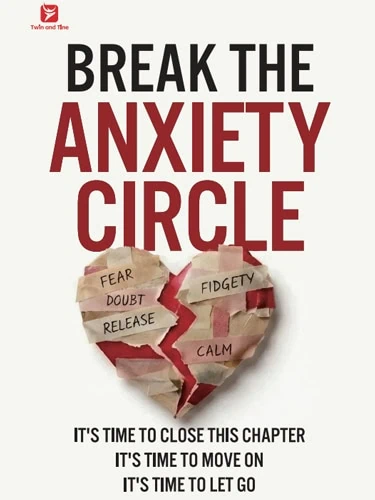
Break the Anxiety Circle
By Miles Carter
If I had to hand one book to a friend at 2am, it would be this one.
What makes it different: It is a practical guide for people who are tired of fighting the same thoughts over and over. The book explores the patterns behind overthinking, self-blame, people-pleasing, and difficulty letting go of the past.
What you get:
| What you learn | Why it matters |
|---|---|
| How to recognize the overthinking spiral | You see the loop before it takes over |
| Why small mistakes become proof you are not good enough | You stop believing the story |
| How to quiet mental noise | You find moments of actual peace |
| How to set healthier boundaries | You protect your energy without guilt |
One key idea: Healing begins when you stop fighting your past and start understanding it.
What I did with it: I read the chapter on replaying conversations twice. Carter describes the exact spiral I knew so well. I finished the book feeling something I had not felt in months. A sense of control over my own inner world.
Best for: Anyone who is tired of replaying everything in their head.
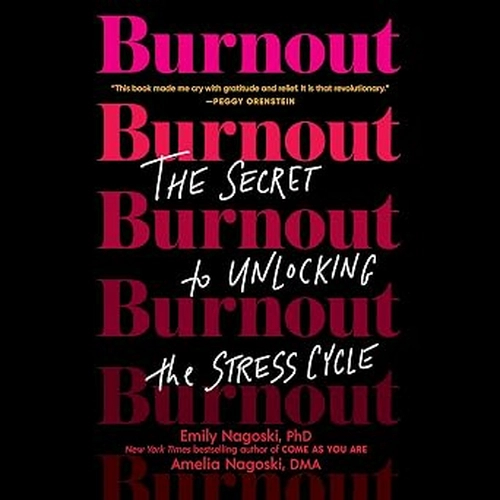
Burnout: The Secret to Unlocking the Stress Cycle
By Emily Nagoski and Amelia Nagoski
This book explains why stress does not just live in your thoughts. It lives in your body.
What makes it different: Stress is not just a thought. It is a biological event, and it needs a physical ending. You can solve the problem, but the stress stays in your body. Have you ever finished a hard week and still felt tense on Saturday morning? That is the unfinished cycle.
What you get:
- A roadmap for completing the stress cycle
- Why movement, breathing, connection, and even a good cry help
- How women experience exhaustion differently
- The gap between what is expected of you and what your actual life looks like
One key idea: Stress is not just a thought. It is a biological event, and it needs a physical ending. Solving the problem is not enough.
Best for: Anyone who solves problems but still feels tense.
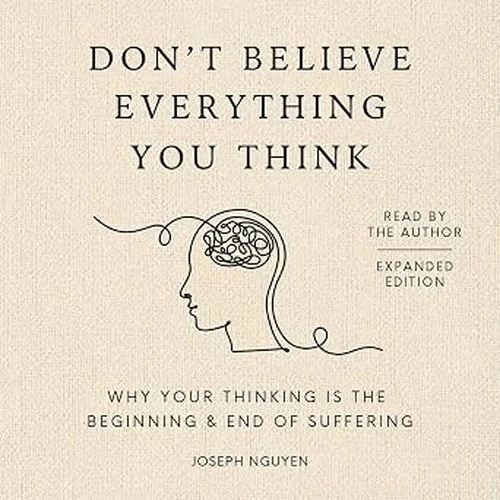
Don’t Believe Everything You Think
By Joseph Nguyen
This one takes a completely different angle. It is not about managing anxiety. It is about understanding where it comes from.
What makes it different: Nguyen argues that the root cause of all psychological and emotional suffering is not our circumstances. It is our thinking. The solution is not to think better. It is to see that our thoughts are not the whole truth.
What you get:
- The root cause of psychological and emotional suffering
- How to become unaffected by negative thoughts and feelings
- How to break free from negative thought loops
- How to let go of anxiety, self-doubt, and self-sabotage
One key idea: Pain is inevitable. Suffering is optional. The difference is what you think about the pain.
Best for: Anyone who wants to understand the deeper source of their anxiety, not just manage the symptoms.
Which Book Should You Start With?
| If you want… | Start with… |
|---|---|
| To stop replaying everything in your head | Break the Anxiety Circle |
| To understand why stress gets stuck in your body | Burnout |
| To understand where anxiety comes from | Don’t Believe Everything You Think |
You do not need all three. Pick the one that matches where you are right now.
Final Thought
If you are lying awake tonight, replaying something small, start with Carter. He writes to the person who is tired. That was me. Maybe it is you too.
You cannot force your mind to be quiet. You can change your relationship with the noise. That is not a cure. It is something better. It is company.
Start with one book. Try one technique. See what happens.
Frequently Asked Questions
Which book is best for overthinking?
Break the Anxiety Circle focuses specifically on the overthinking loop. Don’t Believe Everything You Think goes deeper into why we overthink.
What if I am too stressed to even read?
Start with Burnout. It gives you physical ways to complete the stress cycle. You do not have to think your way out.
Do I need to read all three?
No. But they work well together. One gives you tools. One gives you science. One gives you a new way of seeing your thoughts.
Can these books replace therapy?
No. They are companions, not replacements. If anxiety is severe, a therapist can help. These books support that work.

