At a family dinner, someone casually asks, “So, when are you two having kids?” Before you have even decided whether to answer, another person joins in with, “And are you still working at the same place?” You laugh because everyone else is laughing, give a vague answer, and quickly change the subject. Later, you realize you spent the entire exchange feeling uncomfortable because you never actually knew how to say, “I don’t want to talk about that.”
Intrusive questions can catch people off guard precisely because they arrive in ordinary conversations. They may be about relationships, money, family plans, personal problems, age, or anything else you would rather keep to yourself. The difficult part is not always knowing that the question crossed a line; it is finding a response that protects your privacy without turning the entire conversation into a confrontation.
The good news is that you do not need a clever comeback. In most situations, a calm and direct boundary is enough.

What Should You Say When a Question Crosses the Line?
Start by deciding how much you actually want to share. You do not have to answer simply because someone asked, and you do not need to invent a complicated excuse for keeping something private.
A few natural responses can work in many situations:
“I’d rather keep that private.”
“I’m not really comfortable talking about that.”
“That’s personal, so I’ll pass on that one.”
“I’d rather talk about something else.”
These responses work because they focus on your own boundary rather than criticizing the person for asking. You are not saying, “You’re rude,” or “Why are you so nosy?” You are simply making it clear that the subject is not available for discussion.
Choose the Response Based on the Situation
Not every intrusive question needs the same level of firmness. At a casual gathering, a light redirect may be enough. If someone asks, “Are you seeing anyone?” you might say, “I’m keeping that part of my life to myself. How have things been with you?”
The conversation stays friendly, but you have still made your position clear.
Work situations may require a slightly more neutral response. If a colleague asks about your salary or personal relationship, “I prefer to keep my personal life separate from work” establishes the boundary without creating unnecessary tension.
When someone continues pushing after you have already answered indirectly, it is usually better to become clearer rather than more apologetic. Repeating, “I really don’t want to discuss that” is often more effective than giving a longer explanation that invites another round of questions.
You Do Not Need to Explain Why Your Boundary Is Reasonable
A common mistake is feeling that you have to justify your refusal.
Someone asks a personal question, and you explain why the question makes you uncomfortable. Then you explain why you do not usually talk about the topic. Then you reassure them that you are not upset with them. By the end, the original boundary has turned into a discussion about whether you are allowed to have it.
You are.
Privacy is not something that needs to be defended with a detailed argument. A simple sentence can be enough, especially when you deliver it calmly and move the conversation somewhere else.
What If You Answered Before You Realized It Was Too Personal?
This happens more often than people admit. You answer automatically because you were surprised, and only afterward realize that you shared more than you intended.
You are still allowed to close the subject. You can say, “Actually, I’d rather not get into that,” even if you already started answering.
You do not need to feel embarrassed about changing direction. Conversations move quickly, and people sometimes respond before they have had time to decide what they want to share.
The important thing is recognizing that you can regain control of the conversation once you notice that a boundary has been crossed.
What If the Other Person Gets Offended?
Someone may respond with, “I was only asking,” or, “Why are you being so sensitive?” That can make you question whether you handled the situation badly.
Try not to let their reaction automatically become your responsibility.
You can acknowledge their intention without changing your boundary: “I know you probably didn’t mean anything by it. I’d still rather not talk about that.” This keeps the tone respectful while making it clear that their curiosity does not determine what you have to reveal.
A boundary does not become unreasonable simply because someone dislikes hearing it.
This Is Where Say It Right Every Time Fits In
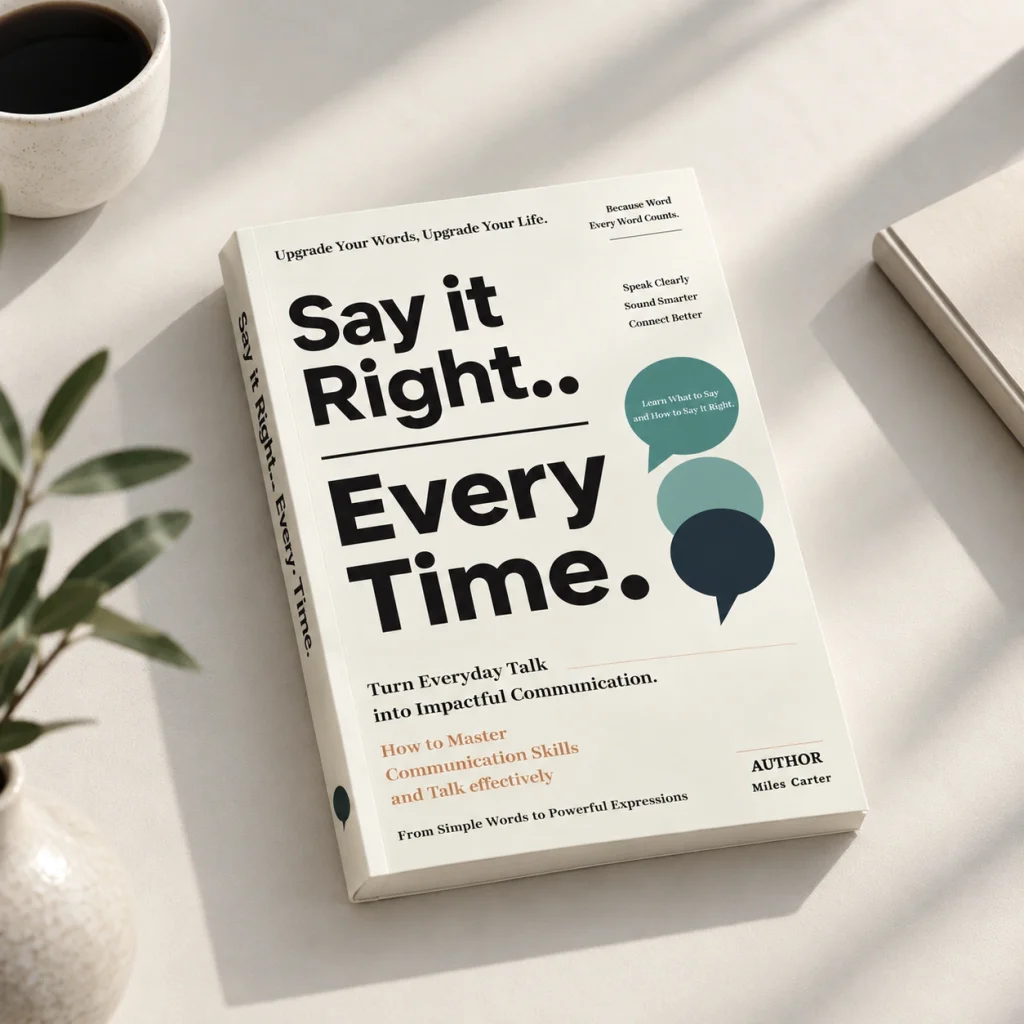
These situations are exactly the kind of everyday communication problem that Say It Right Every Time by Miles Carter is designed to address.
The book includes a dedicated section on what to say when a question crosses the line, along with strategies for staying grounded when someone is rude or makes you uncomfortable. Instead of relying on vague advice such as “be more assertive,” it focuses on the language you can use when you are caught off guard and need to respond without escalating the situation.
That practical approach matters because intrusive questions rarely arrive at a convenient time. You may be standing at a dinner table, sitting in a meeting, talking to a stranger, or dealing with someone who is already being disrespectful. Having a clearer idea of how to respond can make it much easier to protect your boundaries without becoming defensive.

Say it Right..Every Time.
Miles CarterPractical communication tools for the moments that matter — say what you mean, calmly and confidently.
What You Can Gain From Reading the Book
One of the biggest benefits of Say It Right Every Time is that it helps turn communication principles into words you can actually use. Instead of freezing, over-explaining, or reacting emotionally, you can become more comfortable choosing a response that fits the situation.
The book can also help you:
- set boundaries without sounding hostile
- respond when someone becomes rude or disrespectful
- say no without feeling pressured to provide a long explanation
- stay composed when a question catches you off guard
- disagree or push back without immediately creating an argument
- communicate your position more confidently under pressure
These skills are useful far beyond intrusive questions. The same communication habits come into play when someone gives unwanted advice, makes a personal comment, challenges a boundary, or expects an answer you are not ready to give.

You Do Not Need the Perfect Comeback
When someone asks an uncomfortable question, it is easy to search for the smartest or funniest response. Usually, you do not need one.
A calm sentence such as “I’d rather not discuss that” can do more than a clever comeback because it tells the other person exactly where the conversation ends. You are not attacking them, but you are also not giving up your privacy just to keep things comfortable.
With practice, these responses become easier to use because you no longer have to invent them in the moment. That is one of the practical strengths of learning communication as a skill rather than treating it as something people either naturally have or do not have.
Your Privacy Does Not Need an Apology
You can be friendly without answering every question. You can care about keeping a conversation comfortable while still deciding that certain subjects belong to you.
The next time someone asks something too personal, you do not have to search for a perfect explanation. Decide what you want to share, say it clearly, and let the conversation move on.
Sometimes the most confident response is also the simplest: “I’d rather keep that private.”
Did this article help you see things differently? Our books turn helpful ideas into practical tools you can return to anytime.




Imagine The Other Half
$24.99

