At a networking event, Daniel found himself standing beside a group of people who were already deep in conversation. He wanted to join them, but every possible opening sounded awkward in his head. Asking what they did for work felt predictable, interrupting their discussion seemed rude, and making a joke felt like a risk. By the time he finally found something to say, the group had moved on to another topic.
Breaking the ice is not necessarily the hardest part of socializing; it is often the uncertainty surrounding those first few seconds. You want to show interest without interrogating someone, sound friendly without forcing humor, and keep the conversation moving without feeling responsible for entertaining everyone.
The books below approach those moments from different angles. Some offer practical conversation starters, others focus on social cues and rapport, and one concentrates on what to say when an ordinary interaction becomes unexpectedly difficult.
1. How to Talk to Anyone by Leil Lowndes
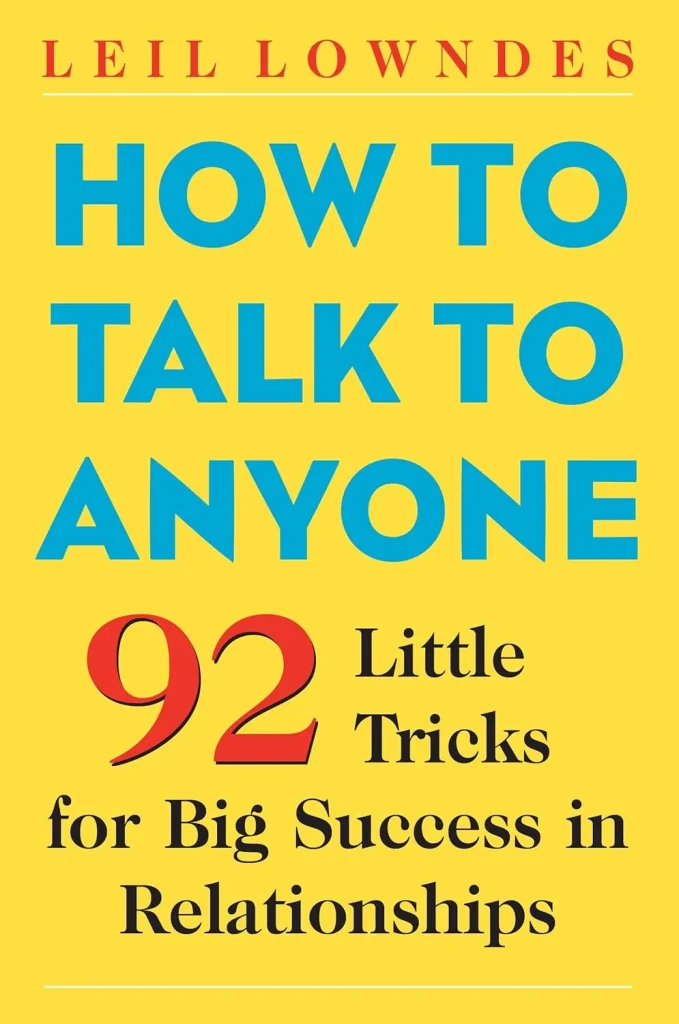
If you want a widely recognized book on social skills, How to Talk to Anyone by Leil Lowndes is a natural starting point. It presents a large collection of practical techniques for making introductions, creating a positive first impression, using body language, and navigating social situations with greater confidence.
What makes it relevant to icebreakers is its attention to the small decisions people make when meeting someone new. How you approach a group, respond to an introduction, or show interest in another person can influence whether the conversation develops naturally or stops after a few polite exchanges.
Not every technique will feel natural to every reader, and that is worth remembering. Rather than trying to imitate every suggestion, choose the ideas that fit your personality and use them as starting points for genuine interaction.
2. Say It Right Every Time by Miles Carter
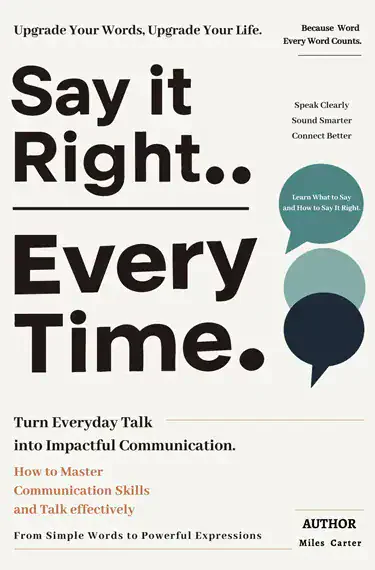
Say It Right Every Time focuses on the practical language behind everyday conversations, especially when you know you want to connect with someone but are unsure what to say next. The book covers how to start a conversation with anyone, keep a conversation going, make others feel understood, respond to compliments, and share ideas in ways that encourage people to listen.
Its approach is useful beyond the opening line. A conversation can start well and still become awkward when you cannot think of a follow-up question, respond too briefly, or struggle to move naturally from one topic to another. The book explores techniques such as the Echo Technique, which emphasizes making the other person feel heard, along with practical approaches to expressing yourself clearly and responding to different conversational situations.

Say it Right..Every Time.
Miles CarterPractical communication tools for the moments that matter — say what you mean, calmly and confidently.
It also addresses moments that can make social interaction more intimidating, including awkward conversations, speaking with confidence under pressure, and handling unexpected questions or unwanted advice. For readers who want to move beyond memorized icebreakers and become more comfortable with the entire conversation, this broader focus can be particularly helpful.
3. The Fine Art of Small Talk by Debra Fine
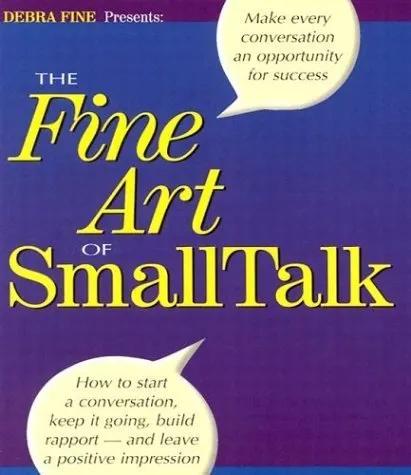
While How to Talk to Anyone covers a broad range of social skills, Debra Fine’s The Fine Art of Small Talk concentrates more directly on everyday conversation. It explores how to start talking to strangers, keep an exchange going, avoid common conversational mistakes, and leave a positive impression in both social and professional settings.
The book is especially relevant if you find yourself repeatedly asking predictable questions without knowing how to develop the answers. Fine’s approach encourages readers to become more comfortable initiating conversations and paying attention to the details that can lead to a more engaging exchange.
It is a practical choice for networking events, parties, work functions, and other settings where you may need to talk with people you have never met. Its focus is less on deep emotional conversations and more on making the first stages of interaction feel manageable.
4. How to Start a Conversation and Make Friends by Don Gabor
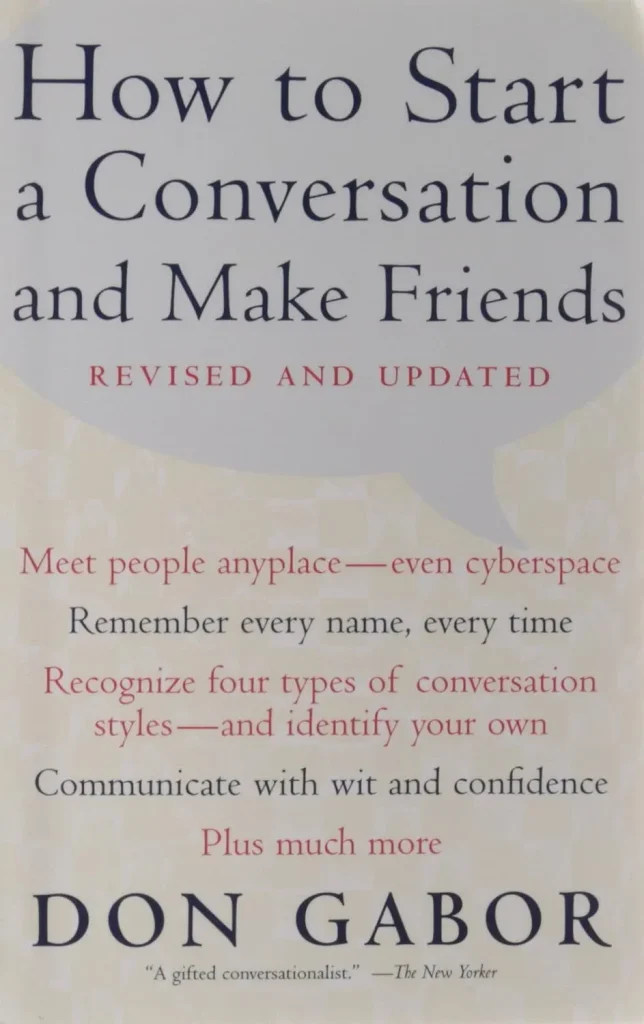
Don Gabor’s How to Start a Conversation and Make Friends focuses on the everyday mechanics of meeting people and building connections. It covers conversation openers, asking questions, using body language, avoiding common social pitfalls, and communicating in both face-to-face and online settings.
This book is particularly useful for people who tend to overthink the opening moments of an interaction. Instead of waiting for an ideal opportunity or a particularly interesting topic, you can learn to approach ordinary situations with more flexibility and confidence.
The book also connects conversation skills with relationship-building. Starting an exchange is only the first step; showing interest, listening well, and giving the other person a reason to continue talking are what help a brief introduction develop into a more lasting connection.
5. Captivate by Vanessa Van Edwards
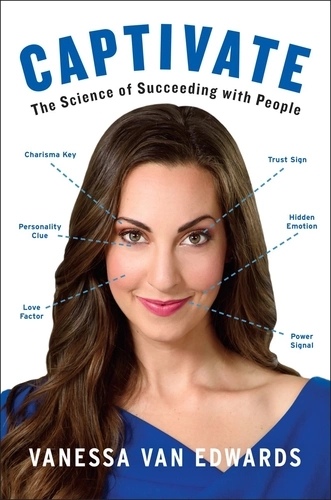
Captivate by Vanessa Van Edwards explores the behavioral and social cues that influence first impressions and interpersonal interactions. It combines research-informed discussion with practical advice about body language, reading social situations, and making connections without pretending to be someone you are not.
This perspective can be useful when your difficulty is not necessarily finding words but knowing how to enter a conversation. You might hesitate because you cannot tell whether a group is open to another person joining, or you may miss signs that someone is interested in continuing an exchange.
The book encourages readers to pay attention to the broader interaction rather than relying entirely on rehearsed lines. That can make icebreaking feel less like delivering a performance and more like responding to the people and circumstances around you.
What to Say When You Cannot Think of an Opening Line
You do not need an original or especially clever question to begin a conversation. In many cases, a simple observation or a question connected to the immediate situation is enough.
At a professional event, you might ask, “What brought you to this event?” At a gathering, you could ask how the person knows the host. If someone mentions a project or recent trip, you can follow up on that detail instead of immediately switching to an unrelated question.
The important part is what happens after the first question. Listen to the answer, notice which details the person seems interested in sharing, and respond to those details. This creates a more natural exchange than moving mechanically from one prepared question to another.
Say it Right..Every Time.
Miles CarterPractical communication tools for the moments that matter — say what you mean, calmly and confidently.
Make the Other Person Feel Comfortable Too
Icebreaking is often approached as a problem of what you should say, but the other person’s experience matters just as much. Someone may be shy, tired, distracted, or unsure how to participate in the conversation themselves.
You can make the interaction easier by asking approachable questions, giving the other person enough time to answer, and sharing a little about yourself rather than turning the conversation into an interview. If they give short answers and do not seem interested in continuing, it is perfectly acceptable to end the exchange politely.
A successful icebreaker does not guarantee an instant friendship. Its purpose is simply to create a comfortable opportunity for two people to discover whether they have something worth talking about.
Which Book Should You Start With?
Each of these books serves a slightly different purpose. How to Talk to Anyone offers a broad collection of social techniques, Say It Right Every Time focuses on wording and real conversational situations, The Fine Art of Small Talk concentrates on starting and sustaining casual exchanges, How to Start a Conversation and Make Friends emphasizes conversation skills across different settings, and Captivate explores the social cues that influence connection.
If your main obstacle is finding something to say at the beginning, a book focused on small talk may be the most direct fit. If you can start conversations but struggle to keep them going, a broader book on communication can help you work on listening, follow-up questions, and responses.
You do not need to become the most outgoing person in the room to master icebreakers. A little preparation, genuine curiosity, and the willingness to let a conversation develop naturally can take you much further than a perfect opening line.
Did this article help you see things differently? Our books turn helpful ideas into practical tools you can return to anytime.



Imagine The Other Half
$24.99

