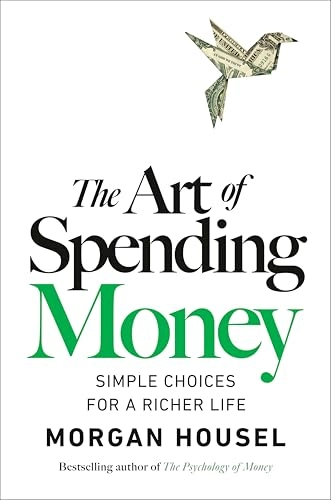
I read most of this book at my kitchen table, one coffee going cold beside me, while a delivery van idled outside and I quietly decided I did not need whatever was in it. That timing was accidental. It also turned out to be the entire book.
Morgan Housel makes a simple argument: most of us don’t have a math problem with money, we have a story problem. We spend to be seen, save out of fear, and confuse admiration with envy. The fix isn’t a budget. It’s self-knowledge, which is a far harder sell than a spreadsheet.
So if the problem was never arithmetic, why do so many careful, intelligent people stay miserable with plenty in the bank?
The Grandmother-in-Law Who Broke the Math
Housel’s most affecting figure is his wife’s grandmother, a woman who finished life with little and wanted even less. He sets her against the billionaires he has met, and not one of them, by his account, came close to her ease. This is not a story about poverty being noble. It’s about desire being a debt you pay before you feel anything else.
Contentment, he suggests, equals what you have minus what you want. Shrink the second number and the first one stops mattering so much.
Housel is honest about how uncomfortable that sounds. He describes retirees who spent forty years saving and now cannot spend a cent, a pattern he calls frugality inertia. Financial planners, he reports, say this is one of their hardest client problems. The habit outlives the reason for it.
That one stung. My father kept a pantry of discounted canned goods long after he could afford anything in the store, and I used to laugh about it. After this chapter I mostly felt sad, then worried, because the reflex looks hereditary.
The conflict Housel builds isn’t between rich and poor. It’s between the version of you that wants to be admired and the version that wants to be left alone with the people you love. He never resolves it for you. That’s the point, and it’s also where the book gets slippery.
A Book That Argues Through Its Own Restraint
The formal gene here is subtraction. Short chapters. Plain sentences. Housel resists the urge to impress you, which is either humility or a very effective performance of it.
His images do the heavy lifting. There’s the ring you finally enter, only to find the next ring waiting. There’s social debt, his term for the way a bigger house recruits you into a peer group that expects more house. There’s the $3 latte versus the $300,000 college decision, and his irritation at people who obsess over the first while ignoring the second.
Contrast, he argues, is where pleasure lives. An occasional luxury lands harder than a permanent one, because a permanent one becomes your baseline and stops registering at all.
That pattern is universal, and it isn’t about money. The promotion that felt enormous in March is ordinary by October. The vacation you saved three years for becomes a photo you scroll past.
Housel’s craft is real. So is the sameness, and I’d rather name it than pretend otherwise.
Where the Book Slips, and Who Should Still Read It
Two problems. First, if you’ve read The Psychology of Money or Same as Ever, roughly a third of this will feel like reheated dinner. Thematic overlap is generous phrasing. Second, the advice is easier to admire from a position of comfort. Telling someone with two jobs to stop chasing status is a little tone deaf, and Housel doesn’t sit with that tension long enough.
Read it if you’re in your twenties or thirties and haven’t yet locked in your spending identity, or if you’re near retirement and genuinely cannot spend what you saved. Skip it if you want tactics, or if you’ve already read his earlier books and need new material.
What you get is a mirror, not a manual. The chapters on raising children around money struck me hardest, the quiet observation that kids watch what you waste and how your face changes when a raise arrives. Mine are young. I’ve been narrating the wrong things.
This book won’t fix your finances. It will make you slightly less certain that the next purchase is the one that finally settles something.
“Desire is a hidden form of debt that must be repaid before you get to feel any happiness.”

