By the time Claire finished work, answered messages from her family, and organized everything needed for the following morning, she had very little energy left for herself. Yet when she finally sat down, her mind began listing everything she might have forgotten. She wondered whether she had disappointed a colleague, whether she was doing enough for the people around her, and whether there was something important she should have handled differently.
For some women, anxiety becomes intertwined with the pressure to keep everything running smoothly. Work, family responsibilities, relationships, expectations around achievement, and the habit of putting other people’s needs first can all contribute to stress. Other women experience anxiety in completely different ways, including panic, fear of uncertainty, perfectionism, or persistent worry that seems to appear without a clear trigger.
There is no single book that fits every woman’s experience. The five options below include a guide written specifically around women’s experiences with anxiety, a broader book on stress, and resources that explore anxious thinking from different psychological perspectives.
1. The Anxiety Sisters’ Survival Guide by Abbe Greenberg and Maggie Sarachek
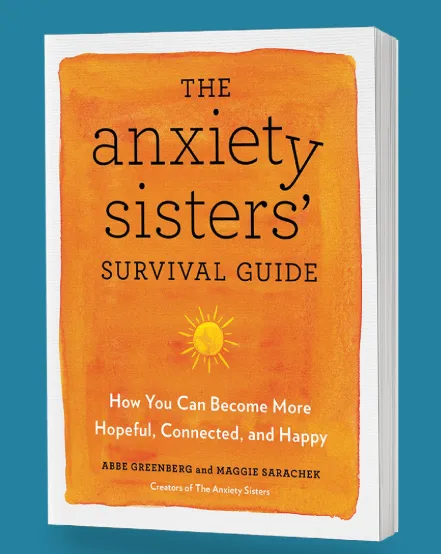
The Anxiety Sisters’ Survival Guide: How You Can Become More Hopeful, Connected, and Happy is an accessible introduction for women who want practical ways to understand and manage anxiety. Abbe Greenberg and Maggie Sarachek draw on their own experiences and their work supporting an anxiety-focused community to discuss worry, panic, stress, grief, and everyday coping.
The book combines relatable stories with practical exercises and strategies, making it useful for readers who prefer an approachable tone over a highly technical discussion of anxiety. It also addresses the isolating effects of anxiety, especially when fear begins to limit social activities or makes ordinary tasks feel unnecessarily difficult.
For someone who wants to feel less alone while learning practical ways to respond to anxious thoughts, this is a natural starting point. The book does not require you to eliminate anxiety completely before you can begin reclaiming parts of your everyday life.
2. Break the Anxiety Circle by Miles Carter
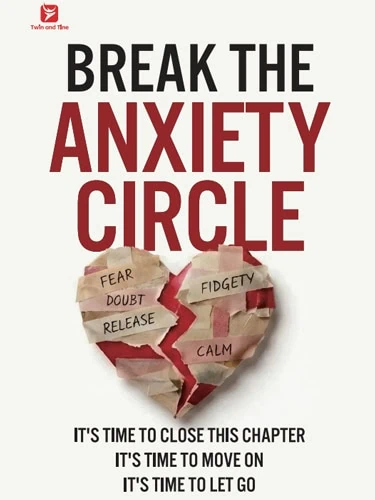
Break the Anxiety Circle examines the patterns that can keep anxiety active long after the original concern has passed. One uncomfortable conversation becomes an evening of self-criticism; one difficult decision leads to repeated reassurance-seeking; one mistake turns into a series of worries about what other people think.
The book explores overthinking, self-doubt, fear of judgment, people-pleasing, emotional regulation, and boundaries. These topics can be especially relevant when anxious thoughts become tangled with the pressure to meet expectations or keep everyone else happy.
Rather than focusing exclusively on stress management, the book looks at the repeated thought patterns that can make anxiety feel difficult to switch off. It may be useful for readers who appear to be managing their daily responsibilities but feel mentally exhausted by constant analysis behind the scenes.

Break the Anxiety Circle
Miles CarterA mental reset for people trapped in the overthinking loop. Understand why your mind won’t stop racing — and how to break free from anxiety, people-pleasing, and emotional exhaustion.
3. Burnout by Emily Nagoski and Amelia Nagoski
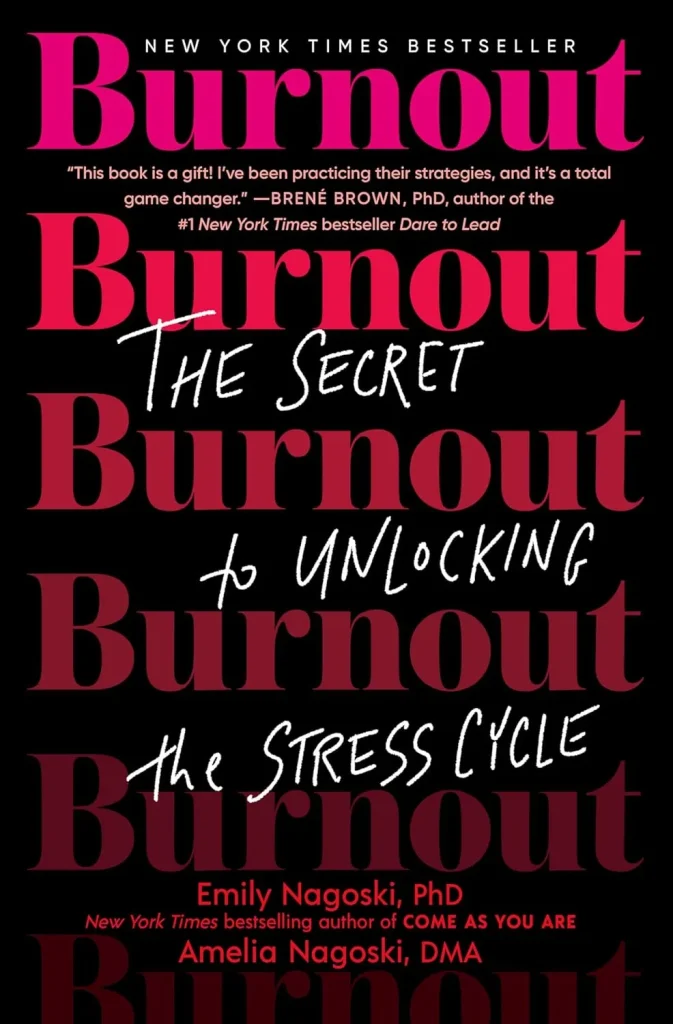
Burnout: The Secret to Unlocking the Stress Cycle by Emily Nagoski and Amelia Nagoski examines chronic stress and why completing a stressful task does not always mean the body and mind immediately feel settled. The authors discuss the stress cycle, emotional exhaustion, and the pressures that can make it difficult to recover after demanding experiences.
Although this is not an anxiety-specific workbook, it can be relevant for women whose anxious feelings are closely connected to prolonged stress and feeling responsible for too many things. The book explores how social expectations and the demands of everyday life can shape the way women experience stress.
Its emphasis on stress recovery offers a different perspective from books that concentrate mainly on the content of anxious thoughts. For readers who feel constantly activated or depleted, understanding the difference between resolving a problem and recovering from stress can be a useful starting point.
4. The Anxiety Toolkit by Alice Boyes
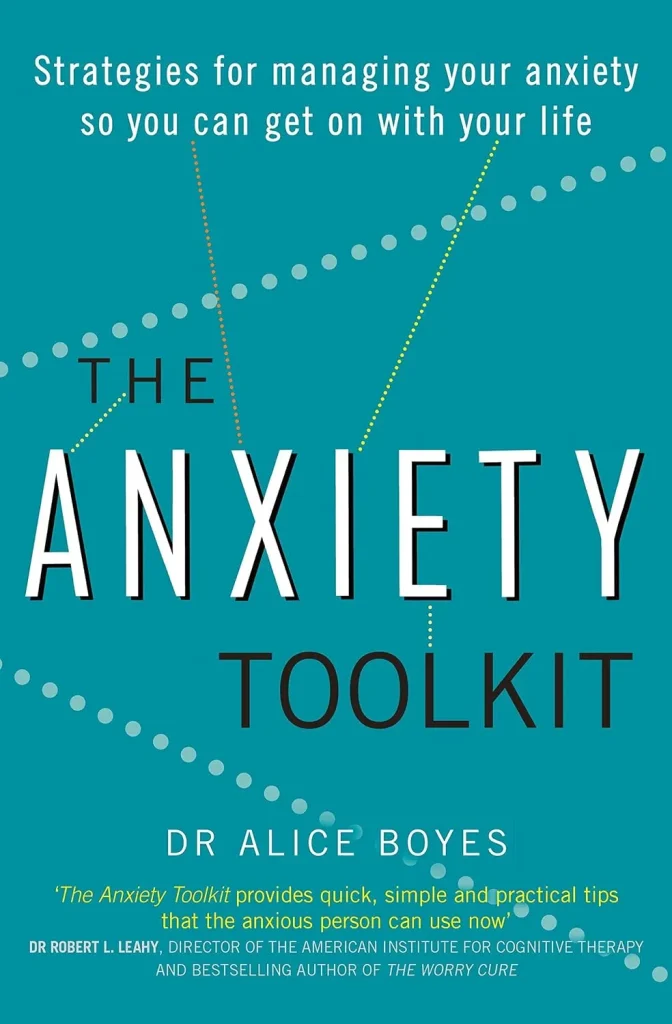
In The Anxiety Toolkit: Strategies for Fine-Tuning Your Mind and Moving Past Your Stuck Points, psychologist Alice Boyes focuses on practical strategies for working with anxious thinking and behavior. The book draws on cognitive behavioral therapy concepts and applies them to common difficulties such as avoidance, perfectionism, uncertainty, and getting stuck in repetitive analysis.
The approach is relevant for people who understand that their fears may be exaggerated but still find it hard to change what they do when anxiety appears. For example, you might keep postponing a difficult task because you want to feel more prepared, only to become more anxious as the deadline approaches.
The book offers ways to identify those patterns and take manageable steps forward. Although it is not written exclusively for women, its practical approach can be useful for anyone whose anxiety shows up through everyday decisions, work, and personal responsibilities.
5. The Anxiety and Phobia Workbook by Edmund J. Bourne
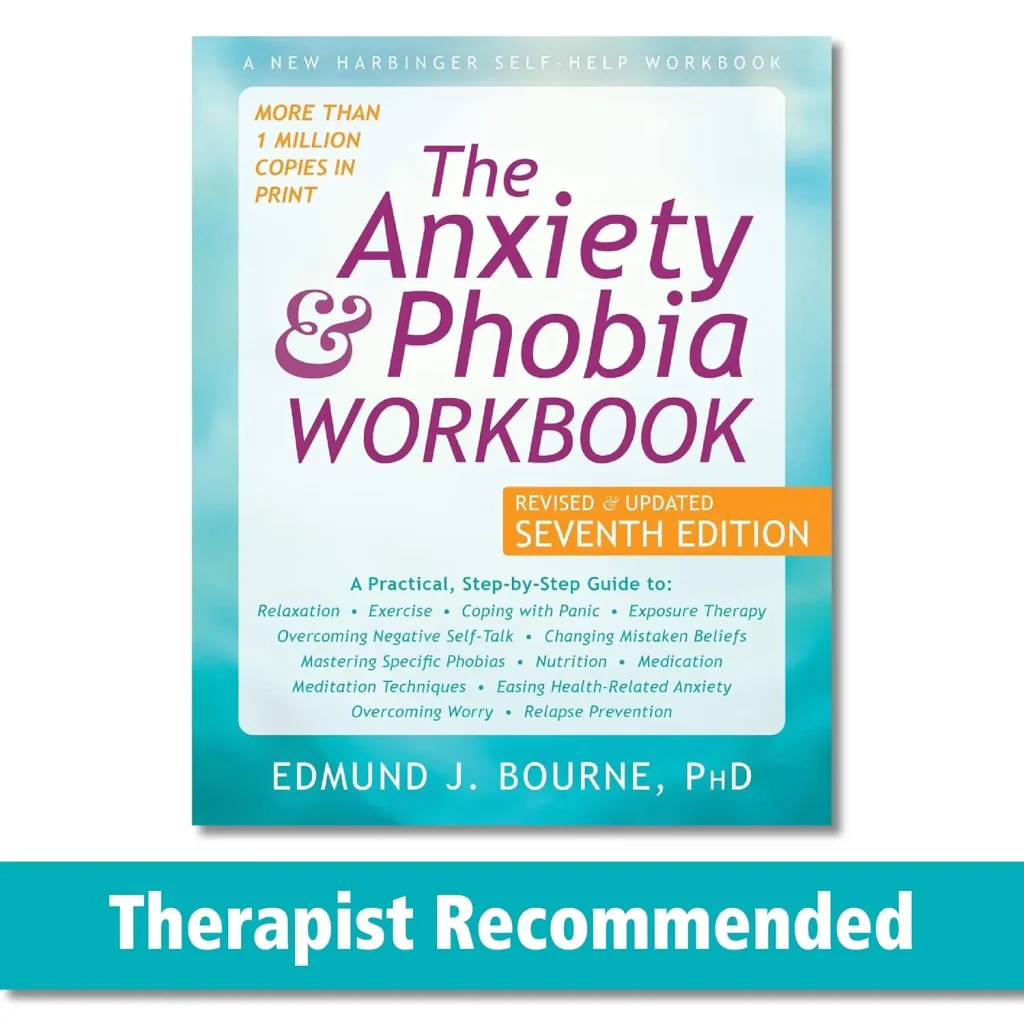
Edmund J. Bourne’s The Anxiety and Phobia Workbook provides a more comprehensive, exercise-based resource. The eighth edition, published in 2025, covers a wide range of anxiety-related difficulties and includes structured material on coping skills and approaches readers can practice at their own pace.
This book is suited to readers who want something they can actively work through rather than a primarily narrative discussion of anxiety. Its broader coverage can be helpful if your concerns involve several areas of life or if you want to explore different techniques before deciding which ones are most useful to you.
It is not specifically a women’s anxiety book, but many of the skills it covers are relevant regardless of gender. The workbook format also makes it possible to focus on selected concerns instead of trying to absorb every section at once.
When Anxiety Is Mixed With the Pressure to Do Everything
Sometimes the most useful question is not simply, “Why am I anxious?” but “What am I expecting myself to manage right now?”
You might be trying to meet demanding standards at work while also being the person who remembers appointments, checks on family members, and keeps personal responsibilities organized. You may feel guilty when you rest or believe that saying no will disappoint someone. Over time, these habits can leave little room to notice your own needs.
It can help to look at the sources of pressure separately. Which responsibilities genuinely belong to you? Which expectations could be discussed or shared? Which worries require practical action, and which ones keep returning even after you have done what you reasonably can?
These questions are not a replacement for addressing anxiety itself, but they can make the demands surrounding it more visible.
Find a Book That Matches Your Experience
The five books above are useful for different reasons. The Anxiety Sisters’ Survival Guide combines practical coping ideas with personal experiences of anxiety; Break the Anxiety Circle focuses on repetitive thinking and self-doubt; Burnout explores the stress cycle and recovery; The Anxiety Toolkit offers practical strategies for anxious thinking; and The Anxiety and Phobia Workbook provides a more structured resource covering a broad range of anxiety concerns.
Not every woman will relate to the same stressors, and anxiety is not a personal failing or a sign that someone is incapable of managing life. The most useful book is the one that helps you understand your own experience and gives you a realistic place to begin.
If anxiety is significantly affecting daily functioning or feels difficult to manage on your own, it can also be worth speaking with a qualified mental health professional. Reading can support self-understanding, but it does not have to carry the whole burden of helping you feel better.
If you found this helpful, these books go deeper into the same themes.



Break the Anxiety Circle
$19.90

From Debt to Wealth
$19.90

