Why this question matters more than it seems
Okay, let’s be real. Parents don’t sit around thinking about this for fun. You ask this question because you just messed up. Maybe you yelled. Maybe you said something you’d give anything to take back. I still remember one night last year. Work ran late, dinner was a disaster, and my daughter spilled her milk—again. I just snapped. The look on her face stopped me cold. It wasn’t just “oh no, Mom’s mad.” She looked hurt. And about two minutes later, the guilt just hit me like a truck.
This isn’t about some fancy parenting philosophy. It’s about guilt. It’s about feeling like you’re supposed to be the grown-up but you just acted like a kid. And honestly, a lot of us have this little voice in our heads: If I say sorry, will she think she can walk all over me? But underneath that, there’s something else—this nagging feeling that you broke something small but real. That’s when you find yourself googling at 10pm, not because you want to be some perfect Pinterest mom, but because you actually care about your kid.
Do parents need to apologize to kids when making mistakes
Yeah, parents should apologize. But here’s what took me a while to figure out—it’s not just about saying the words. It’s how you say them.
A quick “sorry” without any explanation just confuses a kid. I’ve done it. My son would just stare at me like, “Okay… but what are you sorry for?” A real apology—where you actually name what you did wrong and show you give a damn—that hits different. It teaches kids that everybody messes up, even grown-ups. And when we mess up, we try to fix it. I’ve read this from a bunch of parenting experts over the years, and honestly? They’re right. Apologizing the right way doesn’t make you look weak. It just shows your kid what it actually looks like to own your stuff.
What Happens When Parents Never Apologize?
When parents never apologize, children often learn one of two lessons:
- Power matters more than accountability.
- Feelings don’t matter if you’re younger.
Over time, this can damage trust and emotional safety inside the relationship.
Kids don’t need perfect parents.
They need parents who repair after mistakes.
What Kids Need After a Parent’s Mistake
Here’s the thing. Kids don’t need perfect parents. Developmental psychologists often describe this process as “rupture and repair”—the idea that healthy relationships are built not by avoiding mistakes, but by repairing them after they happen. They need us to come back and patch things up after a fight or a bad moment. I first heard this years ago from a friend who’s a therapist, and it stuck with me: relationships don’t get stronger by avoiding problems. They get stronger by how we handle the mess afterward. When you apologize, your kid learns that you can fight and still be okay. That’s huge.
The people who spend their whole careers studying how kids bond with parents will tell you—it’s not about whether you get mad. Everybody gets mad. It’s whether you come back afterwards and make your kid feel safe again. An apology is basically just saying, “Hey, you still matter to me. Even when I screw up.” And over time, that builds a kind of trust that doesn’t need you to be flawless. Good thing, because I am definitely not flawless.
When to apologize (and when you can let it go)
Look, you don’t need to apologize for every little thing. But some moments? Yeah, you really should.
You probably should say sorry when:
- You yelled or lost it over something small
- You were unfair or blamed your kid without knowing the whole story
- You misunderstood what your child was trying to say or feel
A few things to watch out for:
- Over-explaining so much that the apology becomes about your stress, not their feelings
- Making it sound like it’s their fault (“I wouldn’t have yelled if you had just listened”)
- Dumping all your emotions on them so they end up comforting you
I remember when my son was younger, I accused him of forgetting his homework on purpose. I was so sure he was just being lazy. Turns out he was sick and completely exhausted. That one hurt to admit. But you also don’t need to apologize for every tiny correction or every time you say no. Kids actually need to see that you can hold a boundary without falling apart or feeling guilty about it.
Step-by-Step Guide: How to Apologize to Your Child
Here’s a simple way to apologize that I’ve used a bunch of times. Keep it short.
- Say what happened – “I yelled at you earlier when you asked me for help.”
- Own it – “That wasn’t fair to you, and it’s not how I want to treat you.”
- Notice how they might feel – “I think it probably made you feel scared or confused.”
- Connect again – “I’m here with you now, and I’m going to try to do better.”
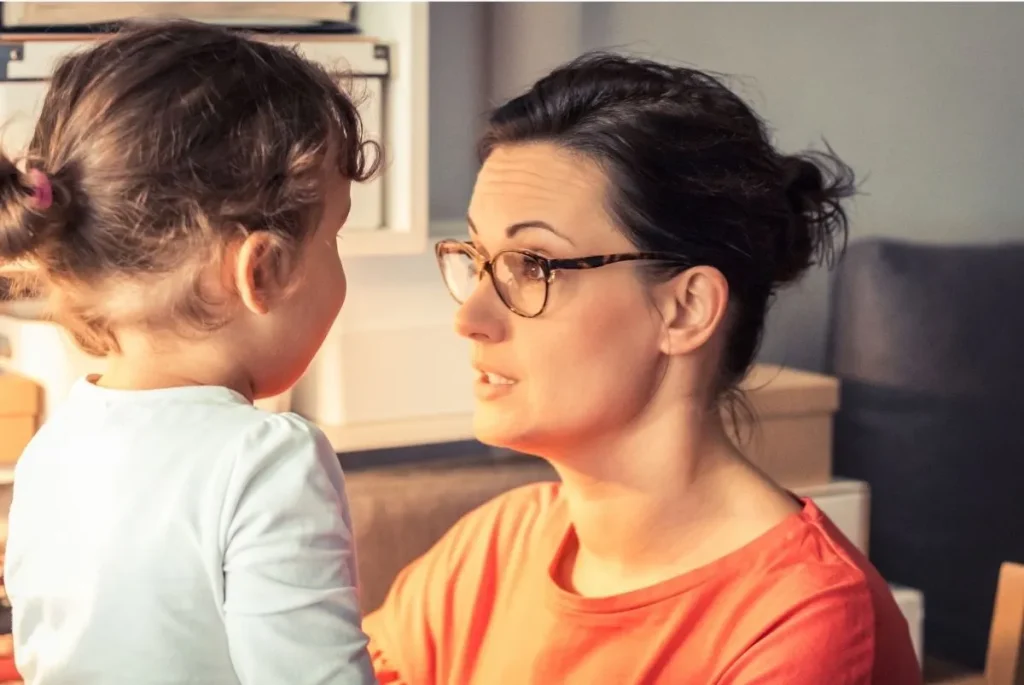
Here’s what that actually sounds like in real life: “Hey, I shouldn’t have snapped at you about the game controller. That wasn’t okay. I know you were probably frustrated because you didn’t mean to break anything. Come here. I’m not mad anymore.”
See what I did there? It’s calm. It’s clear. And it doesn’t make your kid feel like they have to take care of you.
Will apologizing make your kid lose respect for you? Here’s the truth
A lot of parents worry about this. I used to worry about it too, especially when my son became a teenager. I thought, “If I say sorry, will he think I’m a pushover?”
But here’s what I’ve learned the hard way. Being in charge isn’t about never messing up—it’s about showing your kids how you own mistakes and make them right. When you apologize to your kid, you’re showing them that respect goes both ways. Honestly? I think all the time. Think about it. We tell kids to say sorry when they hurt someone, but then we turn around and won’t do it ourselves. That doesn’t make sense. Making it normal to apologize to your kids isn’t about losing authority. It’s about teaching respect by actually showing it. Kids aren’t stupid. They watch everything we do. And they learn way more from that than from any lecture.
FAQ
Q1: Wait, if I apologize, won’t my kid just think they can walk all over me?
A1: Honestly? No. That’s not how it works. Kids actually respect adults who own their mistakes. Think about it—would you respect someone more if they pretended to be perfect, or if they said “yeah, I messed up, I’m sorry”? Kids are the same. When you apologize, you’re showing them what responsibility looks like in real life.
Q2: Okay, so what do I actually say after I’ve lost my temper?
A2: Keep it short and simple. Say what you did wrong. Own it. Acknowledge how they probably felt. Then reconnect. Don’t over-explain. Don’t blame them. Just something like, “Hey, I shouldn’t have yelled. That wasn’t fair. I’m sorry.” That’s it. You don’t need a speech.
Q3: Do I really need to apologize for every little parenting mistake?
A3: No, please don’t. You’ll wear yourself out and confuse your kid. Save it for the stuff that actually hurts them emotionally or breaks trust. Forgot to remind them about something small? Let it go. Told them to clean their room in a normal voice? That’s fine. But if you snapped, blamed them unfairly, or said something mean—yeah, that’s worth a sorry.
Q4: Doesn’t apologizing make me look weak as a parent?
A4: I used to think that too. But I was wrong. Being the parent in charge isn’t about never being wrong. It’s about showing your kid how to handle it when you are. Honestly, I think it takes more guts to say “I messed up” than to just pretend nothing happened.
Q5: What if I apologize and my kid just ignores me or won’t accept it?
A5: That happens sometimes. Especially with older kids. Give them space. You don’t need to force them to say “it’s okay.” The point isn’t to get forgiveness right away. The point is that you showed up, you owned it, and you tried to make it right. Over time, if you keep doing that, the trust comes back. Even if they act like they don’t care in the moment.
Start today: choose one recent mistake and try a clear, calm apology. Small steps rebuild trust.
Information on this:
American Psychological Association – parenting and emotional repair
Journal of Child and Family Studies – attachment and conflict resolution
Greater Good Science Center, UC Berkeley – apology and child development