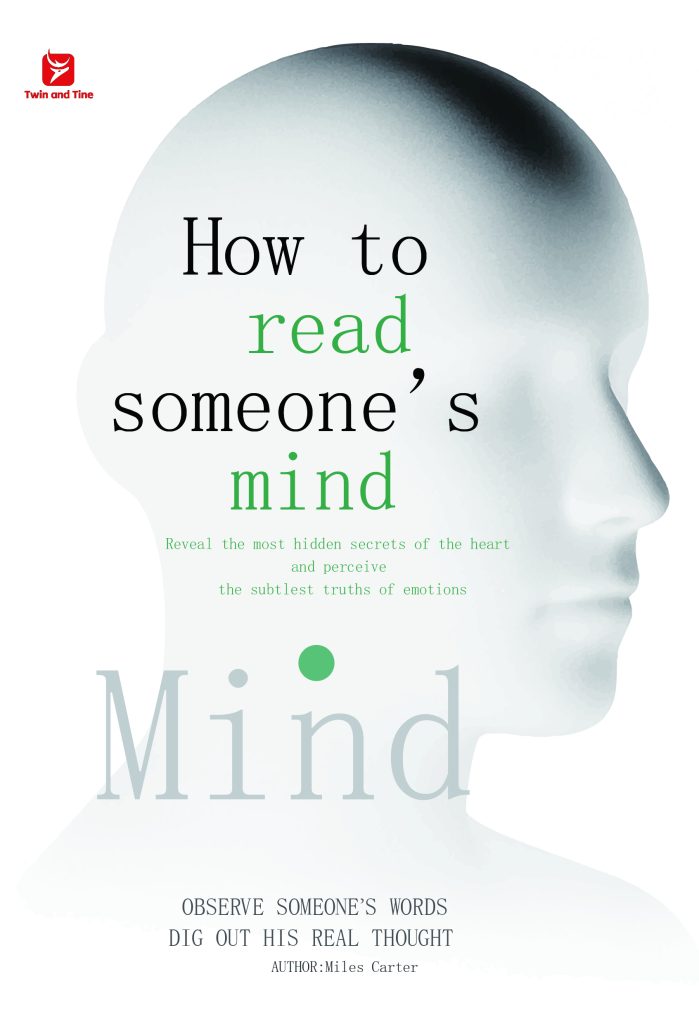
I keep a note on my phone from three years ago. It says, about a friend I no longer speak to, “something feels off, can’t explain it yet.” I wrote that eight months before everything fell apart. Eight months of small moments I noticed and dismissed. When I found Miles Carter’s book, I wasn’t looking for a party trick. I wanted to know why my instincts kept filing reports I refused to read.
That is the question this book actually asks. Not how do you decode a stranger in thirty seconds, but why do we ignore what we already sense? Carter’s answer runs through every chapter: people leak their true selves constantly, and the leak is the message.
What the Book Actually Covers
Carter builds his guide around signals most of us register and immediately explain away. Body language. Facial micro-expressions. Tone drifting from the words it carries. Posture in a doorway. The nervous laugh that arrives half a beat late.
What we notice and dismiss:
| Signal | What We Tell Ourselves |
|---|---|
| Tone that doesn’t match words | “They’re just tired” |
| Warmth that disappears without an audience | “They’re having a bad day” |
| Nervous laugh arriving late | “I’m reading too much into it” |
| Pattern of inconsistency | “Nobody’s perfect” |
The strongest section deals with repeated behavior. A single flattering gesture tells you almost nothing. The same gesture, offered to everyone, tells you everything. Carter’s central concept is consistency: trust is not built on what someone shows you once, it is built on what they keep showing you when nothing is at stake.
He maps personality styles too. The overly cautious. The dominant. The gossip. The emotionally immature. The chronically inconsistent. I’ll be honest, some of these portraits felt broad, almost like horoscopes with better footnotes. But the framework earns its keep when he applies it to real friction: a coworker who agrees in meetings and undermines in emails, a date whose warmth cools the moment you need something.
The Woman Who Taught Me the Lesson Twice
There is a character in my own life who belongs in this book. A former colleague, brilliant, magnetic, the kind of person who remembers your coffee order and your mother’s surgery date. For a year I thought she was the most generous person I knew.
Then I started noticing the pattern. Her generosity always had an audience. Her kindness evaporated in rooms with no witnesses. When a junior colleague made a mistake, she comforted him publicly and documented it privately.
Carter’s chapter on inconsistency reads like a description of her. He argues that contradictions are not noise, they are data. The mask slips in predictable places: under pressure, in boredom, in moments of no advantage.
What kept me turning pages was not suspense about her, I already knew how that story ended. It was the slower, quieter suspense about myself. Why had I needed a year? What was I protecting by not seeing?
The Pattern Beneath the Pattern
The deeper argument here is about attention, and this is where the book surprised me. Carter is not really teaching mind reading. He is teaching a kind of patient looking that our culture actively discourages. We are trained to decide fast, swipe fast, judge fast. Reading people well requires the opposite: slowness, repetition, tolerance for ambiguity.
His key imagery is the tide line. Behavior leaves marks the way water leaves marks on sand, and one wave tells you nothing. You have to watch what keeps washing up. I found that image staying with me for days.
The universal pattern his book exposes is this: we are not fooled by skilled liars. We are fooled by our own wish to be treated well. Hope does most of the deception. The liar just stands nearby.

Who Needs This, and What It Will Not Fix
This book is for you if:
- You are recovering from a friendship or relationship that collapsed in slow motion
- You have said “I should have known”
- You manage people, date after a long gap, or are rebuilding trust in your own judgment
- You want permission to trust your unease sooner
This book is not for you if:
- You want a human lie detector manual
- You prefer data and cited research
- You are looking for manipulation tactics
Its limits are real. Carter occasionally flattens complex people into types, and the writing leans on checklists where a story would land harder. The book will not make you a human lie detector. Nothing will.
What it does offer is quieter and more useful: permission to trust your unease before you can justify it. The note on my phone was correct. It was correct the whole time.
Maybe that is what this skill really is. Not seeing through people, exactly. More like finally sitting down and reading the letter they already sent.

