The other night my youngest threw a wooden block at my head because I said screen time was over. It missed. Barely. But I stood in the kitchen doorway with my heart pounding, hands shaking, and no idea what to do next. I yelled. He screamed louder. Then we both cried, in separate rooms, for ten minutes. That was the night I realized I had been reacting to his anger instead of actually handling it. If you are searching for how to handle aggressive behavior in kids, I get it. I have been there, and I am still learning.
Quick Wins for Today
- Stay calm yourself first. Walk away for 30 seconds if you need to.
- Do not give in to what they want just to stop the screaming.
- Name the feeling out loud: “You are really mad right now.”
- Praise them the moment they calm down, even a little.
- Write down what happened right before the blow-up. You will start seeing patterns.
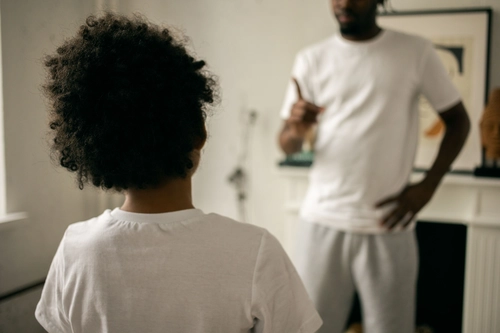
Why Does My Child Hit and Scream When They Get Angry?
Here is something I wish someone had told me earlier. Behavior is communication. My child was not plotting to ruin my evening. He was overwhelmed and had no other tool in his toolbox.
Kids who lash out usually struggle with one of three things: handling frustration, finding words for big feelings, or solving problems in the moment. Some children also deal with attention issues, worry, or sensory sensitivities that make everyday transitions much harder. When the demand hits and the skill is not there, the body takes over.
I used to think my son was being manipulative. He was not. He was stuck.
A clinical psychologist once pointed out that most kids who melt down often do it at predictable times. Homework. Bedtime. The moment you say “time to stop playing.” The trigger is almost always being asked to do something they dislike, or to stop something they love.
Once I started tracking my child’s blow-ups for two weeks, the pattern was almost embarrassing. Seven out of nine meltdowns happened within five minutes of a transition. Every single one. The problem was not his character. It was the moment.
How Do I Stay Calm When My Child Is Aggressive?
This is the hardest part, and I am not going to pretend I have mastered it. But I have gotten better, and it has changed everything.
When my child rages, my instinct is to rage back. My voice goes up. My face gets hot. And every time I yell, he gets worse. Not slightly worse. Much worse. It is like pouring gasoline on a fire and then acting surprised when it flares.
So now I do something that felt ridiculous at first. I go quiet. I lower my voice almost to a whisper. I say one short sentence: “I am right here. I am not going anywhere.” Then I wait.
Does it work instantly? No. Sometimes it takes ten minutes. But it works. His nervous system eventually settles because mine is settled. Kids borrow our calm. They cannot borrow what we do not have.
One thing that helped me: I started stepping into the bathroom for 20 seconds when I felt my own anger rising. Just 20 seconds of deep breathing with the door locked. He was safe in the hallway. I was safe in the bathroom. Then I came back out.
I once read a line from another parent that stuck with me. She wrote, “I am the adult. My job is to be the thermostat, not the thermometer.” I think about that line every single week.
And if you keep finding yourself in the same loop—yelling, then regretting it, then promising yourself tomorrow will be different—this next resource is for you.
You swore you’d break the cycle for your kids—but you still find yourself yelling, shutting down, and repeating the very things you promised to change.
The Parent You Aspire to Be helps you understand what’s driving the behavior and respond with clearer boundaries, better communication, and more self-awareness.
- Understand what may be driving lying, backtalk, procrastination, and emotional outbursts.
- Learn what to say and do in difficult parenting moments—not just what to avoid.
- Build healthier parent-child patterns without relying on constant punishment or control.

The Parent You Aspire to Be
Miles CarterPractical guidance for tantrums, backtalk, lying, screen addiction, emotional outbursts, and everyday parenting struggles.
A Simple Three-Step Approach: Pause, Name, Redirect
After months of trial and error, I landed on a simple three-step framework. I call it Pause, Name, Redirect. It is not fancy. It is not clinical. But it works for us.
Step 1: Pause.
When the aggression starts, I stop everything. I do not lecture. I do not negotiate. I do not try to reason with a child whose brain is in full alarm mode. I make sure everyone is physically safe. If my child is hitting, I step back and create space.
Step 2: Name.
Once the intensity drops even a little, I name what I see. “You are furious because I turned off the TV.” That is it. No “but you should not hit.” No “we do not throw things.” Just the name. I have learned that naming the feeling does not excuse the behavior. It opens the door so we can talk about the behavior later.
Step 3: Redirect.
When my child is calm, we move to something physical. A walk to the mailbox. Squeezing a pillow. Running laps in the backyard. Something that uses his body and gives his nervous system a reset.
Here is what this looks like in real dialogue:
Child: (screaming, throws a shoe)
Me: (quiet voice) “I see you are really angry. I am going to step back so we are both safe.”
Child: “I HATE YOU!”
Me: “That is a big feeling. I am still here. When your body is calm, we can figure this out together.”
(Several minutes pass.)
Child: (crying, quieter) “I wanted to keep watching.”
Me: “I know. Stopping is hard. Let’s go squeeze the big pillow together.”
The first fifty times I did this, it felt fake. He did not calm down faster. He still screamed. But over weeks, something shifted. The meltdowns got shorter. The recovery got faster. And I stopped feeling like a failure every time he lost it.

Is It Different for Younger Kids vs. Older Kids?
Yes, and this tripped me up for a long time. What works for a toddler does not work for an older child.
| Age | What tends to help | What tends to backfire |
|---|---|---|
| 2 to 4 | Short time-outs (1 minute per year of age), physical comfort after calm, lots of naming feelings | Long explanations, reasoning mid-meltdown |
| 5 to 7 | Time-outs still work, plus simple reward charts and clear warnings before transitions | Negotiating during the outburst, giving in to stop the noise |
| 8 to 12 | Points or token systems, problem-solving conversations when calm, natural consequences | Time-outs in a chair, treating them like a toddler |
| Teens | Space, respect, conversations later, removing yourself if you feel unsafe | Power struggles, yelling matches, ultimatums |
For my youngest, time-outs work when I am consistent. One minute in a boring hallway. No toys. No attention. Then he comes back and we try again. For an older child, time-outs might make everything worse. Some need a points system and a calm conversation the next morning. Different kid, different tool.
What If the Usual Tricks Are Not Enough?
I want to be honest here, because I spent months feeling like I was failing. If your child’s aggression is frequent, intense, or scary, it might be time to talk to your pediatrician. That is not a sign of weakness. It is a sign of paying attention.
Some kids have underlying things going on. Attention struggles. Anxiety that builds up all day at school and then explodes at home. Sensory sensitivities that make certain environments unbearable. A learning challenge that makes homework feel impossible. None of these are excuses for hitting. But they are explanations, and explanations lead to better help.
There are also structured programs that some families find useful. Parent-child interaction therapy and parent management training both coach parents on how to respond in the moment. Collaborative and Proactive Solutions, developed by Dr. Ross Greene, focuses on lagging skills rather than labels. His book The Explosive Child was recommended to me by three different people, and I finally bought it last month.
One approach I found helpful was breaking tasks into one-step directions. Instead of “get ready for bed,” I now say “first, put on your pajamas.” That is it. One step. Then the next. He handles one instruction. He falls apart with three.
FAQ
Q: How do I handle aggressive behavior in kids without yelling?
A: Yelling feels natural when you are scared or frustrated. But it usually escalates things. Try lowering your voice instead. Step away for 20 seconds if you need to. Then return with one calm sentence.
Q: Can aggressive behavior in kids be caused by something medical?
A: Sometimes, yes. Attention issues, anxiety, sensory processing differences, and autism can all contribute. If the aggression is frequent or intense, start with your pediatrician. They can rule out medical causes and point you toward the right support.
Q: What do I do when my child hits me?
A: First, create physical distance. You cannot parent well if you are being hit. If your child is young, a brief time-out in a safe, boring space can work. If they are older, remove yourself from the room. In extreme situations, call for help. Your safety matters too.
Q: How long does it take to see improvement in aggressive behavior in kids?
A: It depends on the child, the triggers, and how consistent you can be. Some parents notice changes in a few weeks. Others need months. Progress is not linear. There will be bad days. Keep going.
Q: Should I ever give in just to stop the meltdown?
A: No. Giving in teaches your child that aggression works. It is the fastest way to make things worse long-term. I know it is tempting. I have done it. But every time I gave in, the next meltdown was bigger.
One Last Thing
The block that my child threw at my head is still on our kitchen floor. I have not picked it up. It sits there as a small reminder that I do not have this figured out, and that is okay. Last night, when he got angry about bath time, he stomped his foot and said, “I am mad!” He did not throw anything. He did not hit. He just told me. And I sat down on the bathroom floor next to him, and we took three deep breaths together. It was not perfect. But it was different. That has to count for something.
References
- American Academy of Pediatrics. (n.d.). Aggressive behavior in children. Retrieved from HealthyChildren.org.
- Greene, R. W. (2005). The Explosive Child. HarperCollins.
- Faber, A., & Mazlish, E. (2012). How to Talk So Kids Will Listen & Listen So Kids Will Talk. Scribner.

