When Worry Starts Taking Over Everyday Life
Many people know what it feels like to worry about something that has not happened yet. You imagine possible problems, prepare for situations that may never occur, and keep searching for a way to feel completely certain. Even after everything turns out fine, your mind quickly finds something else to worry about.
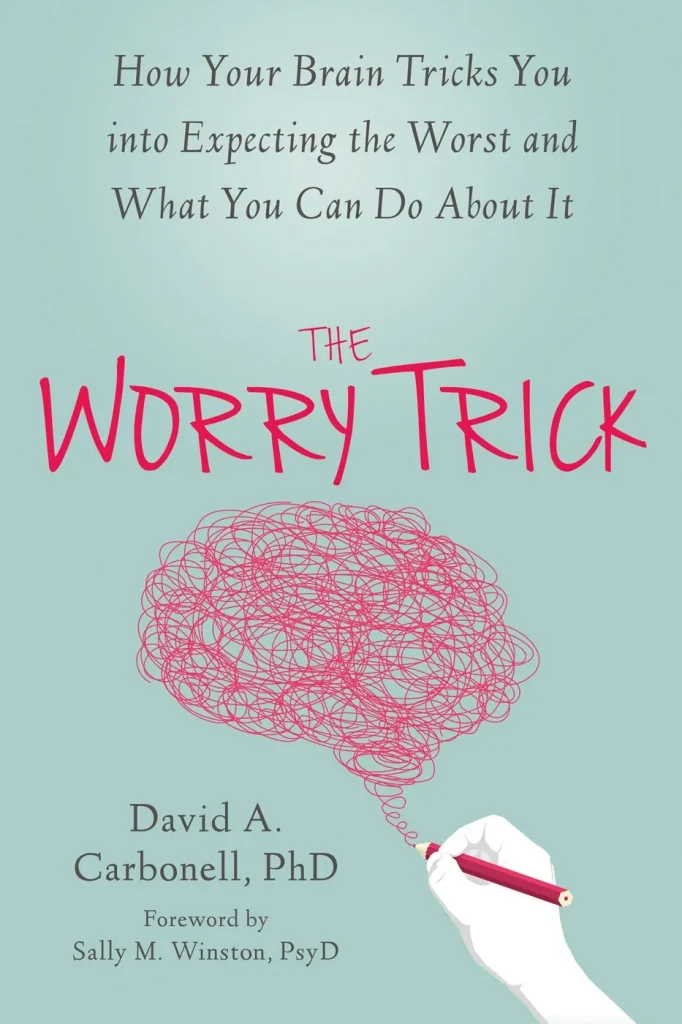
The Worry Trick by David A. Carbonell explores why worry can become such a powerful habit and why simply telling yourself to “stop worrying” rarely works. Instead of treating anxiety as a problem that can be solved through more thinking, the book explains how the cycle of fear and avoidance keeps itself alive.
Why Worry Feels Like Protection
One of the most interesting ideas in The Worry Trick is that worry often feels useful. Many people believe that thinking through every possible problem will help them stay prepared and avoid mistakes.
For example, someone preparing for an important meeting may imagine every possible thing that could go wrong. A parent may repeatedly worry about their child’s future. Someone in a relationship may analyze every message looking for signs that something has changed.
The problem is that worry creates the feeling of control without always creating a real solution. The mind keeps searching for certainty, but life rarely provides complete certainty.
The Anxiety Cycle Behind Constant Worry
Carbonell explains that anxiety often continues because people accidentally teach their brains that worry is necessary. When someone avoids a situation because it feels uncomfortable, they may experience temporary relief. However, that relief can reinforce the belief that the situation was dangerous.
Over time, the person becomes more sensitive to uncertainty and more likely to worry the next time a similar situation appears.
Breaking this cycle requires learning that uncomfortable feelings can exist without needing immediate action or escape.
Learning to Respond Differently to Fear
A major strength of the book is that it does not encourage readers to fight every anxious thought. Trying to eliminate every worry can sometimes make people focus on those thoughts even more.
Instead, the book encourages a different relationship with anxiety. Rather than asking, “How do I make this feeling disappear?” readers learn to consider, “Can I allow this feeling to exist while continuing with my life?”
This approach can be especially helpful for people who spend a lot of time analyzing their thoughts and searching for reassurance.
Why Overthinking Does Not Always Lead to Better Decisions
Many people who overthink are not trying to create problems. They are often trying to avoid making mistakes or experiencing disappointment.
The difficulty is that excessive analysis can make decisions harder. The more possibilities you imagine, the more reasons you find to hesitate.
The Worry Trick highlights the importance of taking action even when some uncertainty remains. Confidence often develops after facing situations, not before.
What Makes The Worry Trick Worth Reading?
The book stands out because it focuses on the mechanics of anxiety rather than simply offering general advice about staying positive. It explains why worry feels convincing and why common attempts to control anxiety may actually strengthen the cycle.
For readers who frequently experience racing thoughts, fear of the future, or difficulty accepting uncertainty, the book provides a practical perspective on how anxiety works.
It is not a quick solution that removes all worries. Instead, it helps readers understand why their minds create anxious patterns and how they can gradually respond differently.
Who Should Read It?
The Worry Trick may be useful for people who:
- Constantly worry about future situations
- Replay possible problems in their mind
- Struggle with uncertainty
- Avoid situations because of fear or anxiety
- Seek reassurance from others frequently
- Feel exhausted from trying to control every outcome
Final Thoughts
The Worry Trick offers an important reminder that worry is not always the same as preparation. Sometimes the habit that feels like protection is actually keeping anxiety alive.
For anyone interested in understanding anxious thoughts, emotional patterns, and ways to build a calmer mindset, this book provides a practical look at why worry happens and how people can begin changing their relationship with uncertainty.

