I read The Shack years ago, in a rented room with bad heating, and cried at the kitchen-table scenes with Papa. I did not want a sequel. Sequels to books that rearranged your faith usually arrive as merchandise, and I had already decided to be disappointed.
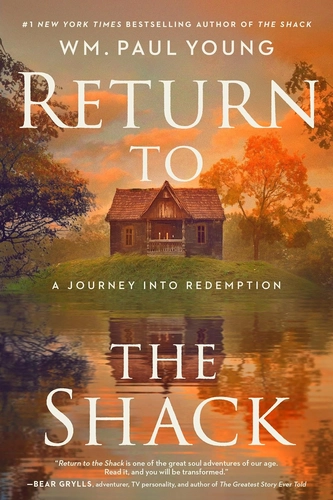
Then I read Return to the Shack, and I have been sitting with it for two weeks.
Forgiveness is not the same act as healing, and we tend to demand the first as proof of the second.
What Actually Happens to Mack and Nan
Ten years have passed. Mack and Nan Phillips are still married, still in church, still parenting. They are also, quietly, a mess. Nan carries a sorrow she has never handed to her husband. Mack has built a life around a wound he refuses to look at directly.
On what would have been Missy’s sixteenth birthday, Mack is asked to visit death row and speak with the man who abducted and killed her. He goes.
That is the engine of the novel, and Young does not let it idle. The prison scenes are the most honest writing in the book. No theatrics. Just a man on one side of a table and another man on the other side, with nothing between them except a decade of grief and a chair they both wish was empty.
Young also brings back the relationships that made the first book work. God, Jesus, and Sarayu appear again, though they are quieter here, less instructional and more present. There is a scene where Sarayu sits with Mack in silence for what feels like pages, and that silence does more than any sermon could.
The middle section leans hard on dialogue, and some readers will find it slow. I did, in places. But the patience pays off.
Why the Prison Scene Is the Whole Book
Mack sits across from a dying man and discovers that the person who destroyed his family is also, in ways he could not have predicted, a person. Not a monster. Not a symbol. A person with a childhood, a mental illness, and a mother who visited him until she died.
That forces the book’s central question into the open: if God’s forgiveness is real, it cannot be selective, or it is not forgiveness at all. It is just a preference for people we find acceptable.
The imagery Young chooses is disciplined. Prison glass. A birthday cake nobody eats. Nan’s hands, which she keeps busy so no one sees them shake. These are not decorative metaphors. They are the emotional architecture of the argument, and they hold weight because Young never explains them.
The book sometimes drifts toward a gentleness that feels easier than the story deserves. Some of the theological conversations resolve faster than real grief does. But the scene where Mack finally says the words out loud, whatever they cost him, is one of the few moments in recent fiction about forgiveness that I found believable.
The Chair You Cannot Leave
If you read The Shack and it mattered to you, this book will land. It is not better, exactly. More like a longer conversation with the same God, held by someone older and less certain.
If you want airtight theology, this may not satisfy you. Young is a storyteller, and the book has been criticized for its views on judgment and the afterlife. If profanity in Christian fiction bothers you, there is a moment near the end that will bother you.
What I gained from it was smaller than I expected and stranger. I finished the book still unable to say whether I would have gone to that prison. I think that is the point. Young does not hand you an answer to keep. He hands you a chair, a table, and someone across from you who is not who you thought they were.
That is not a comfortable gift. But it is a real one. And the question the book leaves open, whether I would want to be in the room when forgiveness happens, is one I am still carrying.

