One winter, on a night when the temperature dropped to minus ten degrees, I finished reading And Quiet Flows the Don wrapped in a blanket. The cold wind slipped in through the cracks in the window, but the snowstorm inside the book was much bigger than the one outside my window.
Sholokhov wrote four whole volumes, hundreds of characters, and a time span of over ten years — from the First World War to the Russian Civil War.
But what stayed in my mind after reading wasn’t those grand historical events. It was Grigory Melekhov — a Cossack. His whole life was like the icy surface of the Don. It looked calm on top, but underneath, the currents never stopped.
He Loved Two Women — and Failed Both
When Grigory first appeared, he was a strong, dark-skinned young Cossack. By the Don River, he met Aksinya Astakhova — a neighbor’s wife, a beautiful woman with fire hiding in her eyes. Their feelings grew like wild grass. They could not be suppressed.
To quiet the gossip, his father forced him to marry Natalya Melekhova, a quiet and dignified girl. Grigory did not love her. ” He returned to Aksinya, leaving Natalya alone with anunfulfilled marriage.
Aksinya abandoned her family for him. Ran away with him. Waited for him through the chaos of war. Natalya silently endured all the neglect, gave birth to twins, and died in a pool of blood from a miscarriage. Before she died, she wrote a letter to Grigory. It said: I don’t hate you. But I can’t forgive myself.
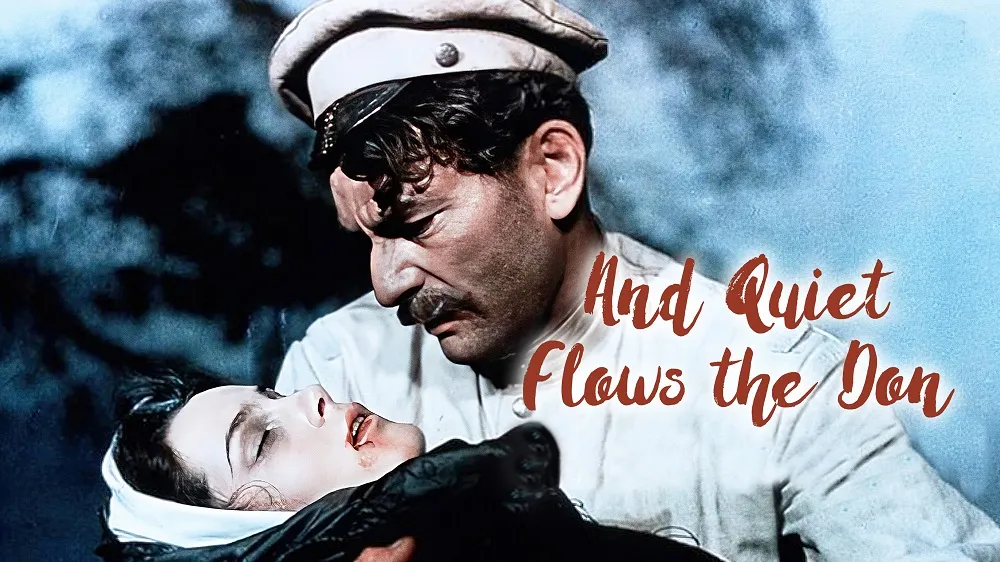
Grigory’s back-and-forth between these two women wasn’t about being a womanizer. It was cowardice. He wanted Aksinya’s fire. But he also did not want to let go of Natalya’s stability. He could not let go of either. In the end, he lost both. Aksinya died in his arms. A bullet went through her shoulder. Grigory carried her across the steppe, walking for an entire night. That night felt longer than his whole life.
He Was Ground Into Powder Between Two Wars
Grigory was born to ride horses and fight. He switched sides between the Red Army and the White Army. His allegiance was torn apart by the era. He only wanted to keep his land, his home, and his Don River. But that era did not allow a man to just tend to his own small patch of earth.
Sholokhov wrote Grigory’s collapse with great restraint. He did not let the protagonist deliver long, dramatic confessions. He did not let him scream at the sky. Grigory simply realized, one ordinary evening, that he had killed more people in his life than he had loved. That thought was like a needle. It pierced into his bones and could never be pulled out.
The Water of the Don Kept Flowing — But People’s Lives Stopped Somewhere
The Don River in And Quiet Flows the Don isn’t just a backdrop. It is a character. It saw Grigory and Aksinya’s first kiss on the riverbank. It saw the Cossacks ride across the river to their deaths. It saw corpses floating downstream. It kept flowing, no matter how many generations of people on its banks came and went.

Sholokhov’s prose when he writes about the Don flows as smoothly as the river itself. He writes about the sound of ice cracking in spring. He writes the speed of autumn leaves floating on the water’s surface. He writes about the river in winter, frozen into a giant sheet of white iron. This poetic quality gives the entire book a strange texture. The brutal killings and deaths, placed inside such beautiful scenery — somehow, that makes the cruelty even crueler.
Under the ice, the water never stops flowing — just like Grigory’s heart, full of a thousand wounds. It still beats. It has no choice but to beat.