Workplace disrespect rarely presents itself as an outright attack. More often, it shows up as subtle passive-aggression: a condescending remark during a meeting, a backhanded compliment about your project, or an intrusive question designed to throw you off balance. When faced with rudeness at work, most people default to two extremes—either snapping back and looking unprofessional, or staying silent and stewing in resentment all afternoon.
Neither reaction protects your reputation or your peace of mind.
When you lose your cool at work, you shift the focus away from the offender’s inappropriate behavior and onto your emotional reaction. On the flip side, ignoring repeated disrespect sends a silent signal that you are an easy target. Learning how to deal with rude coworkers professionally means developing calm, strategic responses that disarm hostility while maintaining unshakeable composure.
3 De-escalation Techniques for Workplace Disrespect
Handling disrespectful colleagues without compromising your professionalism comes down to controlling the pace of the interaction:
- Deploy Strategic PausingWhen someone makes an inappropriate comment, do not respond immediately. Take a deliberate 3-second pause and look at them neutrally. Silence breaks their momentum, signals that their remark missed its mark, and forces them to sit in the awkwardness of what they just said.
- Ask for Immediate ClarificationPassive-aggressive remarks rely on plausible deniability. Neutralize them by asking a direct, calm question: “That’s an interesting comment—what did you mean by that?” Forcing a coworker to explain an insult publicly almost always causes them to back down.
- Deflect Boundary-Crossing QuestionsIf a colleague presses into your personal business or gives unsolicited critiques, maintain a polite, closed loop: “Thanks for your perspective, I have it handled.” Then immediately pivot back to the task at hand.
Top 5 Books for Navigating Workplace Dynamics
To help you master high-pressure conversations and handle difficult personalities with poise, these five top-rated books offer indispensable reading for professional success.
1. Difficult Conversations: How to Discuss What Matters Most by Douglas Stone, Bruce Patton, & Sheila Heen
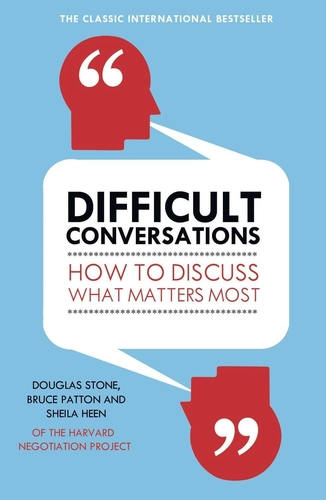
Written by members of the Harvard Negotiation Project, this foundational text breaks down why workplace and personal interactions derail. The authors reveal that every difficult conversation is actually three underlying discussions: the “What Happened?” conversation, the “Feelings” conversation, and the “Identity” conversation.
By understanding these hidden layers, readers learn how to move away from assigning blame and toward mutual understanding. The book provides clear frameworks to handle emotionally charged remarks, manage defensiveness, and maintain composure under pressure.
- The Three-Conversation FrameworkDeconstructs complex discussions into manageable components to reduce emotional reactivity.
- Moving from Blame to ContributionTeaches how to analyze system failures without triggering defensive arguments.
- Managing Identity TriggersHelps you maintain internal stability when faced with criticism or unexpected pushback.
2. Say It Right Every Time by Miles Carter
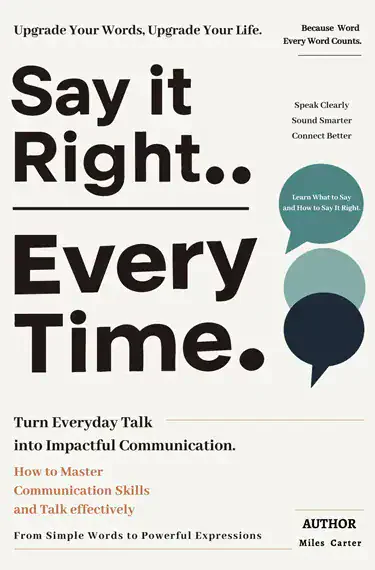
Miles Carter dedicates key sections of Say It Right Every Time to mastering high-friction professional dynamics. Carter breaks down the exact mechanics behind why difficult people act out and provides actionable frameworks to handle insults, passive-aggressive remarks, and invasive questions with unshakeable composure.
From utilizing strategic pauses to responding to unwanted advice with a classy comeback, Carter equips readers with exact, word-for-word scripts. Additionally, the book covers structuring confident self-introductions using the “Past–Present–Future” framework and navigating workplace HR discussions smoothly, making it a complete manual for professional success.

Break the Anxiety Circle
Miles CarterA mental reset for people trapped in the overthinking loop. Understand why your mind won’t stop racing — and how to break free from anxiety, people-pleasing, and emotional exhaustion.
- Strategic Response SystemsDelivers exact phrasing to neutralize rude comments and passive-aggression at work without escalating conflict.
- Emotional Down-RegulationProvides practical mental tools to remain grounded when faced with hostility or unexpected insults.
- Professional Self-PresentationOutlines clear models for structuring high-impact self-introductions and workplace presentations.
3. Dealing with People You Can’t Stand by Dr. Rick Brinkman & Dr. Rick Kirschner
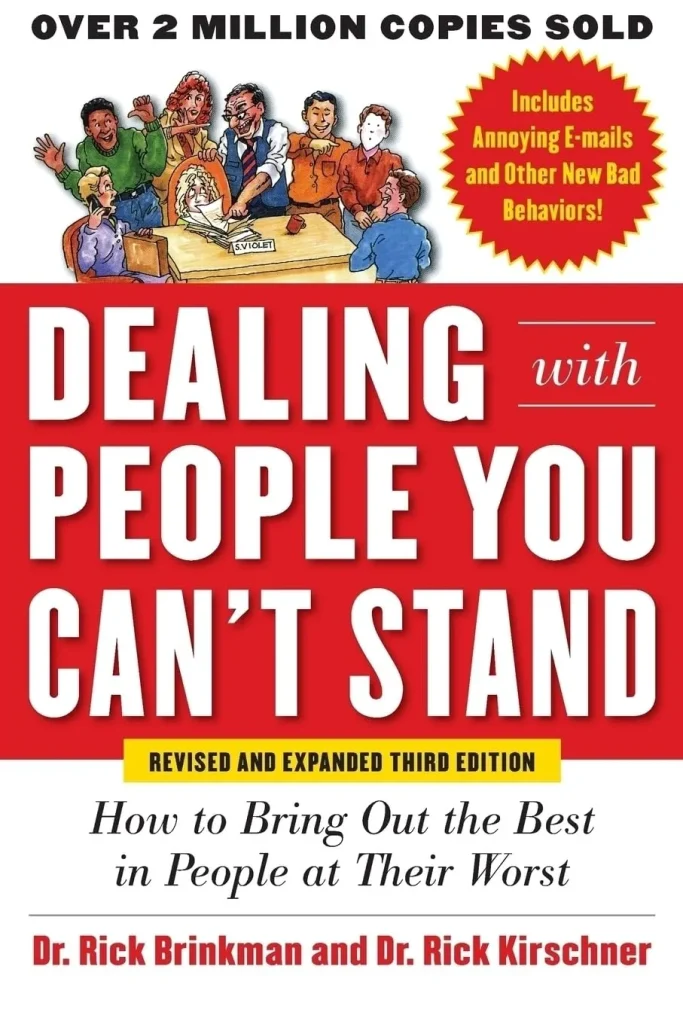
Drs. Brinkman and Kirschner provide a humorous yet deeply practical guide to understanding and managing ten specific difficult personality types—from “The Tank” and “The Sniper” to “The Know-It-All.” The authors explain the core motivations behind disruptive workplace behavior.
The book equips readers with targeted communication tactics for each personality style. By learning how to identify what drives a hostile coworker’s behavior, you can choose the exact verbal approach needed to neutralize their impact and restore productive teamwork.
- Personality Archetype IdentificationHelps you quickly recognize specific behavioral patterns and predict reactions.
- Targeted Communication ScriptsOffers custom strategies to handle aggressive interruptions, backstabbing, or constant whining.
- Intentional Persuasion TechniquesTeaches how to align with difficult colleagues’ underlying needs to reduce friction.
4. Nonviolent Communication: A Language of Life by Marshall B. Rosenberg, Ph.D.
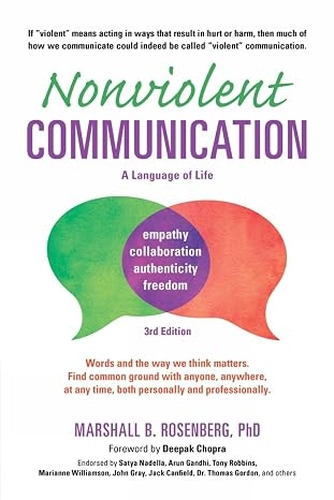
Dr. Marshall Rosenberg’s world-renowned framework transforms how people communicate in high-stress environments. Nonviolent Communication (NVC) focuses on replacing defensive or judgment-heavy language with clear observations, feelings, needs, and requests.
By applying the four pillars of NVC, readers learn how to hear the unmet needs behind a coworker’s rude or aggressive comments. This book provides a powerful methodology for de-escalating tension, establishing mutual respect, and expressing firm workplace requirements without creating distance.
- The Four-Step NVC ProcessMastering Observation, Feeling, Need, and Request to communicate with absolute clarity.
- Empathetic Listening under FireTeaches how to remain calm and neutral when receiving harsh feedback or criticism.
- Disarming Defensive ResponsesOffers phrasing that prevents colleagues from feeling attacked during tough conversations.
5. Never Split the Difference by Chris Voss
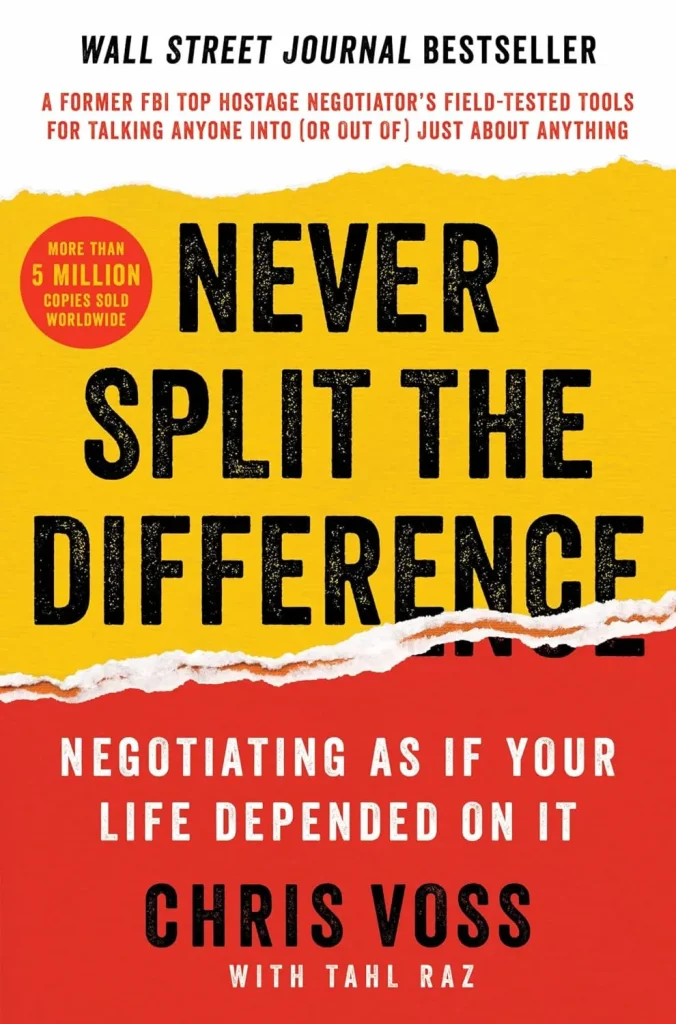
Former FBI lead international hostage negotiator Chris Voss shares battle-tested strategies for high-stakes communication and negotiation. Voss demonstrates that emotional intelligence, tactical empathy, and precise verbal phrasing are far more effective than aggressive debate.
Applying these tactics to the corporate world, Voss teaches readers how to use “labeling,” “mirroring,” and calibrated questions to disarm hostile counterparts, uncover hidden motives, and gain the upper hand in difficult workplace interactions.
- Tactical Empathy & MirroringSimple verbal repetition techniques that make difficult people feel heard and calm down quickly.
- Calibrated QuestionsHow to ask “How” and “What” questions that force rude colleagues to solve problems instead of causing friction.
- Accusation AuditsA proactive technique to disarm negative assumptions before they are used against you in meetings.
Master Your Professional Presence
Workplace friction and rude coworkers don’t have to ruin your workday or drain your ambition.
By applying the strategic pauses, tactical empathy, and calm response frameworks outlined in these five must-read books, you can disarm workplace hostility, protect your professional reputation, and handle even the most challenging personalities with total composure.
Did this article help you see things differently? Our books turn helpful ideas into practical tools you can return to anytime.





Imagine The Other Half
$24.99

