You notice the mistake three hours later and start replaying it. You remember something you said last week and wonder whether you sounded stupid. Someone is disappointed with you, and your first reaction is to apologize, even though you did nothing wrong. When you need help, rest, space, or reassurance, part of you feels that you should have to earn the right to ask.
Being hard on yourself can look like responsibility from the outside. You may be conscientious, considerate, helpful, and always willing to improve. But when every mistake becomes evidence that you are not good enough, self-improvement can quietly turn into self-punishment.
That is where self-compassion becomes important. It does not mean making excuses for harmful behavior or pretending everything is fine. It means learning to respond to your own mistakes, needs, emotions, and imperfections with the same basic understanding you would offer someone you genuinely care about.
These five books approach that process from different directions.
1. Self-Compassion by Kristin Neff
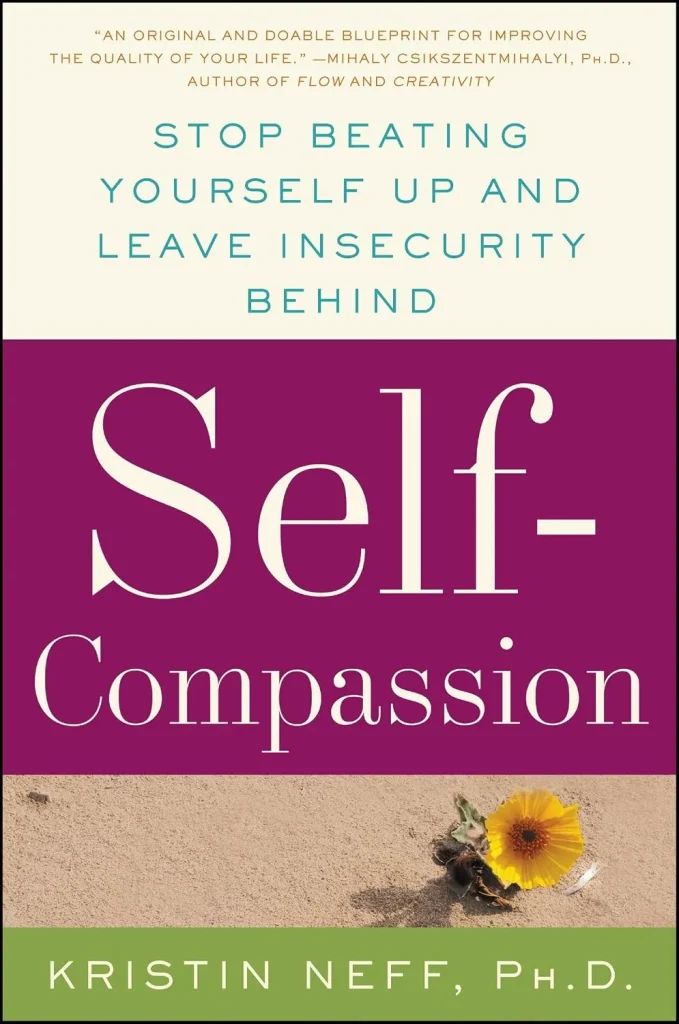
Kristin Neff’s Self-Compassion is one of the best-known books on the subject and a strong starting point if you want to understand what self-compassion actually means.
The central idea is simple but difficult for many people to practice: when something goes wrong, you do not have to attack yourself in order to grow. Instead of turning failure into a judgment about your worth, you can recognize that struggle and imperfection are part of being human.
The book explores how self-kindness, common humanity, and mindful awareness can help replace harsh self-judgment with a more balanced response. It is especially useful if your inner voice becomes much harsher whenever you make a mistake or fall short of your own expectations.
2. Break the Anxiety Circle by Miles Carter
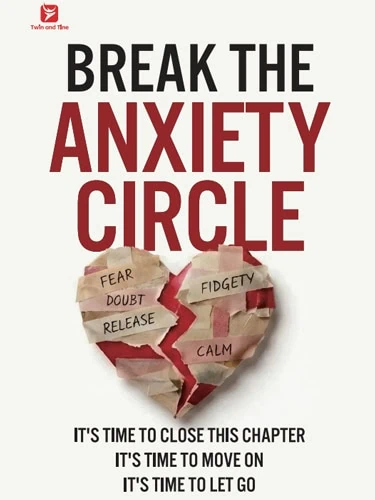
Break the Anxiety Circle approaches self-compassion through something that many people overlook: the habit of shrinking yourself.
One of the book’s most powerful ideas is that you do not need to apologize for having feelings, needs, desires, opinions, or boundaries. It gives a simple example: instead of saying, “Sorry, can I ask you a question?” you can simply ask, “Do you have a moment?” Instead of apologizing for making someone wait, you can say, “Thank you for waiting.”
These may look like tiny wording changes, but the book treats them as something deeper. If you constantly apologize for taking up space, expressing a preference, needing something, or making a mistake, you gradually teach yourself that your existence is an inconvenience.
The book also connects this pattern with people pleasing. Many people say yes because they fear disappointing someone, apologize because they fear conflict, or sacrifice their own time and peace because being needed feels safer than saying no. The solution is not to become cold or selfish. It is to stop treating your own needs as less legitimate than everyone else’s.

Break the Anxiety Circle
Miles CarterA mental reset for people trapped in the overthinking loop. Understand why your mind won’t stop racing — and how to break free from anxiety, people-pleasing, and emotional exhaustion.
There is also a strong emphasis on self-forgiveness and letting go of the past. Instead of endlessly replaying what you should have done differently, the book encourages you to recognize the pattern, regulate the emotional reaction, and take the next useful action.
That combination makes Break the Anxiety Circle particularly relevant if your lack of self-compassion is connected to anxiety, people pleasing, overthinking, boundaries, or regret rather than existing as an isolated problem.
3. Radical Acceptance by Tara Brach
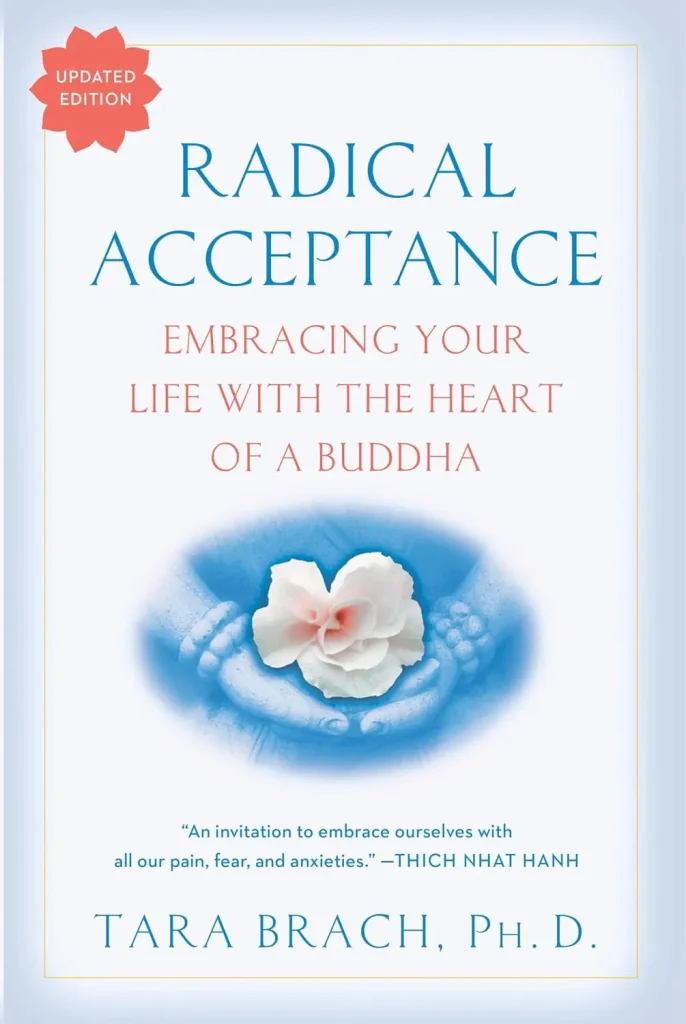
Radical Acceptance explores what happens when people constantly feel that something about themselves or their lives needs to be fixed before they can feel at peace.
Tara Brach combines mindfulness and psychological insight to examine shame, fear, self-judgment, and the feeling of being fundamentally “not enough.” The book encourages readers to meet difficult experiences with awareness rather than immediately fighting them.
For someone who spends a lot of time criticizing themselves, this can be a meaningful shift. Instead of asking, “How do I get rid of this feeling?” you begin by asking, “Can I allow myself to experience this without turning against myself?”
That idea can be particularly useful when self-criticism has become an automatic response to anxiety, mistakes, or emotional discomfort.
4. The Mindful Self-Compassion Workbook by Kristin Neff and Christopher Germer
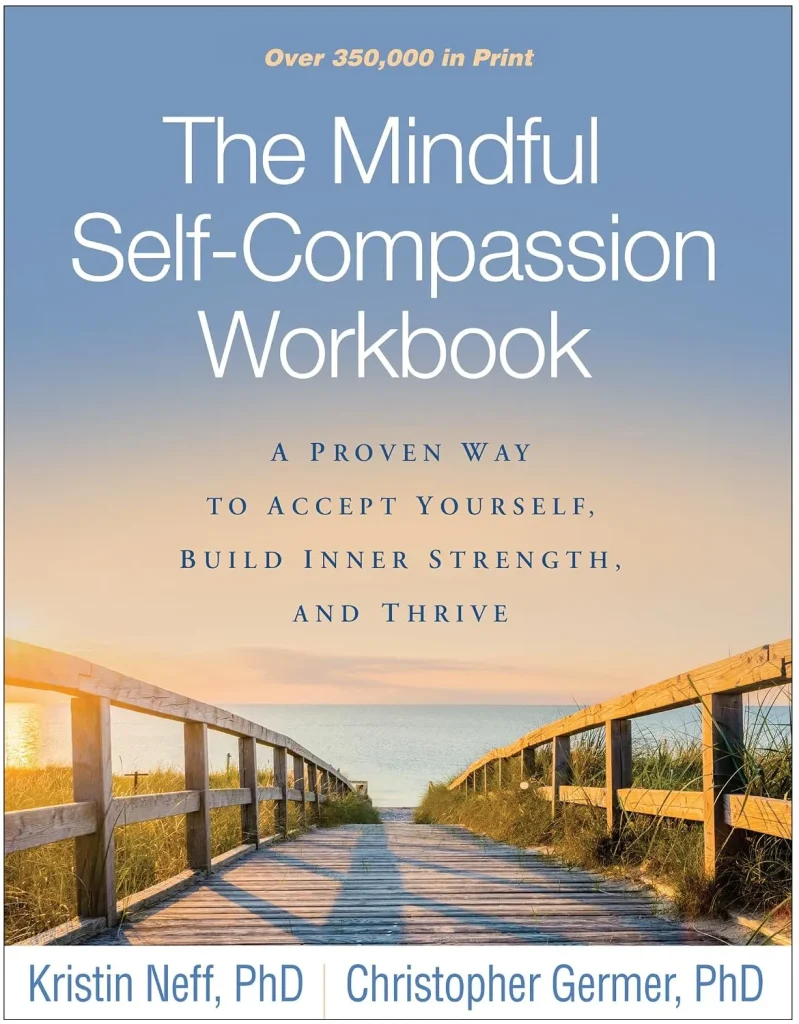
If you prefer practical exercises over a book that is primarily conceptual, The Mindful Self-Compassion Workbook is a strong option.
It provides structured practices for working with difficult emotions and developing a kinder internal response. Rather than simply telling you to “be nicer to yourself,” it gives you ways to practice that skill.
This matters because self-compassion can feel unnatural when you have spent years motivating yourself through criticism. You may understand the idea intellectually while still automatically thinking, “I should have done better” or “Why am I like this?”
Exercises can help turn a new way of thinking into something you actually practice.
5. The Gifts of Imperfection by Brené Brown
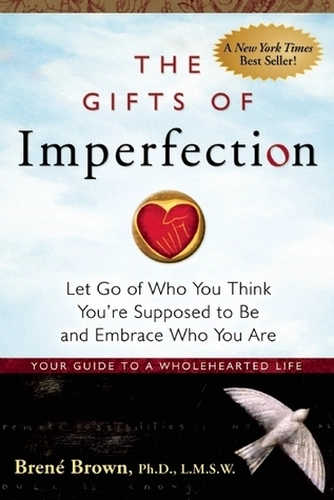
The Gifts of Imperfection is especially relevant if perfectionism and the fear of judgment are closely connected to your self-criticism.
Brené Brown explores the pressure to appear successful, capable, and put together while hiding the parts of yourself that feel uncertain or imperfect. The book encourages readers to move away from constantly proving their worth and toward a more authentic way of living.
That makes it a useful choice for people whose inner pressure does not come only from mistakes, but from the belief that they must always perform, please, achieve, or appear fine in order to be worthy.
Why Break the Anxiety Circle Is a Strong Choice for Self-Compassion
If you search for a self-compassion book, you will find many excellent resources that focus directly on mindfulness and self-kindness. Break the Anxiety Circle takes a slightly different route: it shows how a lack of self-compassion can appear in ordinary behavior before you even realize you are being hard on yourself.
You apologize for needing something. You agree when you want to say no. You keep helping someone even though you are exhausted. You replay an old mistake because you think punishing yourself will somehow prevent it from happening again. You make yourself smaller because you believe being easier for other people is the same thing as being a better person.
The book challenges that pattern with very practical changes. Start with small boundaries. Replace unnecessary apologies with clear language. Identify what you will no longer sacrifice, such as sleep, dignity, time, rest, or peace of mind. Learn to tolerate someone else’s disappointment without immediately trying to fix it.
It also connects self-compassion with self-forgiveness and emotional regulation. Instead of demanding that you become perfectly calm, perfectly confident, or perfectly healed, the book focuses on learning how to respond differently when difficult emotions appear.
That is why it can be especially useful for someone whose self-compassion problem is tied to anxiety and everyday self-abandonment. You are not simply learning to say nicer things to yourself. You are learning to stop abandoning your own needs whenever someone else might be unhappy.
If you found this helpful, these books go deeper into the same themes.



Break the Anxiety Circle
$19.90

From Debt to Wealth
$19.90

