Someone asks how much money you make, why you are still single, whether you plan to have children, or why you have not made a particular life decision. You may not want to answer, but refusing feels awkward. So you laugh, give a vague explanation, or share more than you intended just to move the conversation along.
Invasive personal questions can be difficult because they put you in an uncomfortable position without warning. You might want to preserve the relationship while making it clear that a subject is private. The good news is that you do not need to justify every personal decision or reveal information simply because someone asks.

Why It’s Hard to Say “I’d Rather Not Answer”
Many people feel pressure to answer personal questions because they do not want to appear rude, secretive, or overly sensitive. This can be especially difficult when the question comes from a relative, coworker, or someone who believes they are simply showing interest.
However, another person’s curiosity does not automatically entitle them to private information. You can appreciate someone’s intention without answering the question itself.
The key is to decide how much you want to share before responding. Sometimes a brief answer is enough. In other situations, you may prefer to change the subject or state directly that you are not comfortable discussing it.
3 Ways to Respond to Invasive Questions
1. Give a brief answer without adding unnecessary details.
If a coworker asks about your salary or personal finances, you do not have to provide a detailed explanation. A simple response such as “I prefer to keep that private” communicates your boundary without turning the exchange into a confrontation.
2. Redirect the conversation when you want to keep things friendly.
If a relative keeps asking about your relationship status, you can acknowledge the question and move on to another subject. Redirecting is useful when you want to avoid an extended discussion without making the interaction more tense.
3. Be more direct when someone refuses to stop.
If you have already avoided a topic and the person continues pressing for an answer, a clearer boundary may be necessary. You can calmly explain that you have answered as much as you intend to and would like to discuss something else. You do not need to keep inventing excuses to make your decision acceptable to them.
Learn to Set Boundaries With Say It Right Every Time
Knowing that you have the right to privacy does not always make it easy to defend that privacy in the moment. You may worry about offending someone, struggle to respond when a question catches you off guard, or find yourself overexplaining because silence feels uncomfortable.
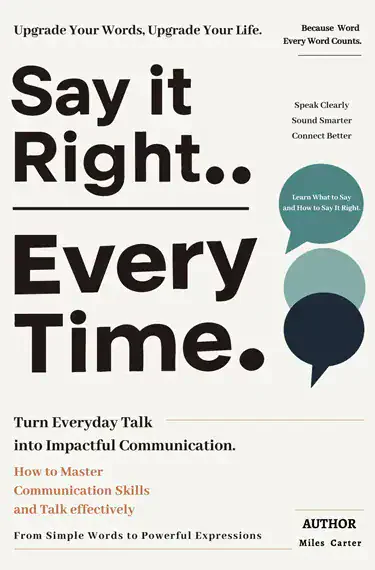
Say It Right Every Time by Miles Carter is a practical resource for people who want to communicate more confidently in these situations. The book includes 115 communication scripts and 15 frameworks covering mature expression, personal boundaries, difficult conversations, and calm responses under pressure.
Its practical approach can help you develop the language to:
- Protect your privacy: Respond to personal questions without feeling obligated to disclose more than you want.
- Say no without excessive apologizing: Communicate your limits clearly instead of offering a long list of excuses.
- Handle uncomfortable remarks: Address inappropriate comments without immediately reacting with anger or embarrassment.
- Stay firm when someone pushes back: Maintain your position even when another person questions or challenges your decision.
- Keep conversations respectful: Express discomfort directly without turning every boundary into a personal conflict.

Say it Right..Every Time.
Miles CarterPractical communication tools for the moments that matter — say what you mean, calmly and confidently.
The benefit of practicing these responses is that you are less likely to be caught off guard. Rather than feeling that you must answer immediately, you can draw on language you have already considered and choose a response that fits the relationship and situation.
Whether you are dealing with nosy relatives, overly curious coworkers, or acquaintances who ask questions that feel too personal, the book can help you approach these interactions with greater confidence. You can remain polite without giving up your right to decide what stays private.
You Don’t Owe Everyone a Personal Explanation
You are allowed to keep parts of your life to yourself. You can decline to answer a question, change the subject, or explain that you are not comfortable discussing something. A reasonable person may accept your boundary immediately; someone who does not may require you to state it more firmly.
If you often struggle to find the right words in uncomfortable interactions, Say It Right Every Time offers practical scripts and frameworks to help you express yourself clearly, set boundaries, and respond calmly under pressure.
You do not need to become cold or confrontational to protect your privacy. Sometimes, a short and confident response is enough to remind both yourself and the other person that personal information is yours to share, not theirs to demand.

